


Deforming to Best Practice: Key considerations for deformable image registration in radiotherapy
- PMID: 32741090
- PMCID: PMC7754021
- DOI: 10.1002/jmrs.417
Deforming to Best Practice: Key considerations for deformable image registration in radiotherapy
Abstract
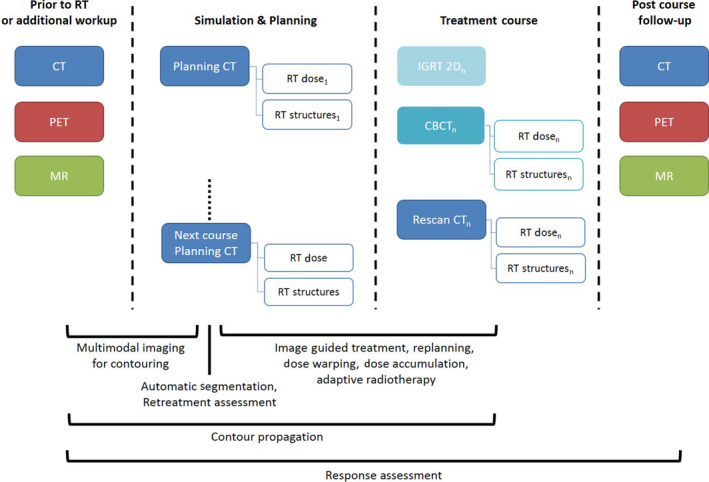
Image registration is a process that underlies many new techniques in radiation oncology - from multimodal imaging and contour propagation in treatment planning to dose accumulation throughout treatment. Deformable image registration (DIR) is a subset of image registration subject to high levels of complexity in process and validation. A need for local guidance to assist in high-quality utilisation and best practice was identified within the Australian community, leading to collaborative activity and workshops. This report communicates the current limitations and best practice advice from early adopters to help guide those implementing DIR in the clinic at this early stage. They are based on the state of image registration applications in radiotherapy in Australia and New Zealand (ANZ), and consensus discussions made at the 'Deforming to Best Practice' workshops in 2018. The current status of clinical application use cases is presented, including multimodal imaging, automatic segmentation, adaptive radiotherapy, retreatment, dose accumulation and response assessment, along with uptake, accuracy and limitations. Key areas of concern and preliminary suggestions for commissioning, quality assurance, education and training, and the use of automation are also reported. Many questions remain, and the radiotherapy community will benefit from continued research in this area. However, DIR is available to clinics and this report is intended to aid departments using or about to use DIR tools now.
© 2020 The Authors. Journal of Medical Radiation Sciences published by John Wiley & Sons Australia, Ltd on behalf of Australian Society of Medical Imaging and Radiation Therapy and New Zealand Institute of Medical Radiation Technology.
Conflict of interest statement
The authors declare no conflict of interest.
Figures
References
-
- Brock KK, Mutic S, McNutt TR, Li H, Kessler ML. Use of image registration and fusion algorithms and techniques in radiotherapy: Report of the AAPM radiation therapy committee task group no. 132. Med Phys 2017; 44: e43–e76. - PubMed
-
- Rigaud B, Simon A, Castelli J, et al. Deformable image registration for radiation therapy: principle, methods, applications and evaluation. Acta Oncol (Madr) 2019; 58: 1225–37. - PubMed
-
- Chen Y, Yang K, Marušic A, et al. A reporting tool for practice guidelines in health care: The RIGHT statement. Ann Intern Med 2017; 166: 128. - PubMed
MeSH terms
LinkOut - more resources
Full Text Sources
