


Oxytocin-enhanced group therapy for methamphetamine use disorder: Randomized controlled trial
- PMID: 32741502
- PMCID: PMC7491413
- DOI: 10.1016/j.jsat.2020.108059
Oxytocin-enhanced group therapy for methamphetamine use disorder: Randomized controlled trial
Abstract
Background: Methamphetamine (METH) use is a public health crisis that disproportionately affects men who have sex with men (MSM). There are currently no FDA-approved pharmacological interventions to treat methamphetamine use disorder (MUD). MUD is associated with social impairments and extremely high treatment attrition rates. Administration of oxytocin, a neuropeptide involved in social attachment, may be a novel approach to addressing these issues. Moreover, oxytocin administration has shown promise for reducing METH-related addictive behavior in animal models, but has not yet been investigated in clinical trials for MUD. Last, oxytocin is known to modulate stress responsivity via regulation of the autonomic nervous system, which is dysregulated in METH users. We hypothesize that oxytocin, in combination with group psychotherapy, will increase treatment engagement, reduce addiction behavior, and mitigate stress hyperreactivity.
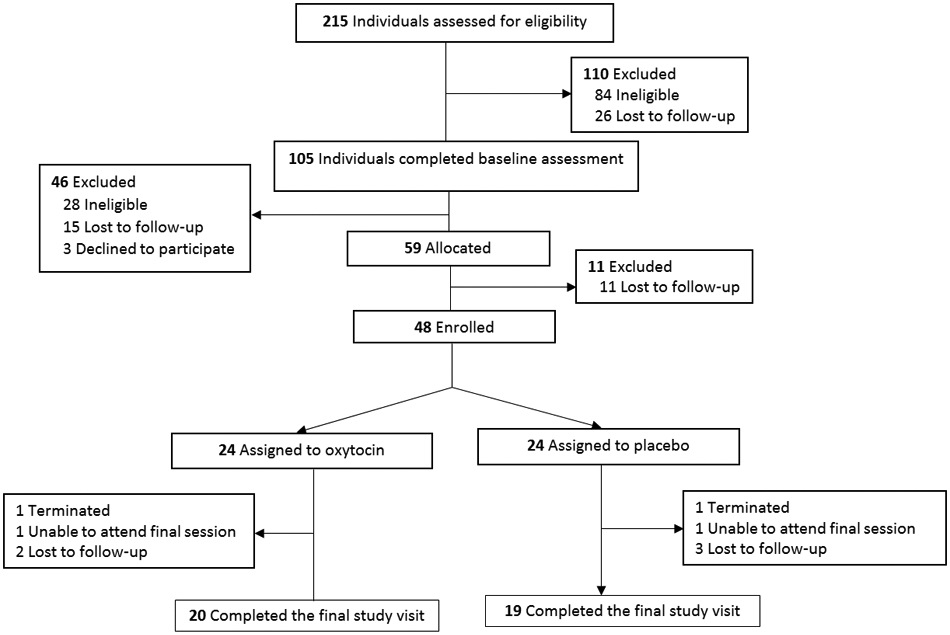
Methods: This is a randomized, double blind trial of oxytocin 40-IU (n = 24) or placebo (n = 24) administered intranasally prior to each of six weekly motivational interviewing group therapy (MIGT) sessions for MUD in MSM.
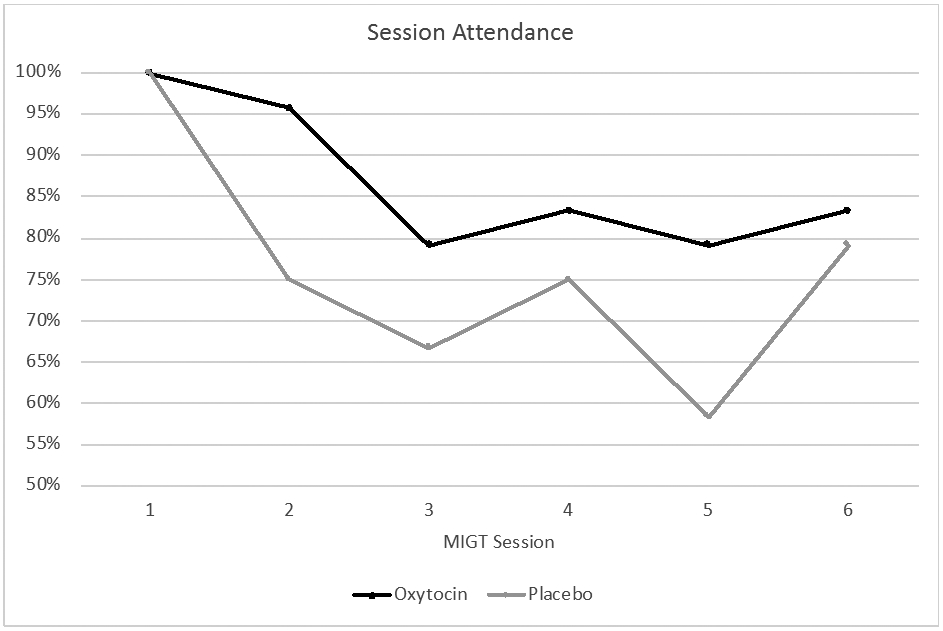
Primary outcome: (a) session attendance.
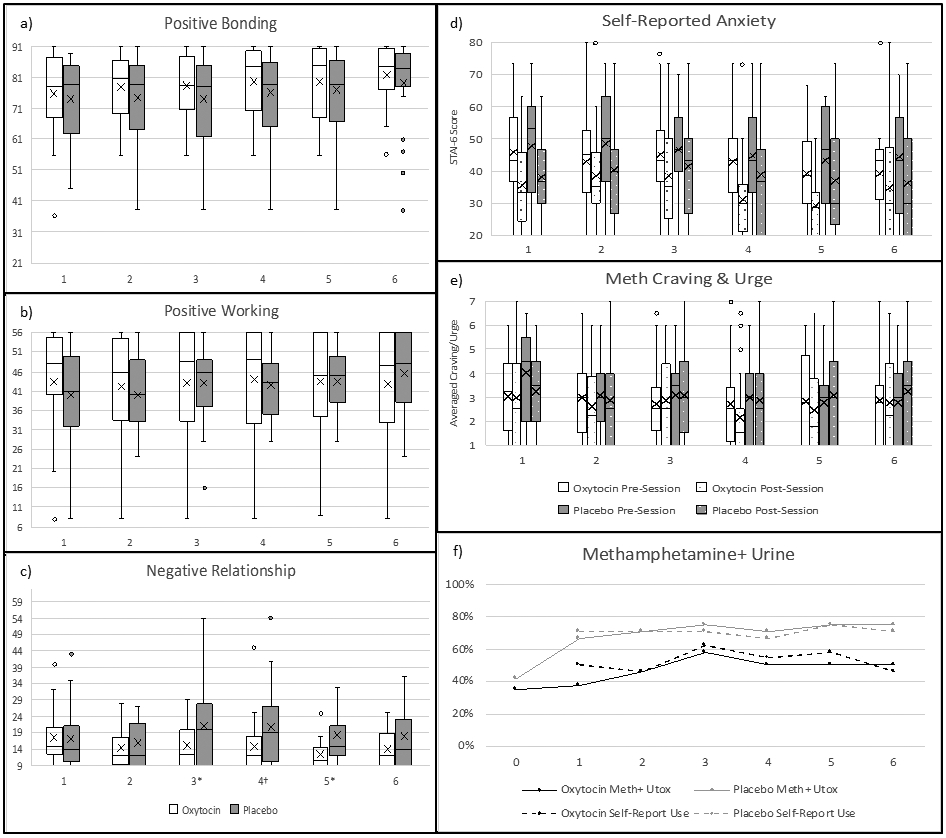
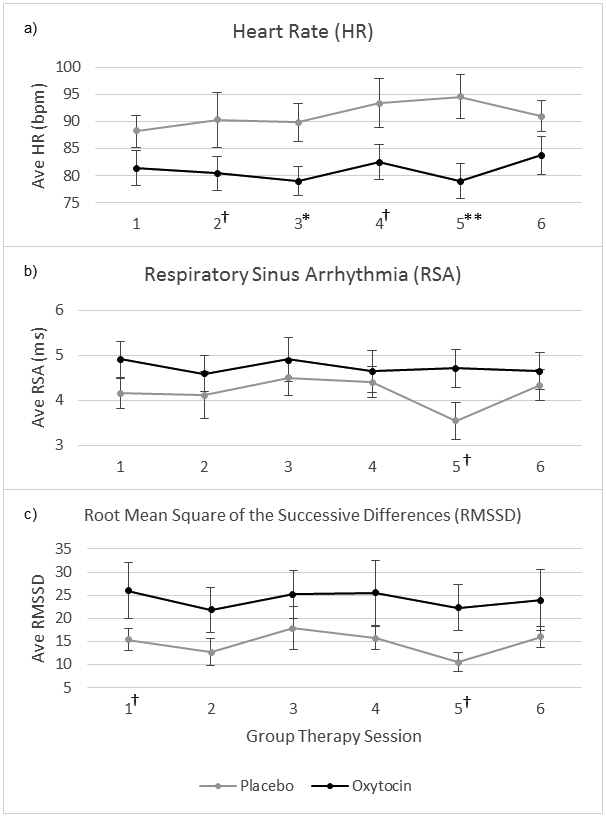
Secondary outcomes: (b) group cohesion, (c) anxiety, (d) METH craving, (e) METH use, and (f) in-session cardiac physiology.
Results: Participants receiving oxytocin had significantly higher group therapy attendance than those receiving placebo, OR 3.26, 95% CI [1.27-8.41], p = .014. There was a small effect of oxytocin on group cohension, but not anxiety or craving. METH use did not change over the six-week MIGT course in either treatment arm. Participants receiving oxytocin had lower average heart rates during MIGT sessions and higher heart rate variability. There were positive main effects of MIGT over Time regardless of study drug.
Conclusions: This evidence, and the lack of any serious adverse events, suggests that oxytocin may safely increase treatment attendance. One possible mechanism by which it may do so is its modulation of the autonomic nervous system. Further investigation is warranted.
Keywords: Methamphetamine; Motivational interviewing; Oxytocin; Psychotherapy, group; Retention in care; Sexual and gender minorities.
Published by Elsevier Inc.
Conflict of interest statement
Declaration of competing interest The authors declare that they have no known competing financial interests or personal relationships that could have appeared to influence the work reported in this paper.
Figures
References
-
- Appelhans BM, & Luecken LJ (2006). Heart rate variability as an index of regulated emotional responding. Review of General Psychology, 10(3), 229–240. 10.1037/1089-2680.10.3.229. - DOI
