


Iteratively Pruned Deep Learning Ensembles for COVID-19 Detection in Chest X-rays
- PMID: 32742893
- PMCID: PMC7394290
- DOI: 10.1109/access.2020.3003810
Iteratively Pruned Deep Learning Ensembles for COVID-19 Detection in Chest X-rays
Abstract
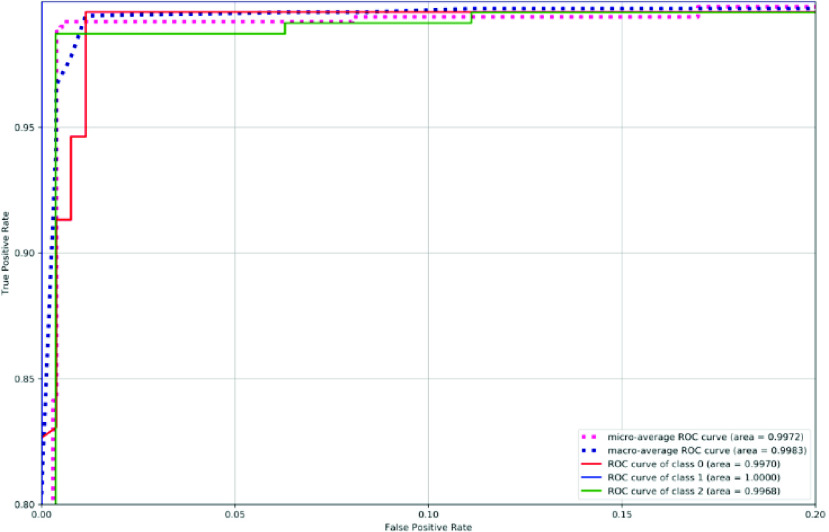
We demonstrate use of iteratively pruned deep learning model ensembles for detecting pulmonary manifestation of COVID-19 with chest X-rays. This disease is caused by the novel Severe Acute Respiratory Syndrome Coronavirus 2 (SARS-CoV-2) virus, also known as the novel Coronavirus (2019-nCoV). A custom convolutional neural network and a selection of ImageNet pretrained models are trained and evaluated at patient-level on publicly available CXR collections to learn modality-specific feature representations. The learned knowledge is transferred and fine-tuned to improve performance and generalization in the related task of classifying CXRs as normal, showing bacterial pneumonia, or COVID-19-viral abnormalities. The best performing models are iteratively pruned to reduce complexity and improve memory efficiency. The predictions of the best-performing pruned models are combined through different ensemble strategies to improve classification performance. Empirical evaluations demonstrate that the weighted average of the best-performing pruned models significantly improves performance resulting in an accuracy of 99.01% and area under the curve of 0.9972 in detecting COVID-19 findings on CXRs. The combined use of modality-specific knowledge transfer, iterative model pruning, and ensemble learning resulted in improved predictions. We expect that this model can be quickly adopted for COVID-19 screening using chest radiographs.
Keywords: COVID-19; Convolutional neural network; Deep learning; Ensemble; Iterative pruning.
Figures


References
-
- (2020). World Health Coronavirus Disease (COVID-2019) Situation Reports. [Online]. Available: https://www.who.int/emergencies/diseases/novel-coronavirus-2019/situatio...
-
- Bai H. X., Hsieh B., Xiong Z., Halsey K., Choi J. W., Tran T. M. L., Pan I., Shi L.-B., Wang D.-C., Mei J., Jiang X.-L., Zeng Q.-H., Egglin T. K., Hu P.-F., Agarwal S., Xie F., Li S., Healey T., Atalay M. K., and Liao W.-H., “Performance of radiologists in differentiating COVID-19 from viral pneumonia on chest CT,” Radiology, Mar. 2020, Art. no. 200823, doi: 10.1148/radiol.2020200823. - DOI - PMC - PubMed
-
- Folio L. R., Combat Radiology: Diagnostic Imaging of Blast and Ballistic Injuries. New York, NY, USA: Springer, 2010.
Grants and funding
LinkOut - more resources
Full Text Sources
Other Literature Sources
Miscellaneous