


Improvement of locomotive syndrome with surgical treatment in patients with degenerative diseases in the lumbar spine and lower extremities: a prospective cohort study
- PMID: 32746915
- PMCID: PMC7397584
- DOI: 10.1186/s12891-020-03547-0
Improvement of locomotive syndrome with surgical treatment in patients with degenerative diseases in the lumbar spine and lower extremities: a prospective cohort study
Abstract
Background: The epidemiology, risk factors, and prevention of locomotive syndrome (LS) have been reported. However, the number of clinical studies about the efficacy of LS treatment, including surgery, has been limited. This study aimed to evaluate LS and its improvement in patients undergoing surgeries for degenerative disease of the lumbar spine and lower extremities, and to discuss the effects of surgery on LS and the issues of LS assessment in these patients.
Methods: We enrolled 257 patients aged ≥60 years that underwent surgery for degenerative diseases of the lumbar spine and lower extremities and agreed to participate in the preoperative and 6- and 12-month postoperative LS examinations. According to the disease location, patients were divided into the lumbar (n = 81), hip (n = 106), knee (n = 43), and foot and ankle (n = 27) groups. Patients underwent LS risk tests, including the stand-up test, two-step test, and 25-Question Geriatric Locomotive Function Scale (GLFS-25) assessment.
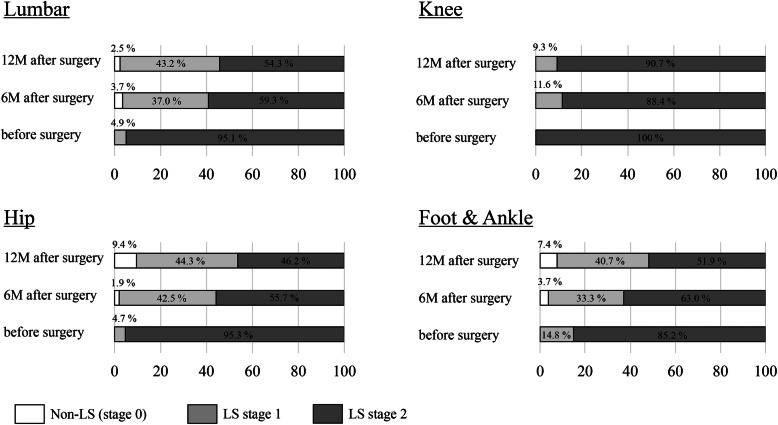
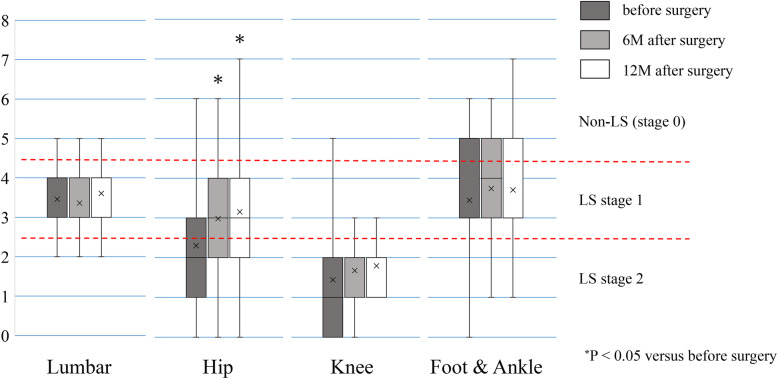
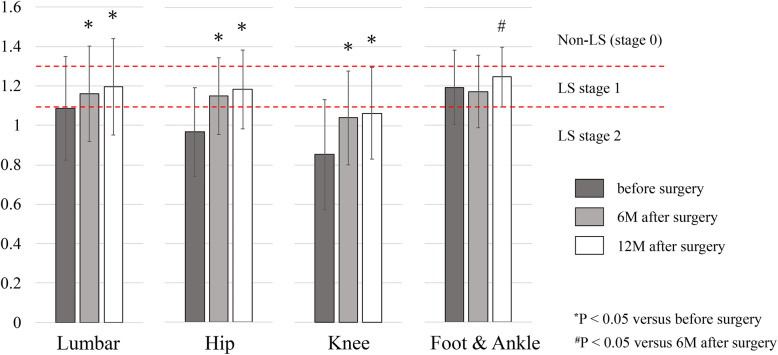
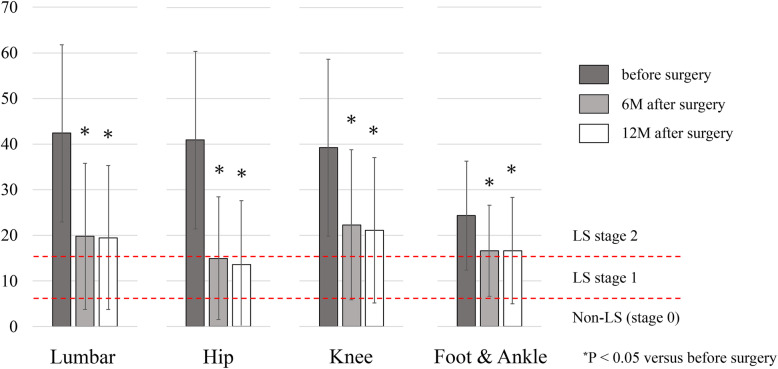
Results: The preoperative prevalence of LS stage 2 was 95%. Only the hip group showed significant improvements in the stand-up test. The knee group showed the worst results in the stand-up and two-step tests at all time points. All four groups had significant improvements in GLFS-25 scores. Approximately 40% of all patients had improvement in their LS stage postoperatively. However, > 90% of the patients in the knee group had LS stage 2 postoperatively.
Conclusion: Nearly all elderly patients requiring surgeries for degenerative diseases of the lumbar spine and lower extremities had advanced conditions (LS stage 2). Surgeries could be beneficial in alleviating LS. The LS stage 3 criteria should be established, and the use of the GLFS-25 assessment can be appropriate for advanced LS patients with severe musculoskeletal diseases requiring surgeries.
Keywords: Degenerative disease; Improvement; Locomotive syndrome; Lower extremity; Lumbar spine; Outcome; Surgery.
Conflict of interest statement
The authors declare that they have no competing interests.
Figures
References
-
- Yoshimura N, Muraki S, Oka H, Mabuchi A, En-Yo Y, Yoshida M, et al. Prevalence of knee osteoarthritis, lumbar spondylosis, and osteoporosis in Japanese men and women: the research on osteoarthritis/osteoporosis against disability study. J Bone Miner Metab. 2009;27(5):620–628. - PubMed
-
- Kadono Y, Yasunaga H, Horiguchi H, Hashimoto H, Matsuda S, Tanaka S, et al. Statistics for orthopedic surgery 2006–2007: data from the Japanese diagnosis procedure combination database. J Orthop Sci. 2010;15(2):162–170. - PubMed
MeSH terms
Grants and funding
LinkOut - more resources
Full Text Sources
Medical
