


Abnormal immunity of non-survivors with COVID-19: predictors for mortality
- PMID: 32746940
- PMCID: PMC7396941
- DOI: 10.1186/s40249-020-00723-1
Abnormal immunity of non-survivors with COVID-19: predictors for mortality
Abstract
Background: The number of coronavirus disease 2019 (COVID-19) cases has rapidly increased all over the world. Specific information about immunity in non-survivors with COVID-19 is scarce. This study aimed to analyse the clinical characteristics and abnormal immunity of the confirmed COVID-19 non-survivors.
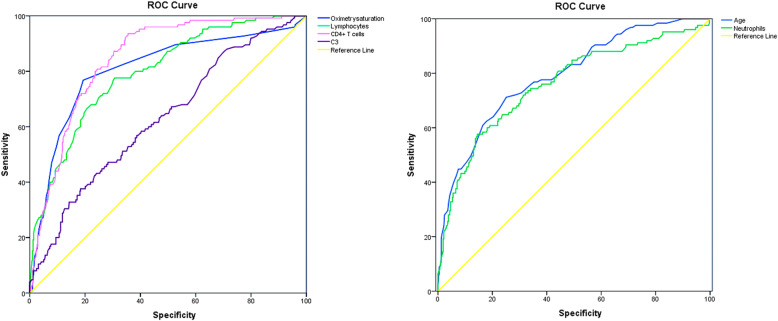
Methods: In this single-centered, retrospective, observational study, we enrolled 125 patients with COVID-19 who were died between January 13 and March 4, 2020 in Renmin Hospital of Wuhan University. A total of 414 randomly recruited patients with confirmed COVID-19 who were discharged from the same hospital during the same period served as control. The demographic, clinical characteristics and laboratory findings at admission, and treatment used in these patients were collected. The immunity-related risk factors associated with in-hospital death were tested by logistic regression models and Receiver Operating Characteristic (ROC) curve.
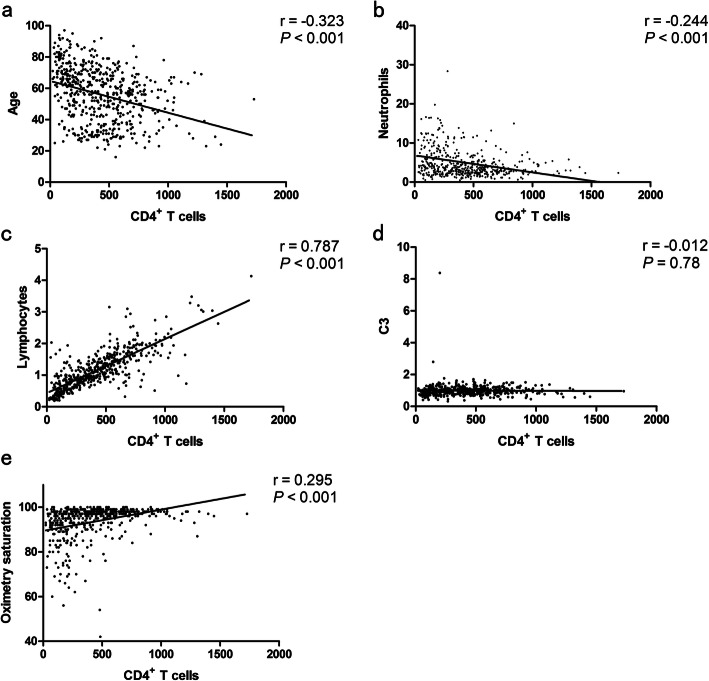
Results: Non-survivors (70 years, IQR: 61.5-80) were significantly older than survivors (54 years, IQR: 37-65) (P < 0.001). 56.8% of non-survivors was male. Nearly half of the patients (44.9%) had chronic medical illness. In non-survivors, hypertension (49.6%) was the most common comorbidity, followed by diabetes (20.0%) and coronary heart disease (16.0%). The common signs and symptoms at admission of non-survivors were fever (88%), followed by cough (64.8%), dyspnea (62.4%), fatigue (62.4%) and chest tightness (58.4%). Compared with survivors, non-survivors had higher white blood cell (WBC) count (7.85 vs 5.07 × 10⁹/L), more elevated neutrophil count (6.41 vs 3.08 × 10⁹/L), smaller lymphocyte count (0.69 vs 1.20 × 10⁹/L) and lower platelet count (172 vs 211 × 109/L), raised concentrations of procalcitonin (0.21 vs 0.06 ng/mL) and CRP (70.5 vs 7.2 mg/L) (P < 0.001). This was accompanied with significantly decreased levels of CD3+ T cells (277 vs 814 cells/μl), CD4+ T cells (172 vs 473 cells/μl), CD8+ T cells (84 vs 262.5 cells/μl, P < 0.001), CD19+ T cells (88 vs 141 cells/μl) and CD16+ 56+ T cells (79 vs 128.5 cells/μl) (P < 0.001). The concentrations of immunoglobulins (Ig) G (13.30 vs 11.95 g/L), IgA (2.54 vs 2.21 g/L), and IgE (71.30 vs 42.25 IU/ml) were increased, whereas the levels of complement proteins (C)3 (0.89 vs 0.99 g/L) and C4 (0.22 vs 0.24 g/L) were decreased in non-survivors when compared with survivors (all P < 0.05). The non-survivors presented lower levels of oximetry saturation (90 vs 97%) at rest and lactate (2.40 vs 1.90 mmol/L) (P < 0.001). Old age, comorbidity of malignant tumor, neutrophilia, lymphocytopenia, low CD4+ T cells, decreased C3, and low oximetry saturation were the risk factors of death in patients with confirmed COVID-19. The frequency of CD4+ T cells positively correlated with the numbers of lymphocytes (r = 0.787) and the level of oximetry saturation (r = 0.295), Whereas CD4+ T cells were negatively correlated with age (r =-0.323) and the numbers of neutrophils (r = - 0.244) (all P < 0.001).
Conclusions: Abnormal cellular immunity and humoral immunity were key features of non-survivors with COVID-19. Neutrophilia, lymphocytopenia, low CD4+ T cells, and decreased C3 were immunity-related risk factors predicting mortality of patients with COVID-19.
Keywords: COVID-19; Cellular immunity; Humoral immunity; Mortality.
Conflict of interest statement
No conflicts of interest are declared by the authors.
Figures
References
-
- World Health Organization (WHO). Coronavirus disease (COVID-2019) situation reports. 2020.https://www.who.int/emergencies/diseases/novel-coronavirus-2019/situatio.... Accessed April 25, 2020.
Publication types
MeSH terms
Grants and funding
LinkOut - more resources
Full Text Sources
Research Materials
Miscellaneous
