


Genomic analysis of inherited hearing loss in the Palestinian population
- PMID: 32747562
- PMCID: PMC7443947
- DOI: 10.1073/pnas.2009628117
Genomic analysis of inherited hearing loss in the Palestinian population
Abstract
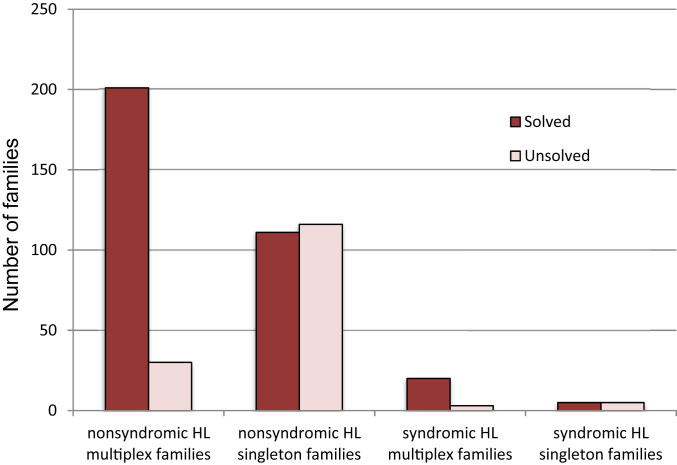
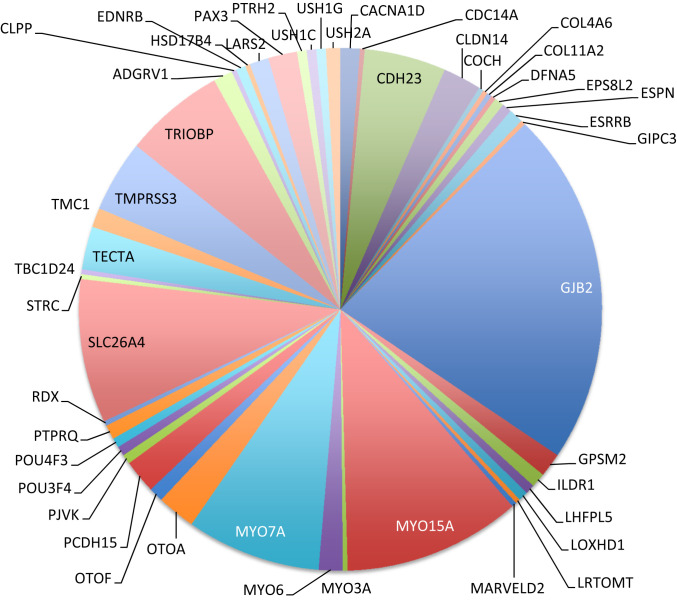
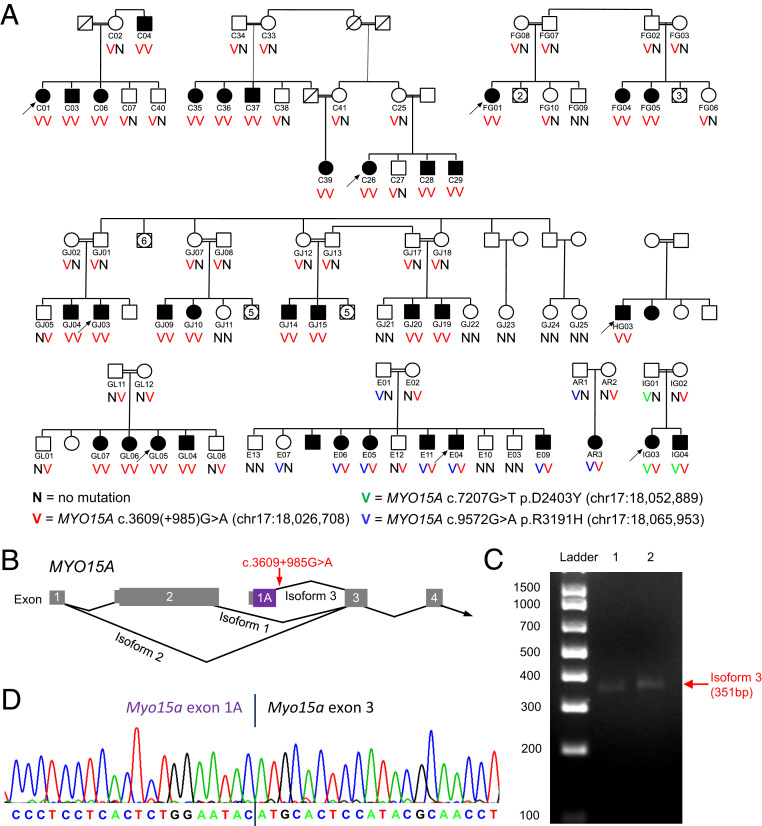
The genetic characterization of a common phenotype for an entire population reveals both the causes of that phenotype for that place and the power of family-based, population-wide genomic analysis for gene and mutation discovery. We characterized the genetics of hearing loss throughout the Palestinian population, enrolling 2,198 participants from 491 families from all parts of the West Bank and Gaza. In Palestinian families with no prior history of hearing loss, we estimate that 56% of hearing loss is genetic and 44% is not genetic. For the great majority (87%) of families with inherited hearing loss, panel-based genomic DNA sequencing, followed by segregation analysis of large kindreds and transcriptional analysis of participant RNA, enabled identification of the causal genes and mutations, including at distant noncoding sites. Genetic heterogeneity of hearing loss was striking with respect to both genes and alleles: The 337 solved families harbored 143 different mutations in 48 different genes. For one in four solved families, a transcription-altering mutation was the responsible allele. Many of these mutations were cryptic, either exonic alterations of splice enhancers or silencers or deeply intronic events. Experimentally calibrated in silico analysis of transcriptional effects yielded inferences of high confidence for effects on splicing even of mutations in genes not expressed in accessible tissue. Most (58%) of all hearing loss in the population was attributable to consanguinity. Given the ongoing decline in consanguineous marriage, inherited hearing loss will likely be much rarer in the next generation.
Keywords: consanguinity; deafness; genomics; hearing loss; human genetics.
Conflict of interest statement
The authors declare no competing interest.
Figures

References
-
- Richardson G. P., de Monvel J. B., Petit C., How the genetics of deafness illuminates auditory physiology. Annu. Rev. Physiol. 73, 311–334 (2011). - PubMed
-
- Morton C. C., Nance W. E., Newborn hearing screening—A silent revolution. N. Engl. J. Med. 354, 2151–2164 (2006). - PubMed
-
- Shahin H., et al. , Nonsense mutation of the stereociliar membrane protein gene PTPRQ in human hearing loss DFNB84. J. Med. Genet. 47, 643–645 (2010). - PubMed
Publication types
MeSH terms
Grants and funding
LinkOut - more resources
Full Text Sources
