. 2020 Nov;4(11):1030-1043.
doi: 10.1038/s41551-020-0594-x. Epub 2020 Aug 3.

Integrated pipeline for the accelerated discovery of antiviral antibody therapeutics

Affiliations

Integrated pipeline for the accelerated discovery of antiviral antibody therapeutics

Pavlo Gilchuk et al. Nat Biomed Eng. 2020 Nov.

Abstract

The emergence and re-emergence of highly virulent viral pathogens with the potential to cause a pandemic creates an urgent need for the accelerated discovery of antiviral therapeutics. Antiviral human monoclonal antibodies (mAbs) are promising candidates for the prevention and treatment of severe viral diseases, but their long development timeframes limit their rapid deployment and use. Here, we report the development of an integrated sequence of technologies, including single-cell mRNA-sequence analysis, bioinformatics, synthetic biology and high-throughput functional analysis, that enables the rapid discovery of highly potent antiviral human mAbs, the activity of which we validated in vivo. In a 78-d study modelling the deployment of a rapid response to an outbreak, we isolated more than 100 human mAbs that are specific to Zika virus, assessed their function, identified that 29 of these mAbs have broadly neutralizing activity, and verified the therapeutic potency of the lead candidates in mice and non-human primate models of infection through the delivery of an antibody-encoding mRNA formulation and of the respective IgG antibody. The pipeline provides a roadmap for rapid antibody-discovery programmes against viral pathogens of global concern.


Conflict of interest statement

Competing interests

J.L., E.D., M.E.F., and B.J.D. are employees of Integral Molecular. B.J.D. is a shareholder of Integral Molecular. G.A. has a financial interest in SeromYx, a company developing technology that describes the antibody immune response. G.A. interests were reviewed and are managed by Massachusetts General Hospital and Partners HealthCare in accordance with their conflict of interest policies. M.S.D. is a consultant for Inbios and Emergent BioSolutions and on the Scientific Advisory Board of Moderna. J.E.C. has served as a consultant for Sanofi and is on the Scientific Advisory Boards of CompuVax and Meissa Vaccines, is a recipient of previous unrelated research grants from Moderna and Sanofi and is founder of IDBiologics. JHE, APK, and NVH are inventors on a patent application describing the NLC formulation. Vanderbilt University has applied for a patent concerning ZIKV antibodies that is related to this work. All other authors declare no competing interests.

Figures
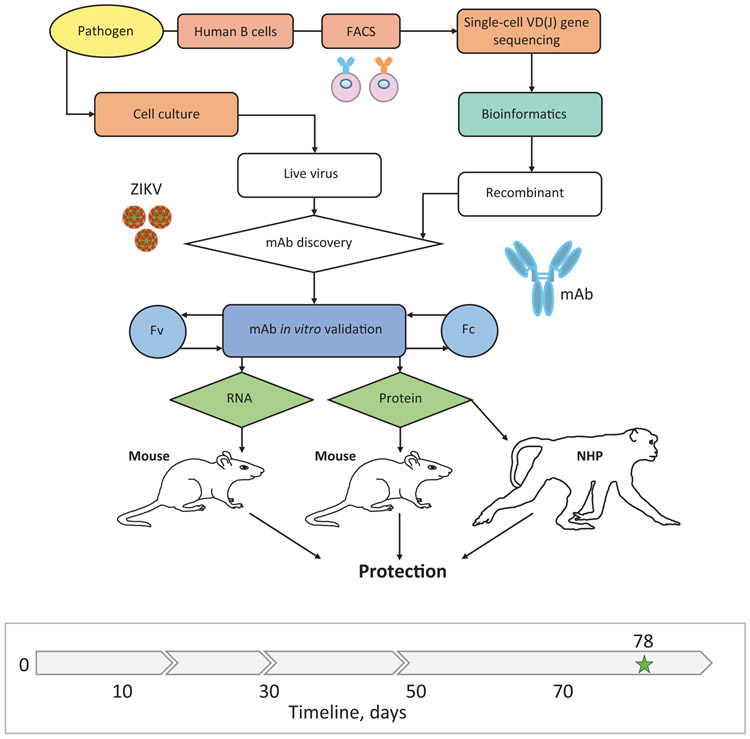
Fig. 1:
Fig. 1:. Integrated technology workflow for rapid discovery of anti-viral human mAbs.
A cartoon of proposed integrated technology workflow that incorporated pathogen production, target-specific B cell isolation, single-cell VD(J) genes sequence analysis, bioinformatics analysis, mAb production, mAb in vitro validation, mAb-encoding RNA synthesis, and mAb in vivo validation using protein and nucleic acid delivery technologies. Timeline to identify and validate protective mAbs against ZIKV is indicated in the timeline chart, where day 0 is designated as a start point, and day 90 was the projected endpoint for this study. Green star (day 78) depicts the completion time.
Fig. 2:
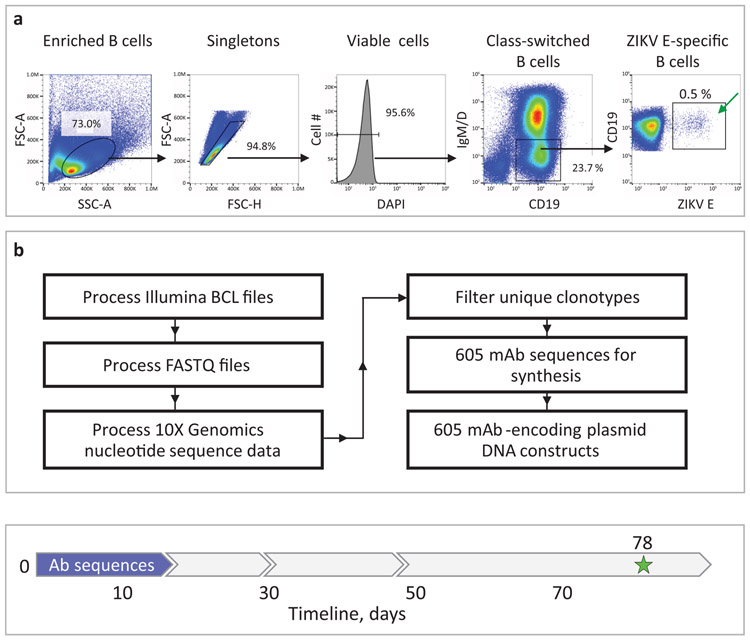
Fig. 2:. Rescue and sequence analysis of antibody genes from ZIKV E antigen-specific human B cells.
a, Flow cytometric identification of target-specific memory B cells after labeling of magnetically enriched total B cells with ZIKV E antigen. Target-specific B cells were labeled with biotinylated recombinant E protein and detected by fluorochrome-conjugated streptavidin as indicated. Green arrow indicates FACS-sorted cells. Representative data of four experiments is shown. b, Bioinformatics filtering steps to select mAb sequences for synthesis. Timeline to identify sequences of target mAbs and obtain cDNA constructs for recombinant mAb expression is indicated with blue arrow in the timeline chart.
Fig. 3:
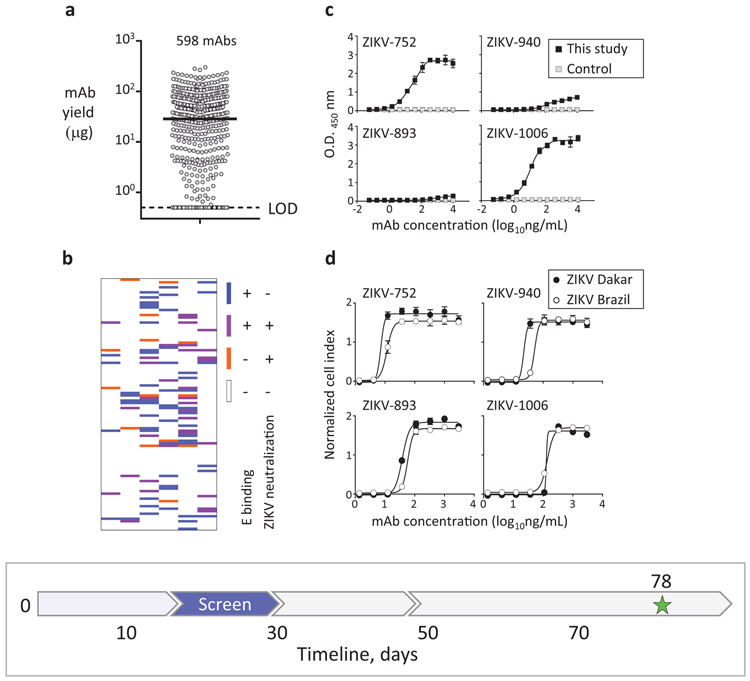
Fig. 3:. Rapid mAb production and screening to identify lead candidates for in vivo testing.
a, Micro-scale expressed and purified mAbs. Dots indicate average concentration of individual mAbs from assay duplicates, and median mAb yield is shown with horizontal line. LOD – limit of the detection. b, Relationships between binding and neutralizing activities of individual mAbs of the panel shown as a heatmap. Binding to E protein was determined by ELISA and neutralizing activity was measured using RTCA from mAbs purified as in (a). c, ZIKV E protein binding by potently neutralizing mAbs representing three distinct epitope binding groups. MAb rRSV-90, which is specific to the unrelated respiratory syncytial virus (RSV) fusion protein (F) antigen, served as a control. d, Neutralization of ZIKV Brazil or Dakar strain viruses by representative cross-neutralizing mAbs from (c), as determined using RTCA. Data shown indicate the mean ± SD of assay triplicates in (c, d), and represent at least two independent experiments. Timeline to identify mAb candidates for in vivo testing is indicated with a blue arrow in the timeline chart.
Fig. 4:
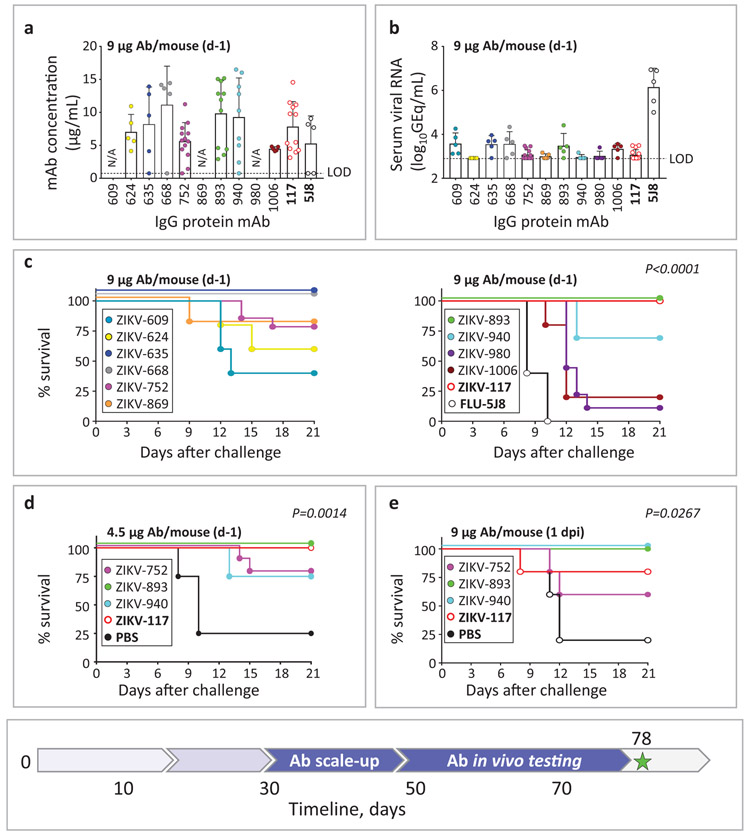
Fig. 4:. mAb protection against lethal challenge with ZIKV in mice.
a, Serum concentration of human mAbs (2 dpi) that was determined by ELISA from mice that were treated prophylactically (d-1) with indicated mAbs (9 μg/mouse) and challenged with ZIKV (d0). Dots show measurements from individual mice. ZIKV-609, −624, −635, −668, −869, −980, −1006, and FLU5J8 were examined using n= 5 mice per group in one experiment; ZIKV-752 (n=14 mice), −893 (n=11 mice), −940 (n=9 mice), and −117 (n=12 mice) were examined in three independent experiments and for which cumulative data from three experiments are shown. Mean ± SD values are shown. N/A – not available. b, Serum ZIKV titers (2 dpi) from mice treated and challenged as in (a). Dots show measurements from individual mice. n=5 mice per group were examined and data represent one experiment except for ZIKV-752 and −117 treatment groups, where total n=14 mice per group were examined in three independent experiments and for which cumulative data from three experiments are shown. Mean ± SD values are shown. c, Survival of B6 mice that were treated and challenged as in (a). Overall difference in survival between the groups was estimated using a two-sided log-rank (Mantel cox) test. P values are indicated. d, Low dose (4.5 μg/mouse) prophylaxis of three lead candidate mAbs ZIKV-752, −893, and −940, representing each of three competition-binding groups. n=5 mice per group were examined in one experiment. Mice were treated and challenged as in (a). Overall difference in survival between the groups was estimated using a two-sided log-rank (Mantel cox) test. P values are indicated. e, Low-dose (9 μg/mouse) post-exposure therapeutic efficacy (1 dpi) of three lead candidate mAbs in mice challenged with ZIKV. n=5 mice per group were examined in one experiment. Overall difference in survival between the groups was estimated using a two-sided log-rank (Mantel cox) test. P values are indicated. The mAbs ZIKV-117 and FLU-5J8 or PBS served as controls. Timeline to scale-up mAb protein production and identify the lead protective mAbs is indicated with blue arrows in the timeline chart.
Fig. 5:
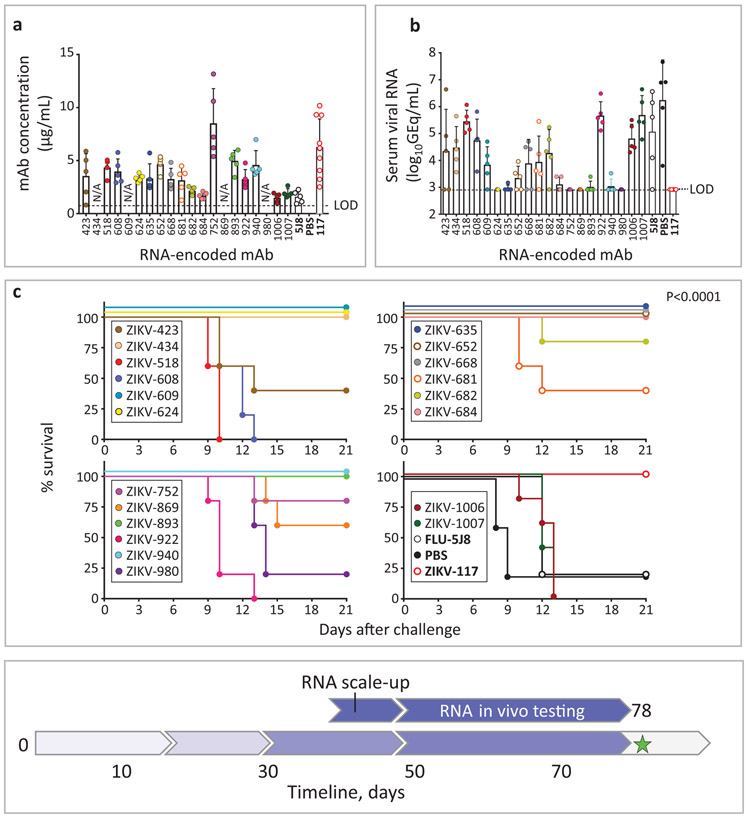
Fig. 5:. Protection against lethal challenge with ZIKV that was mediated by mAb-encoding RNA formulation delivery in mice.
a, Serum concentration of human mAbs (2 dpi) from mice that were treated with the indicated mAb-encoding RNA formulations (40 μg/mouse) on day −1 and challenged with ZIKV on day 0 was determined by ELISA. Dots show measurements from individual mice. n=5 mice per group were examined and data represent one experiment except for ZIKV-117 where n=10 mice per group were examined. Mean ± SD values are shown. N/A – not available. b, Serum ZIKV titers (2 dpi) from mice treated and challenged as in (a) was determined by qRT-PCR. Dots show measurements from individual mice. n=5 mice per group were examined in one experiment except for ZIKV-117 where n=10 mice per group were examined. Mean ± SD values are shown. c, Survival of mice that were treated and challenged as in (a). n=5 mice per group were examined in one experiment. Overall difference in survival between the groups was estimated using a two-sided log-rank (Mantel cox) test. P values are indicated. The mAbs ZIKV-117 and FLU-5J8 served as controls. Timeline to scale-up mAb-encoding RNA production and identify the lead protective mAb-encoding RNA formulations is indicated with blue arrows in the timeline chart.
Fig. 6:
Fig. 6:. Efficacy of mAb treatment against ZIKV infection in NHPs.
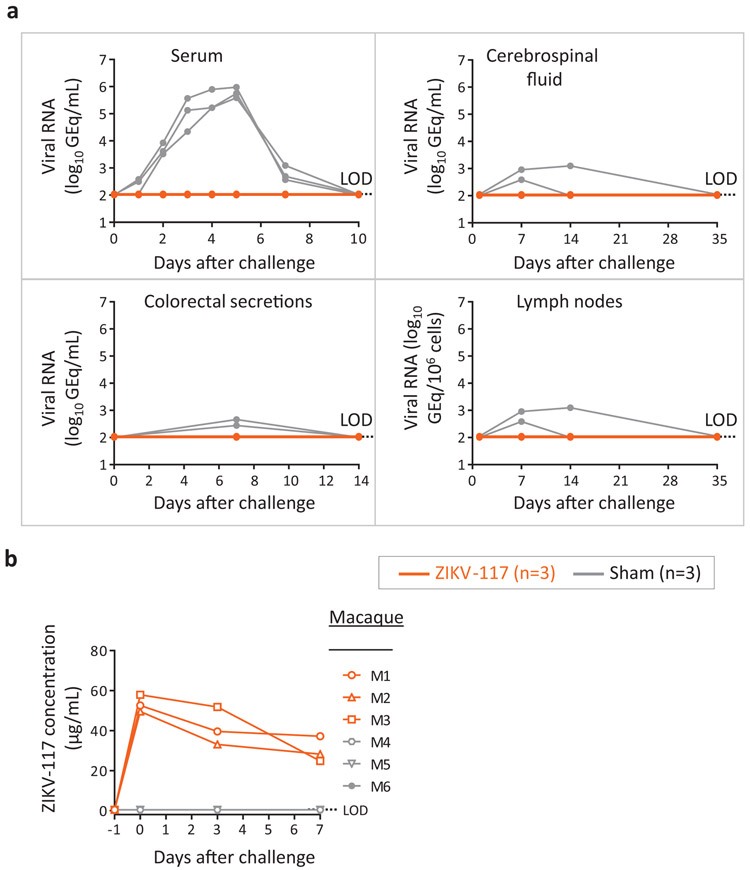
Animals received one 10 mg/kg dose of mAb ZIKV-117 (n=3 NHPs per group) or mAb PGT121(n=3 NHPs per group) served as a contemporaneous control intravenously on day −1 and then challenged subcutaneously with a target dose of 103 PFU of ZIKV strain Brazil the next day. a, qRT-PCR measurement of viremia in plasma and other compartments at indicated time points after virus challenge. b, concentration of ZIKV-117 human mAb that was determined in serum of treated and control NHPs at indicated time points after virus challenge. Data in a,b represent a single experiment.

References

    1. Sok D & Burton DR Recent progress in broadly neutralizing antibodies to HIV. Nat Immunol 19, 1179–1188 (2018). - PMC - PubMed
    1. Laursen NS & Wilson IA Broadly neutralizing antibodies against influenza viruses. Antiviral Res 98, 476–483 (2013). - PMC - PubMed
    1. Bornholdt ZA et al. Isolation of potent neutralizing antibodies from a survivor of the 2014 Ebola virus outbreak. Science 351, 1078–1083 (2016). - PMC - PubMed
    1. Flyak AI et al. Mechanism of human antibody-mediated neutralization of Marburg virus. Cell 160, 893–903 (2015). - PMC - PubMed
    1. Sapparapu G et al. Neutralizing human antibodies prevent Zika virus replication and fetal disease in mice. Nature 540, 443–447 (2016). - PMC - PubMed

Publication types