


Nanotechnology-based antiviral therapeutics
- PMID: 32748035
- PMCID: PMC7398286
- DOI: 10.1007/s13346-020-00818-0
Nanotechnology-based antiviral therapeutics
Abstract
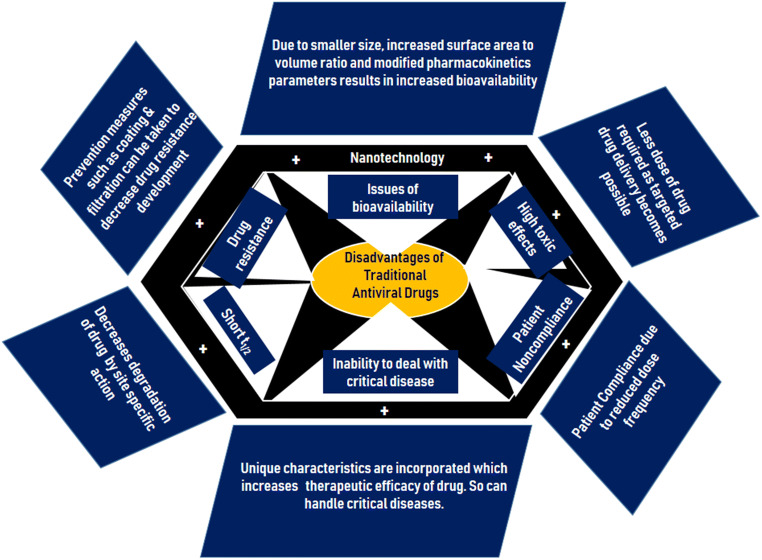
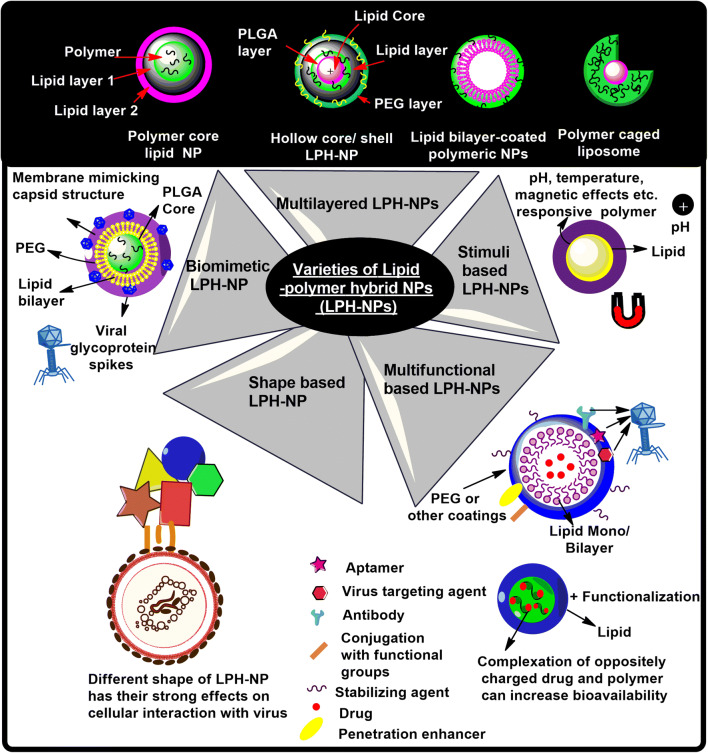
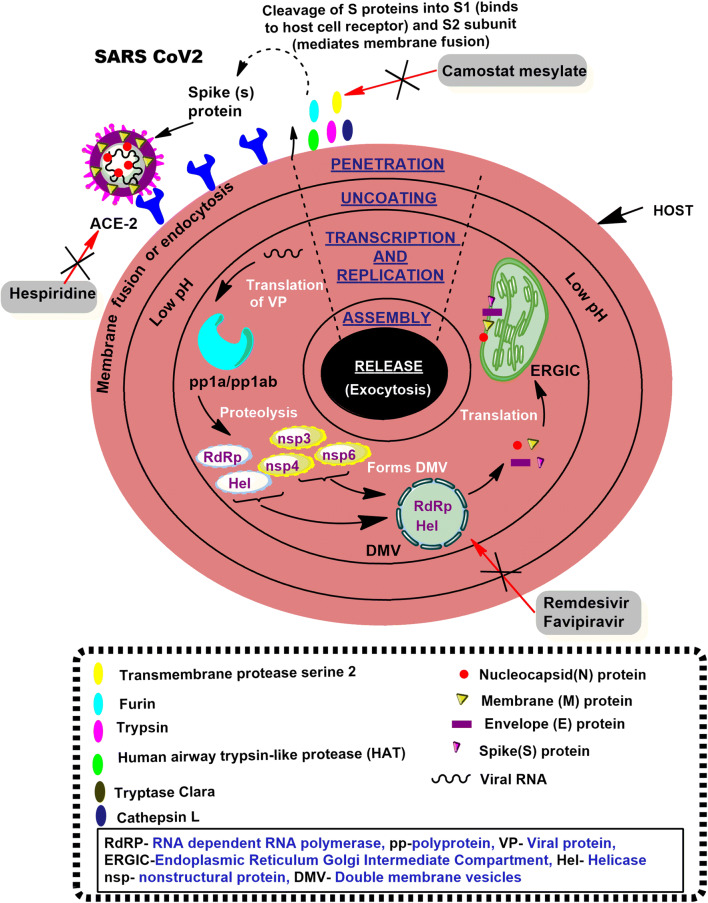
The host immune system is highly compromised in case of viral infections and relapses are very common. The capacity of the virus to destroy the host cell by liberating its own DNA or RNA and replicating inside the host cell poses challenges in the development of antiviral therapeutics. In recent years, many new technologies have been explored for diagnosis, prevention, and treatment of viral infections. Nanotechnology has emerged as one of the most promising technologies on account of its ability to deal with viral diseases in an effective manner, addressing the limitations of traditional antiviral medicines. It has not only helped us to overcome problems related to solubility and toxicity of drugs, but also imparted unique properties to drugs, which in turn has increased their potency and selectivity toward viral cells against the host cells. The initial part of the paper focuses on some important proteins of influenza, Ebola, HIV, herpes, Zika, dengue, and corona virus and those of the host cells important for their entry and replication into the host cells. This is followed by different types of nanomaterials which have served as delivery vehicles for the antiviral drugs. It includes various lipid-based, polymer-based, lipid-polymer hybrid-based, carbon-based, inorganic metal-based, surface-modified, and stimuli-sensitive nanomaterials and their application in antiviral therapeutics. The authors also highlight newer promising treatment approaches like nanotraps, nanorobots, nanobubbles, nanofibers, nanodiamonds, nanovaccines, and mathematical modeling for the future. The paper has been updated with the recent developments in nanotechnology-based approaches in view of the ongoing pandemic of COVID-19.Graphical abstract.
Keywords: Antiviral therapy; Nanotechnology; Nanovaccines; Viral infections.
Conflict of interest statement
The authors declare that they have no competing interest.
Figures


References
-
- Rajbari M, Rajbari N, Faridpur F. Morbidity and mortality due to Nipah or Nipah-like virus encephalitis in WHO South-East Asia Region Country: India 2018;2018. Available from: http://www.searo.who.int/entity/emerging_diseases/links/morbidity-and-mo....
-
- Immunisation Coalition 2019 Influenza statistics - Immunisation Coalition [Internet]. [cited 2019 Apr 12]. Available from: https://www.immunisationcoalition.org.au/news-media/2019-influenza-stati...
-
- S C, Mishra AK, Bazroy J. Trend of morbidity and mortality of dengue in Tamil Nadu and Puducherry, South India. Int J Community Med Public Heal. 2017;5:322. Available from: http://www.ijcmph.com/index.php/ijcmph/article/view/2291.
-
- CDTR-Disease, communicable report, threats. 2018;20–6. Available from: https://ecdc.europa.eu/sites/portal/files/documents/Communicable-disease....
Publication types
MeSH terms
Substances
LinkOut - more resources
Full Text Sources
Medical
