


Setting and techniques for monitoring blood pressure during pregnancy
- PMID: 32748394
- PMCID: PMC8409325
- DOI: 10.1002/14651858.CD012739.pub2
Setting and techniques for monitoring blood pressure during pregnancy
Abstract
Background: Regular blood pressure (BP) measurement is crucial for the diagnosis and management of hypertensive disorders in pregnancy, such as pre-eclampsia. BP can be measured in various settings, such as conventional clinics or self-measurement at home, and with different techniques, such as using auscultatory or automated BP devices. It is important to understand the impact of different settings and techniques of BP measurement on important outcomes for pregnant women.
Objectives: To assess the effects of setting and technique of BP measurement for diagnosing hypertensive disorders in pregnancy on subsequent maternal and perinatal outcomes, women's quality of life, or use of health service resources.
Search methods: We searched Cochrane Pregnancy and Childbirth's Trials Register, ClinicalTrials.gov, the WHO International Clinical Trials Registry Platform (ICTRP) on 22 April 2020, and reference lists of retrieved studies.
Selection criteria: Randomised controlled trials (RCTs) involving pregnant women, using validated BP devices in different settings or using different techniques.
Data collection and analysis: Two authors independently extracted data, assessed risk of bias, and used the GRADE approach to assess the certainty of the evidence.
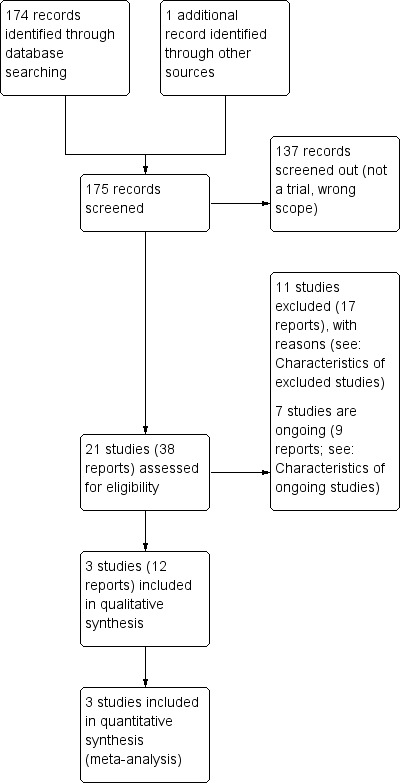
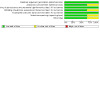
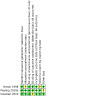
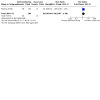
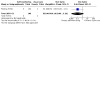
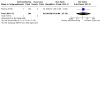
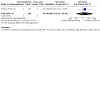
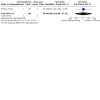
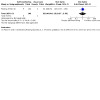
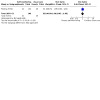
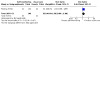
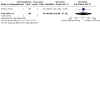
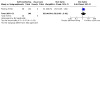
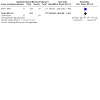
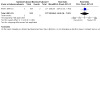
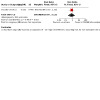
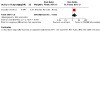
Main results: Of the 21 identified studies, we included three, and excluded 11; seven were ongoing. Of the three included RCTs (536,607 women), one was a cluster-RCT, with a substantially higher number of participants (536,233 deliveries) than the other two trials, but did not provide data for most of our outcomes. We generally judged the included studies at low risk of bias, however, the certainty of the evidence was low, due to indirectness and imprecision. Meta-analysis was not possible because each study investigated a different comparison. None of the included studies reported our primary outcome of systolic BP greater than or equal to 150 mmHg. None of the studies reported any of these important secondary outcomes: antenatal hospital admissions, neonatal unit length of stay, or neonatal endotracheal intubation and use of mechanical ventilation. Setting of BP measurement: self-measurement versus conventional clinic measurement (one study, 154 women) There were no maternal deaths in either the self-monitoring group or the usual care group. The study did not report perinatal mortality. Self-monitoring may lead to slightly more diagnoses of pre-eclampsia compared with usual care (risk ratio (RR) 1.49, 95% confidence interval (CI) 0.87 to 2.54; 154 women; 1 study; low-certainty evidence) but the wide 95% CI is consistent with possible benefit and possible harm. Self-monitoring may have little to no effect on the likelihood of induction of labour compared with usual care (RR 1.09, 95% CI 0.82 to 1.45; 154 women; 1 study; low-certainty evidence). We are uncertain if self-monitoring BP has any effect on maternal admission to intensive care (RR 1.54, 95% CI 0.06 to 37.25; 154 women; 1 study; low-certainty evidence), stillbirth (RR 2.57, 95% CI 0.13 to 52.63; 154 women; 1 study; low-certainty evidence), neonatal death (RR 1.54, 95% CI 0.06 to 37.25; 154 women; 1 study; low-certainty evidence) or preterm birth (RR 1.15, 95% CI 0.37 to 3.55; 154 women; 1 study; low-certainty evidence), compared with usual care because the certainty of evidence is low and the 95% CI is consistent with appreciable harms and appreciable benefits. Self-monitoring may lead to slightly more neonatal unit admissions compared with usual care (RR 1.53, 95% CI 0.65 to 3.62; 154 women; 1 study; low-certainty evidence) but the wide 95% CI includes the possibility of slightly fewer admissions with self-monitoring. Technique of BP measurement: Korotkoff phase IV (K4, muffling sound) versus Korotkoff phase V (K5, disappearance of sound) to represent diastolic BP (one study, 220 women) There were no maternal deaths in either the K4 or K5 group. There may be little to no difference in the diagnosis of pre-eclampsia between using K4 or K5 for diastolic BP (RR 1.16; 95% CI 0.89 to 1.49; 1 study; 220 women; low-certainty evidence), since the wide 95% CI includes the possibility of more diagnoses with K4. We are uncertain if there is a difference in perinatal mortality between the groups because the quality of evidence is low and the 95% CI is consistent with appreciable harm and appreciable benefit (RR 1.14, 95% CI 0.16 to 7.92; 1 study, 220 women; low-certainty evidence). The trial did not report data on maternal admission to intensive care, induction of labour, stillbirth, neonatal death, preterm birth, or neonatal unit admissions. Technique of BP measurement: CRADLE intervention (CRADLE device, a semi-automated BP monitor with additional features, and an education package) versus usual care (one study, 536,233 deliveries) There may be little to no difference between the use of the CRADLE device and usual care in the number of maternal deaths (adjusted RR 0.80, 95% CI 0.30 to 2.11; 536,233 women; 1 study; low-certainty evidence), but the 95% CI is consistent with appreciable harm and appreciable benefit. The trial did not report pre-eclampsia, induction of labour, perinatal mortality, preterm birth, or neonatal unit admissions. Maternal admission to intensive care and perinatal outcomes (stillbirths and neonatal deaths) were only collected for a small proportion of the women, identified by an outcome not by baseline characteristics, thereby breaking the random allocation. Therefore, any differences between the groups could not be attributed to the intervention, and we did not extract data for these outcomes.
Authors' conclusions: The benefit, if any, of self-monitoring BP in hypertensive pregnancies remains uncertain, as the evidence is limited to one feasibility study. Current practice of using K5 to measure diastolic BP is supported for women with pregnancy hypertension. The benefit, if any, of using the CRADLE device to measure BP in pregnancy remains uncertain, due to the limitations and instability of the trial study design.
Trial registration: ClinicalTrials.gov NCT00809666 NCT03222414 NCT03334149 NCT03509272 NCT03648645 NCT03858595 NCT03978429 NCT04031430.
Copyright © 2020 The Cochrane Collaboration. Published by John Wiley & Sons, Ltd.
Conflict of interest statement
This project was supported by the National Institute for Health Research, via Cochrane Reviews of NICE Priority funding to Cochrane Pregnancy and Childbirth (award number 131142).
Danielle C Ashworth ‐ none known
Sophie P Maule ‐ none known
Fiona Stewart ‐ none known
Hannah Nathan ‐ Dr Nathan was involved in the development of the CRADLE VSA device with Professor Shennan and is co‐author of the CRADLE‐3 study paper (Vousden 2019).
Andrew Shennan – Professor Shennan is the inventor of the CRADLE VSA device and co‐author of the CRADLE‐3 study paper (Vousden 2019).
Lucy C Chappell ‐ Professor Chappell is a co‐author of the OPTIMUM‐BP study paper (Pealing 2019a), and the CRADLE‐3 study paper (Vousden 2019).
Hannah Nathan, Andrew Shennan, and Lucy C Chappell had no part in the assessment, data extraction, or data entry for either the OPTIMUM‐BP study paper (Pealing 2019a), or the CRADLE‐3 study paper (Vousden 2019).
Figures
Update of
References
References to studies included in this review
Brown 1998 {published data only}
-
- Brown MA, Buddle ML, Farrell T, Davis G, Jones M. Randomised trial of management of hypertensive pregnancies by Korotkoff phase IV or phase V. Lancet 1998;352(9130):777-81. - PubMed
-
- Brown MA. Does it matter which Korotkoff sound is used to determine diastolic blood pressure in hypertensive pregnancies? In: 10th World Congress of the International Society for the Study of Hypertension in Pregnancy; 1996 Aug 4-8; Seattle, Washington, USA. 1996:Abstract no: O86.
Pealing 2019a {published data only}ISRCTN16018898
-
- ISRCTN16018898. OPTIMUM: Optimising titration and monitoring of maternal blood pressure. isrctn.com/ISRCTN16018898 (first received 4 July 2016).
-
- Pealing L, Crawford C, Wilson H, Tucker K, MacKillop L, Churchill D, et al. Self-monitoring blood pressure in hypertensive pregnancies: the optimum-BP pilot randomised controlled trial. BJOG 2019;126(6):e139.
-
- Pealing LM, Tucker KL, Mackillop LH, Crawford C, Wilson H, Nickless A, et al. A randomised controlled trial of blood pressure self-monitoring in the management of hypertensive pregnancy. OPTIMUM-BP: A feasibility trial. Pregnancy Hypertension 2019;18:141-9. [PMID: ] - PubMed
Vousden 2019 {published data only}ISRCTN41244132
-
- ISRCTN41244132. Evaluation of a novel device in the management of high blood pressure and shock in pregnancy in low-resource settings. isrctn.com/ISRCTN41244132 (first received 24 November 2015).
-
- Nathan HL, Duhig K, Vousden N, Lawley E, Seed PT, Sandall J, et al. Evaluation of a novel device for the management of high blood pressure and shock in pregnancy in low-resource settings: study protocol for a stepped-wedge cluster-randomised controlled trial (CRADLE-3 trial). Trials 2018;19(1):206. - PMC - PubMed
-
- Vousden N, Lawley E, Nathan HL, Seed PT, Gidiri MF, Goudar S, et al, CRADLE Trial Collaborative Group. Effect of a novel vital sign device on maternal mortality and morbidity in low-resource settings: a pragmatic, stepped-wedge, cluster-randomised controlled trial. Lancet Global Health 2019;7(3):e347-56. - PMC - PubMed
-
- Vousden N, Lawley E, Seed PT, Gidiri MF, Charantimath U, Makonyola G, et al. Exploring the effect of implementation and context on a stepped wedge randomized-controlled trial of a vital sign triage device in routine maternity care in low-resource settings. BJOG: An International Journal of Obstetrics and Gynaecology 2019;126:43. - PMC - PubMed
-
- Vousden N, Lawley E, Seed PT, Gidiri MF, Charantimath U, Makonyola G, et al. Exploring the effect of implementation and context on a stepped-wedge randomised controlled trial of a vital sign triage device in routine maternity care in low-resource settings. Implementation Science 2019;14(1):38. - PMC - PubMed
References to studies excluded from this review
Aslani 2014 {published data only}
Brown 2012 {published data only}
-
- Brown M, Roberts L, Mackenzie C, Mangos G, Davis G. A prospective randomised study of automated versus mercury blood pressure recordings in hypertensive pregnancy ('Pram' Study). Hypertension in Pregnancy 2008;27(4):521. - PubMed
-
- Brown MA, Roberts LM, Mackenzie C, Mangos G, Davis GK. A prospective randomized study of automated versus mercury blood pressure recordings in hypertensive pregnancy (PRAM Study). Hypertension in Pregnancy 2012;31(1):107-19. - PubMed
-
- Davis GK, McHugh L, Brown MA, Mangos GJ, Bowyer L, Buddel ML. A prospective study of automated versus mercury ('PRAM') recording in pregnancy. Hypertension in Pregnancy 2002;21(Suppl 1):37. - PubMed
-
- NCT00809666. A prospective randomised study of automated versus mercury blood pressure recordings in pregnancy. clinicaltrials.gov/ct2/show/NCT00809666 (first received 17 December 2008).
Cartwright 1992 {published data only}
-
- Cartwright W, Dalton KJ, Swindells H, Rushant S, Mooney P. Objective measurement of anxiety in hypertensive pregnant women managed in hospital and in the community. British Journal of Obstetrics and Gynaecology 1992;99:182-5. - PubMed
Denolle 2008 {published data only}
-
- Denolle T, Weber JL, Calvez C, Getin Y, Daniel JC, Lurton O, et al. Diagnosis of white coat hypertension in pregnant women with teletransmitted home blood pressure. Hypertension in Pregnancy 2008;27(3):305-13. - PubMed
Duggan 1999 {published data only}
-
- Duggan PM. Quiet resting is not necessary prior to routine antenatal blood pressure measurement. Australian & New Zealand Journal of Obstetrics & Gynaecology 1999;39(1):19-20. - PubMed
Holm 2019 {published data only}
-
- Holm L, Stucke-Brander T, Wagner S, Sandager P, Schlutter J, Lindahl C, et al. Automated blood pressure self-measurement station compared to office blood pressure measurement for first trimester screening of pre-eclampsia. Health Informatics Journal 2019;25(4):1815-24. - PubMed
Leung 1998 {published data only}
-
- Leung KY, Sum TK, Tse CY, Law KW, Chan MY. Is in-patient management of diastolic blood pressure between 90 and 100 mmHg during pregnancy necessary? Hong Kong Medical Journal 1998;4:211-7. - PubMed
Mangos 2012 {published data only}
-
- Mangos GJ, Ram J, Brown MA. The effect of cuff size on automated blood pressure measurement. Journal of Hypertension 2012;30:e287.
NCT03222414 {published data only}
-
- NCT03222414. Non-invasive versus invasive blood pressure measurement in the morbidly obese parturient with severe preeclampsia. clinicaltrials.gov/ct2/show/record/NCT03222414 (first received 19 July 2017).
Rhodes 2018 {published data only}
-
- Rhodes C, Churchill D. A randomised comparison of ambulatory blood pressure measurement (ABPM), versus conventional blood pressure measurement, for the management of pregnant hypertensive women. Hypertension in Pregnancy 2006;25(Suppl 1):166.
-
- Rhodes C, Churchill D. Randomized comparison of ambulatory blood pressure measurement (ABPM), versus conventional blood pressure measurement, for the management of pregnant hypertensive women. Journal of Obstetrics and Gynaecology 2005;25 Suppl 1:S16.
-
- Rhodes CA, Beevers DG, Churchill D. A randomized trial of ambulatory blood pressure monitoring versus clinical blood pressure measurement in the management of hypertension in pregnancy. A feasibility study. Pregnancy Hypertension 2018;11:142-4. - PubMed
Ross‐McGill 2000 {published data only}ISRCTN20643323
-
- ISRCTN20643323. Home blood pressure recording in pregnancy - a pilot study for a randomised trial. isrctn.com/ISRCTN20643323 (first received 23 January 2004).
-
- Ross-McGill H, Hewison J, Hirst J, Dowswell T, Holt A, Brunskill P, et al. Antenatal home blood pressure monitoring: a pilot randomised controlled trial. British Journal of Obstetrics and Gynaecology 2000;107(2):217-21. - PubMed
References to ongoing studies
Dougall 2020 {published data only}
-
- Dougall G, Franssen M, Tucker KL, Yu L-M, Hinton L, Abel L, et al. Blood pressure monitoring in high-risk pregnancy to improve the detection and monitoring of hypertension (the BUMP 1 and 2 trials): protocol for two linked randomised controlled trials. BMJ Open 2020;10(1):e034593. [CENTRAL: CN-02072405] [EMBASE: 630719140] [PMID: ] - PMC - PubMed
-
- NCT03334149. Blood pressure monitoring in high risk pregnancy to improve the detection and monitoring of hypertension. clinicaltrials.gov/show/NCT03334149 (first received 7 November 2017).
-
- Tucker K, Dougall G, Hinton L, Arias OR, Wilson H, Crawford C, et al. Self-monitoring of blood pressure during pregnancy: the BUMP trials. BJOG 2019;126(S2):159.
NCT03509272 {published data only}
-
- NCT03509272. LimPrOn: Limburg Pre-eclampsia Investigation. clinicaltrials.gov/show/NCT03509272 (first received 2018 April 26). [CENTRAL: CN-01586280]
NCT03648645 {published data only}
-
- NCT03648645. Hypertensive pregnant women monitored by teletransmitted self-measurements of blood pressure. clinicaltrials.gov/ct2/show/NCT03648645 (first received 27 August 2018).
NCT03858595 2019 {published data only}
-
- NCT03858595. Optimizing gestational weight gain, birth weight and other perinatal outcomes among pregnant women at risk of hypertension in pregnancy by regular monitoring of weight gain and blood pressure: a pilot randomized controlled trial. clinicaltrials.gov/show/NCT03858595 (first received 2019 February 28). [CENTRAL: CN-02089793]
NCT03978429 {published data only}
-
- NCT03978429. An mHealth strategy to reduce pre-eclampsia and infant death in Tanzania. clinicaltrials.gov/show/nct03978429 (first received 2019 Jun 7). [CENTRAL: CN-01945374]
NCT04031430 {published data only}
-
- NCT04031430. PREMOM II: Pregnancy remote monitoring of women with gestational hypertensive disorders. clinicaltrials.gov/ct2/show/NCT04031430 (first received 24 July 2019).
NTR6076 {published data only}
-
- NTR6076. HOspital care versus TELemonitoring in high risk pregnancy: the HOTEL trial. trialregister.nl/trialreg/admin/rctview.asp?TC=6076 (first received 19 September 2016).
Additional references
ACOG 2013
-
- American College of Obstetricians and Gynecologists, Task Force on Hypertension in Pregnancy. Hypertension in pregnancy. Report of the American College of Obstetricians and Gynecologists’ Task Force on Hypertension in Pregnancy. Obstetrics & Gynecology 2013;122(5):1122-31. - PubMed
Bello 2018
Bellomo 1999
-
- Bellomo G, Narducci PL, Rondoni F, Pastorelli G, Stangoni G, Angeli G, et al. Prognostic value of 24-hour blood pressure in pregnancy. JAMA 1999;282(15):1447-52. - PubMed
Bergel 2002
Bernal 2017
Brown 2000
-
- Brown MA, Hague WM, Higgins J, Lowe S, McCowan L, Oats J, et al. The detection, investigation and management of hypertension in pregnancy: executive summary. Australian & New Zealand Journal of Obstetrics & Gynaecology 2000;40:133–8. - PubMed
Brown 2005
-
- Brown MA, Mangos G, Davis G, Homer C. The natural history of white coat hypertension during pregnancy. BJOG 2005;112(5):601–6. - PubMed
Cantwell 2011
-
- Cantwell R, Clutton-Brock T, Cooper G, Dawson A, Drife J, Garrod D, et al. Saving mothers’ lives: reviewing maternal deaths to make motherhood safer: 2006–2008. The eighth report of the Confidential Enquiries into Maternal Deaths in the United Kingdom. BJOG 2011;118(Suppl 1):1–203. - PubMed
Canzanello 2001
-
- Canzanello VJ, Jensen PL, Schwartz GL. Are aneroid sphygmomanometers accurate in hospital and clinic settings? Archives of Internal Medicine 2001;161(5):729-31. - PubMed
Cuckson 2004
-
- Cuckson AC, Moran P, Seed P, Reinders A, Shennan AH. Clinical evaluation of an automated oscillometric blood pressure wrist device. Blood Pressure Monitoring 2004;9(1):31-7. - PubMed
Duley 2009
-
- Duley L. The global impact of pre-eclampsia and eclampsia. Seminars in Perinatology 2009;33(3):103-7. - PubMed
Franx 1994
-
- Franx A, Post JA, Elfering IM, Veerman DP, Merkus HM, Boer K, et al. Validation of automated blood pressure recording in pregnancy. British Journal of Obstetrics and Gynaecology 1994;101(1):66-9. - PubMed
Franx 1997
-
- Franx A, Post JA, Montfrans GA, Bruinse HW. Comparison of an auscultatory versus an oscillometric ambulatory blood pressure monitor in normotensive, hypertensive, and preeclamptic pregnancy. Hypertension in Pregnancy 1997;16(2):187-202.
GRADEpro GDT [Computer program]
-
- McMaster University (developed by Evidence Prime) GRADEpro GDT. Version Version accessed March 2020. Hamilton (ON): McMaster University (developed by Evidence Prime), 2015. Available at gradepro.org.
Green 1996
-
- Green LA, Froman RD. Blood pressure measurement during pregnancy: auscultatory versus oscillatory methods. Journal of Obstetric, Gynecologic, and Neonatal Nursing 1996;25(2):155-9. - PubMed
Greer 1993
-
- Greer IA. Ambulatory blood pressure in pregnancy: measurement and machines. British Journal of Obstetrics and Gynaecology 1993;100(10):887-9. - PubMed
Gupta 1997
-
- Gupta M, Shennan AH, Halligan A, Taylor DJ, Swiet M. Accuracy of oscillometric blood pressure monitoring in pregnancy and pre-eclampsia. British Journal of Obstetrics and Gynaecology 1997;104(3):350-5. - PubMed
Halligan 1993
-
- Halligan A, O'Brien E, O'Malley K, Mee F, Atkins N, Conroy R, et al. Twenty-four-hour ambulatory blood pressure measurement in a primigravid population. Journal of Hypertension 1993;11(8):869-73. - PubMed
Hermida 2000
-
- Hermida RC, Ayala DE, Mojon A, Fernandez JR, Alonso I, Silva I, et al. Blood pressure patterns in normal pregnancy, gestational hypertension, and preeclampsia. Hypertension 2000;36(2):149–58. - PubMed
Hewitt 1988
-
- Hewitt B, Newnham J. A review of the obstetric and medical complications leading to the delivery of infants of very low birthweight. Medical Journal of Australia 1988;149(5):234. - PubMed
Higgins 1997
-
- Higgins JR, Walshe JJ, Halligan A, O'Brien E, Conroy R, Darling MR. Can 24-hour ambulatory blood pressure measurement predict the development of hypertension in primigravidae? British Journal of Obstetrics and Gynaecology 1997;104(3):356-62. - PubMed
Higgins 2011
-
- Higgins JPT, Green S, editor(s). Cochrane Handbook for Systematic Reviews of Interventions Version 5.1.0 (updated March 2011). The Cochrane Collaboration, 2011. Available from www.cochrane-handbook.org.
Hutcheon 2011
-
- Hutcheon JA, Lisonkova S, Joseph K. Epidemiology of pre-eclampsia and the other hypertensive disorders of pregnancy. Best Practice & Research. Clinical Obstetrics & Gynaecology 2011;25(4):391-403. - PubMed
ISO 2013
-
- ISO– International Standard. Non-invasive Sphygmomanometers. Part 2: Clinical Investigation of Automated Measurement Type. Geneva: International Organization of Standardisation, 2013.
Khan 2006
-
- Khan KS, Wojdyla D, Say L, Gulmezoglu AM, Van Look PFA. WHO analysis of causes of maternal death: a systematic review. Lancet 2006;367(9516):1066-74. - PubMed
Knight 2016
-
- Knight M NM, Tuffnell D, Kenyon S, Shakespeare J, Brocklehurst P, Kurinczuk JJ, editors, on behalf of MBRRACE-UK. Saving Lives, Improving Mothers’ Care - Surveillance of Maternal Deaths in the UK 2012-14 and Lessons Learned to Inform Maternity Care from the UK and Ireland Confidential Enquiries into Maternal Deaths and Morbidity 2009-14. Oxford: National Perinatal Epidemiology Unit, University of Oxford, 2016.
Lo 2002
-
- Lo C, Taylor RS, Gamble G, McCowan L, North RA. Use of automated home blood pressure monitoring in pregnancy: is it safe? American Journal of Obstetrics and Gynecology 2002;187(5):1321-8. - PubMed
MacKay 2001
-
- MacKay AP, Berg CJ, Atrash HK. Pregnancy‐related mortality from preeclampsia and eclampsia. Obstetrics and Gynecology 2001;97(4):533-8. - PubMed
Martin 2005
-
- Martin JN Jr, Thigpen BD, Moore RC, Rose CH, Cushman J, May W. Stroke and severe preeclampsia and eclampsia: a paradigm shift focusing on systolic blood pressure. Obstetrics and Gynecology 2005;105(2):246–54. - PubMed
McNutt 2003
-
- McNutt LA, Wu C, Xue X, Hafner JP. Estimating the relative risk in cohort studies and clinical trials of common outcomes. American Journal of Epidemiology 2003;157(10):940-3. [PMID: ] - PubMed
Moustgaard 2020
Nataranjan 1999
-
- Natarajan P, Shennan A, Penny J, Halligan A, De Swiet M, Anthony J. Comparison of auscultatory and oscillometric automated blood pressure monitors in the setting of preeclampsia. American Journal of Obstetrics and Gynecology 1999;181(5 Pt 1):1203–10. - PubMed
Nathan 2015
-
- Nathan HL, Duhig K, Hezelgrave NL, Chappell LC, Shennan AH. Blood pressure measurement in pregnancy. The Obstetrician & Gynaecologist 2015;17(2):91-8.
NICE 2008
-
- National Institute for Health and Care Excellence. Antenatal Care for Uncomplicated Pregnancies (CG62). National Institute for Health and Care Excellence, 2008.
NICE 2019
-
- National Institute for Health and Care Excellence. Hypertension in Pregnancy: Diagnosis and Management (NG133). National Institute for Health and Care Excellence, 2019. - PubMed
NICE 2019a
-
- National Institute for Health and Care Excellence. Hypertension in Adults: Diagnosis and Management (NG136). National Institute for Health and Care Excellence, 2019.
O'Brien 1993
-
- O’Brien E, Petrie J, Littler W, Swiet M, Padfield PL, Altman D, et al. The British Hypertension Society protocol for the evaluation of blood pressure measuring devices. Journal of Hypertension 1993;11(2):S43-62. - PubMed
O'Brien 1993a
-
- O'Brien E, Mee F, Atkins N, Halligan A, O'Malley K. Accuracy of the SpaceLabs 90207 ambulatory blood pressure measuring system in normotensive pregnant women determined by the British Hypertension Society protocol. Journal of Hypertension 1993;11 Suppl(5):S282-3. - PubMed
O'Brien 2001
O'Brien 2001a
O'Brien 2002
-
- O'Brien E, Pickering T, Asmar R, Myers M, Parati G, Staessen J, et al, Working Group on Blood Pressure Monitoring of the European Society of Hypertension. Working Group on Blood Pressure Monitoring of the European Society of Hypertension International Protocol for validation of blood pressure measuring devices in adults. Blood Pressure Monitoring 2002;7(1):3-17. - PubMed
O'Brien 2003
-
- O'Brien E, Asmar R, Beilin L, Imai Y, Mallion J-M, Mancia G, et al. European Society of Hypertension recommendations for conventional, ambulatory and home blood pressure measurement. Journal of Hypertension 2003;21(5):821-48. - PubMed
O'Brien 2010
-
- O'Brien E, Atkins N, Stergiou G, Karpettas N, Parati G, Asmar R, et al. European Society of Hypertension International Protocol revision 2010 for the validation of blood pressure measuring devices in adults. Blood Pressure Monitoring 2010;15:23–38. - PubMed
Penny 1996
-
- Penny JA, Shennan AH, Rushbrook J, Halligan Aidan W, Taylor DJ, Swiet M. Validation of the Welch Allyn Quiettrak ambulatory blood pressure monitor in pregnancy. Hypertension in Pregnancy 1996;15(3):313-21.
Perry 1991
-
- Perry IJ, Wilkinson LS, Shinton RA, Beevers DG. Conflicting views on the measurement of blood pressure in pregnancy. British Journal of Obstetrics and Gynaecology 1991;98(3):241-3. - PubMed
Review Manager 2014 [Computer program]
-
- Nordic Cochrane Centre, The Cochrane Collaboration Review Manager 5 (RevMan 5). Version 5.3. Copenhagen: Nordic Cochrane Centre, The Cochrane Collaboration, 2014.
Shennan 1993
-
- Shennan AH, Kissane J, Swiet M. Validation of the SpaceLabs 90207 ambulatory blood pressure monitor for use in pregnancy. British Journal of Obstetrics and Gynaecology 1993;100(10):904-8. - PubMed
Shennan 1996
-
- Shennan A, Halligan A, Gupta M, Taylor D, Swiet M. Oscillometric blood pressure measurements in severe pre-eclampsia: validation of the SpaceLabs 90207. British Journal of Obstetrics and Gynaecology 1996;103(2):171-3. - PubMed
References to other published versions of this review
Publication types
MeSH terms
Associated data
Grants and funding
LinkOut - more resources
Full Text Sources
Medical
Research Materials
Miscellaneous
