Initial Challenges of Caregiving During COVID-19: Caregiver Burden, Mental Health, and the Parent-Child Relationship
- PMID: 32749568
- PMCID: PMC7398861
- DOI: 10.1007/s10578-020-01037-x
Initial Challenges of Caregiving During COVID-19: Caregiver Burden, Mental Health, and the Parent-Child Relationship
Abstract
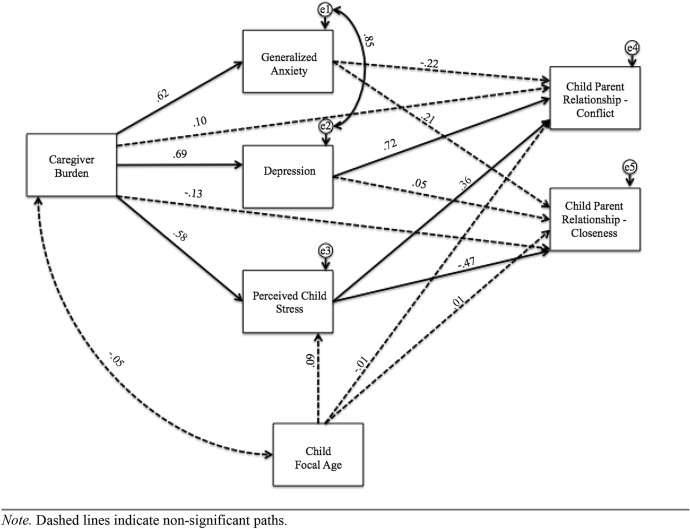
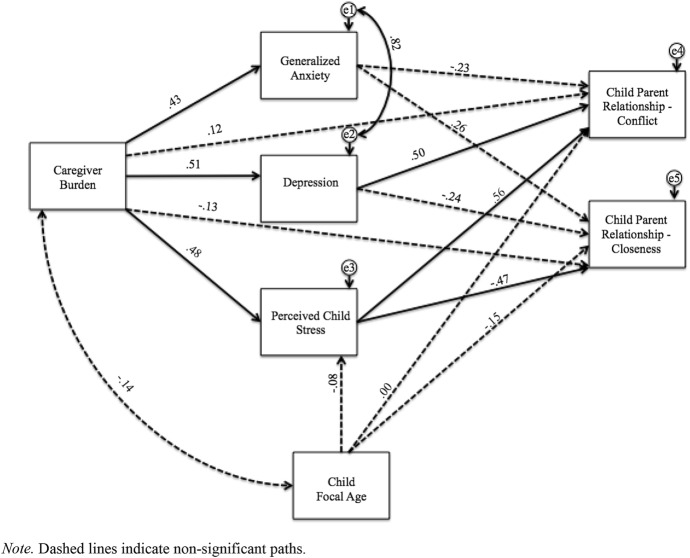
Research confirms that the mental health burdens following community-wide disasters are extensive, with pervasive impacts noted in individuals and families. It is clear that child disaster outcomes are worst among children of highly distressed caregivers, or those caregivers who experience their own negative mental health outcomes from the disaster. The current study used path analysis to examine concurrent patterns of parents' (n = 420) experience from a national sample during the early months of the U.S. COVID-19 pandemic. The results of a multi-group path analysis, organized by parent gender, indicate good fit to the data [X2(10) = 159.04, p < .01]. Results indicate significant linkages between parents' caregiver burden, mental health, and perceptions of children's stress; these in turn are significantly linked to child-parent closeness and conflict, indicating possible spillover effects for depressed parents and compensatory effects for anxious parents. The impact of millions of families sheltering in place during the COVID-19 pandemic for an undefined period of time may lead to unprecedented impacts on individuals' mental health with unknown impacts on child-parent relationships. These impacts may be heightened for families whose caregivers experience increased mental health symptoms, as was the case for fathers in the current sample.
Keywords: Anxiety; COVID-19; Caregiver burden; Depression; Parent–child relationship.
Figures