


An overview of the pathogenic mechanisms involved in severe cases of COVID-19 infection, and the proposal of salicyl-carnosine as a potential drug for its treatment
- PMID: 32750366
- PMCID: PMC7395637
- DOI: 10.1016/j.ejphar.2020.173457
An overview of the pathogenic mechanisms involved in severe cases of COVID-19 infection, and the proposal of salicyl-carnosine as a potential drug for its treatment
Abstract
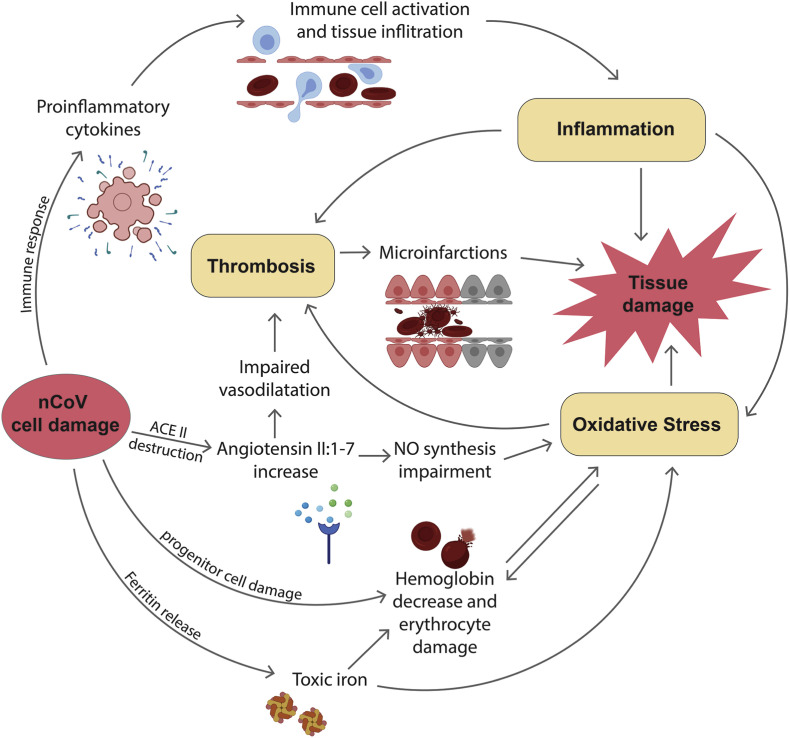
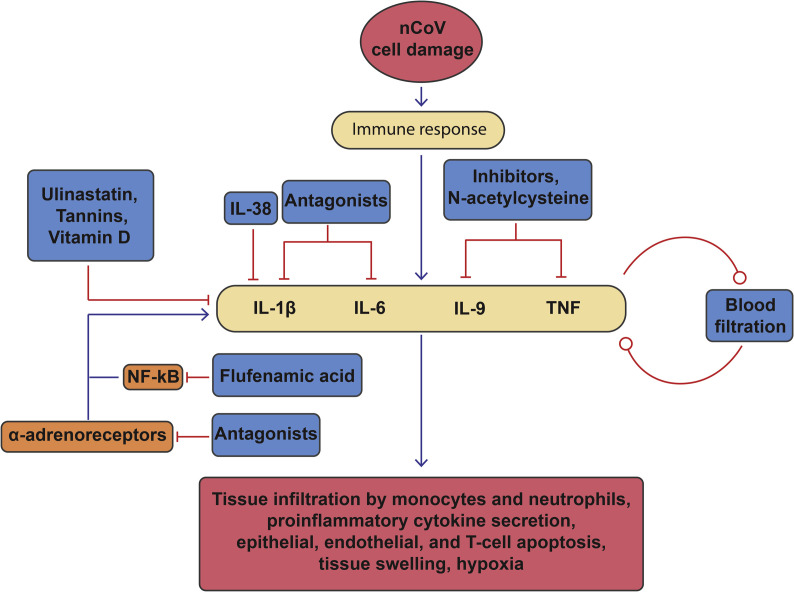
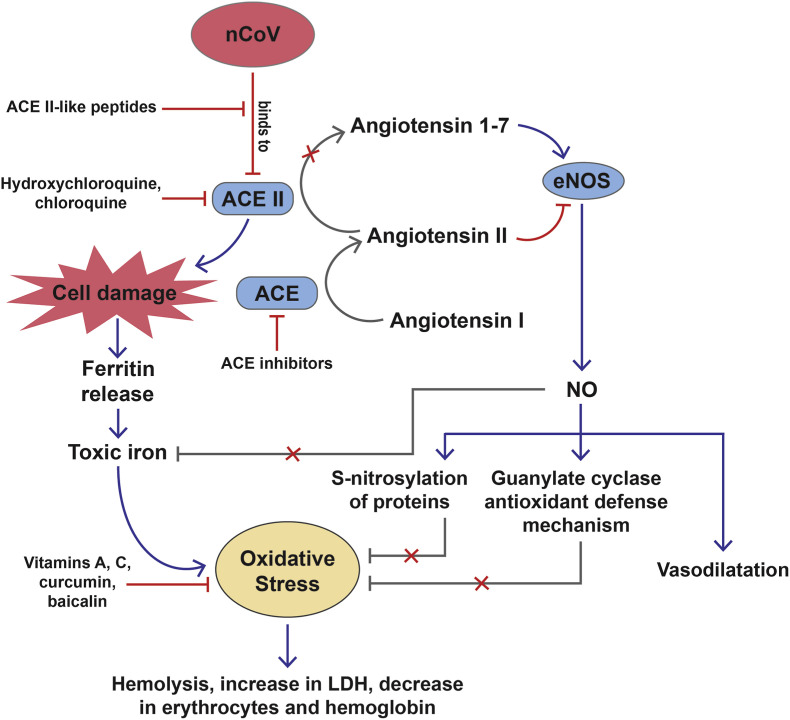
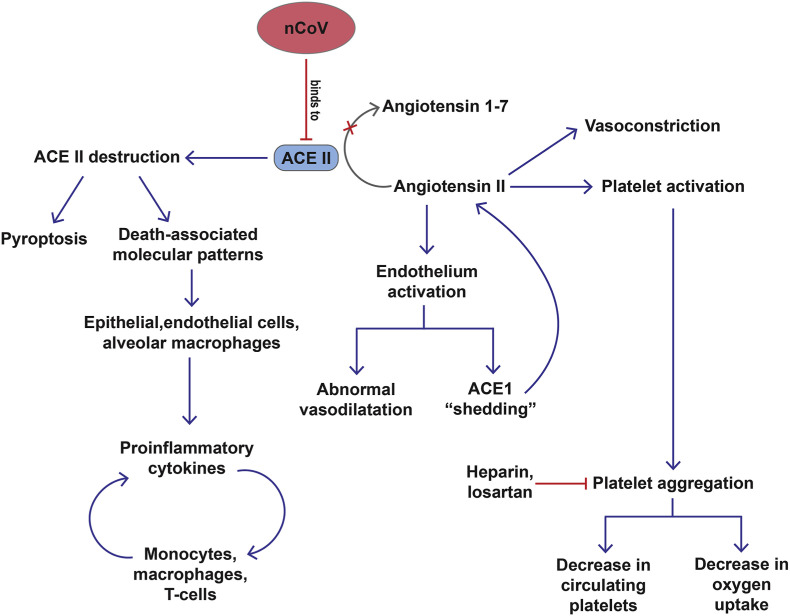
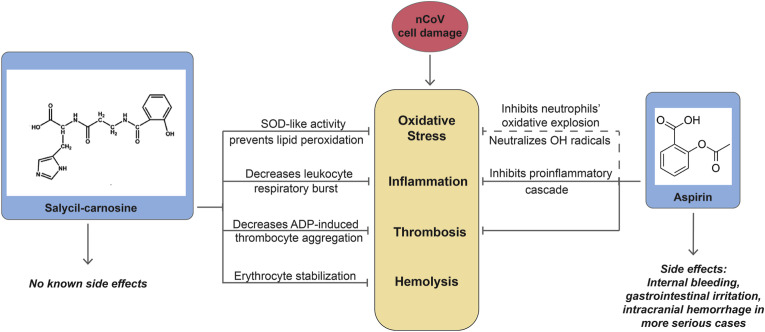
Multiple organ failure in COVID-19 patients is a serious problem which can result in a fatal outcome. Damage to organs and tissues, including general lung dysfunction, develops as a consequence of ischemia, which, in turn, is caused by thrombosis in small blood vessels and hypoxia, leading to oxidative stress and inflammation. Currently, research is underway to screen existing drugs for antioxidant, antiplatelet and anti-inflammatory properties. Having studied the available publications concerning the mechanisms of damage to tissues and organs of patients with COVID-19, as well as the available treatment strategies, we propose to investigate salicyl-carnosine as a potential drug for treating COVID-19 patients. In a recent study, we described the drug's synthesis procedure, and showed that salicyl-carnosine possesses antioxidant, anti-inflammatory, and antiplatelet effects. Therefore, it can simultaneously act on the three pathogenetic factors involved in tissue and organ damage in COVID-19. Thus, we propose to consider salicyl-carnosine as a potential drug for the treatment of patients with severe cases of COVID-19 infection.
Keywords: Aspirin; COVID-19; Inflammation; Oxidative stress; Salicyl-carnosine; Thrombosis.
Copyright © 2020 Elsevier B.V. All rights reserved.
Conflict of interest statement
The authors declare no competing interests.
Figures
References
-
- Adam F., Khatib A.M., Lopez J.J., Vatier C., Turpin S., Muscat A., Soulet F., Aries A., Jardin I., Bobe R., Stepanian A., de Prost D., Dray C., Rosado J.A., Valet P., Feve B., Siegfried G. Apelin: an antithrombotic factor that inhibits platelet function. Blood. 2016;127:908–920. doi: 10.1182/blood-2014-05-578781. - DOI - PubMed
-
- Berezhnoy D.S., Stvolinsky S.L., Lopachev A.V., Devyatov A.A., Lopacheva O.M., Kulikova O.I., Abaimov D.A., Fedorova T.N. Carnosine as an effective neuroprotector in brain pathology and potential neuromodulator in normal conditions. Amino Acids. 2019;51:139–150. doi: 10.1007/s00726-018-2667-7. - DOI - PubMed
-
- Buinitskaya Y.G., Roman, Wlodaver Clifford G., Kastsiuchenka Siarhei. Figshare Preprint; 2020. Highlights of COVID-19 Pathogenesis. Insights into Oxidative Damage.
Publication types
MeSH terms
Substances
LinkOut - more resources
Full Text Sources
