


BIRC5/Survivin Expression as a Non-Invasive Biomarker of Endometriosis
- PMID: 32751449
- PMCID: PMC7459871
- DOI: 10.3390/diagnostics10080533
BIRC5/Survivin Expression as a Non-Invasive Biomarker of Endometriosis
Abstract
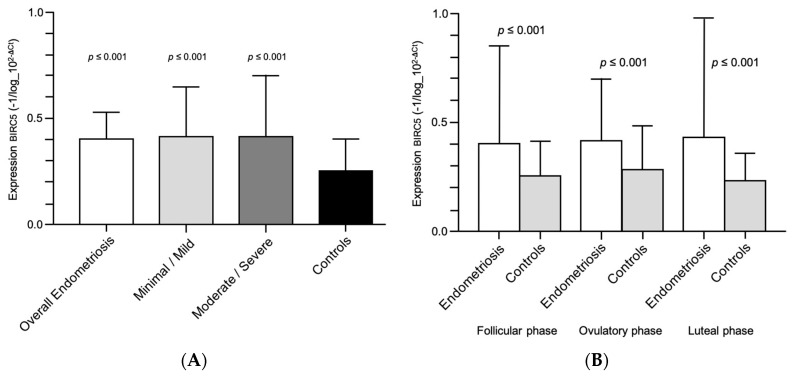
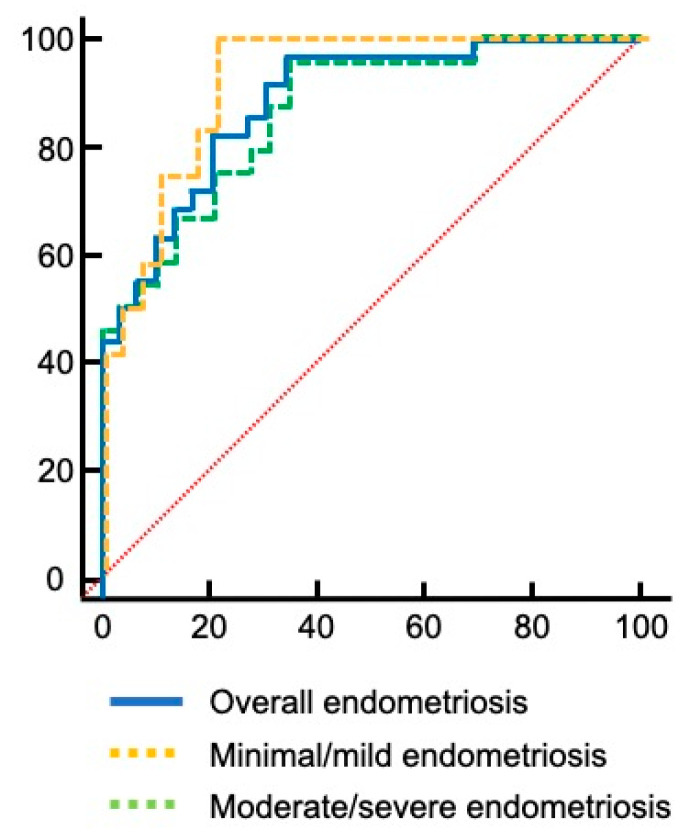
The etiology of endometriosis is highly complex, and although it is a benign disease, it has several biological behaviors similar to malignant lesions, including cell invasion, neo-angiogenesis, and decreased apoptosis. Survivin is a protein encoded by the BIRC5 gene that plays a role in cell division by inhibiting apoptosis and regulating the process of mitosis in embryonic and cancer cells. Therefore, we aimed to evaluate the expression of BIRC5 in samples of peripheral blood of women with and without endometriosis. This study comprised of 40 women with endometriosis and 10 healthy women as controls. Peripheral blood samples were collected in the three phases of the menstrual cycle (follicular, ovulatory, and luteal). The expression of the BIRC5 gene was evaluated by RT-qPCR using the TaqMan methodology. The BIRC5 expression was significantly higher in all phases of the menstrual cycle in women with endometriosis, regardless of the disease stage. The accuracy of BIRC5 expression in the peripheral blood for the diagnosis endometriosis presented AUC of 0.887 (p < 0.001), with 97.2% of sensitivity and specificity of 65.5% considering the overall endometriosis group. Regarding the minimal/mild endometriosis group, the AUC presented a value of 0.925 (p < 0.001), with 100% of sensitivity and 79.3% of specificity, whereas in the moderate/severe endometriosis group the AUC was 0.868 (p < 0.001), with a sensitivity of 95.8% and specificity of 65.5%. These findings suggest that the expression of BIRC5 may be a potential noninvasive biomarker for the diagnosis of endometriosis.
Keywords: BIRC5; apoptosis; endometriosis; inhibitor of apoptosis protein; survivin.
Conflict of interest statement
The authors declare no conflict of interest.
Figures
References
LinkOut - more resources
Full Text Sources
