


Spectrum and Antibiotic Resistance of Uropathogens in Romanian Females
- PMID: 32752222
- PMCID: PMC7459805
- DOI: 10.3390/antibiotics9080472
Spectrum and Antibiotic Resistance of Uropathogens in Romanian Females
Abstract
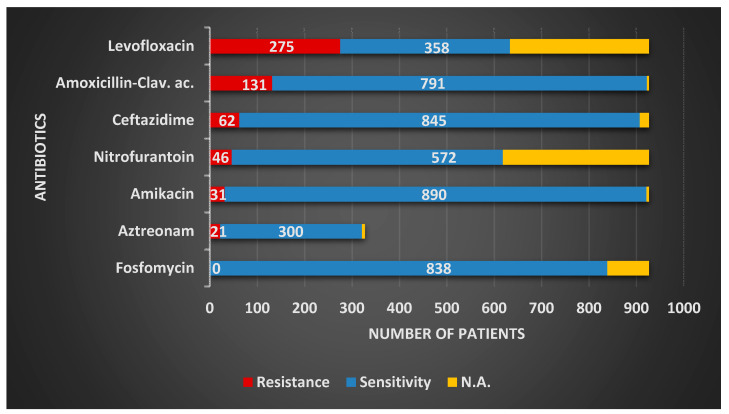
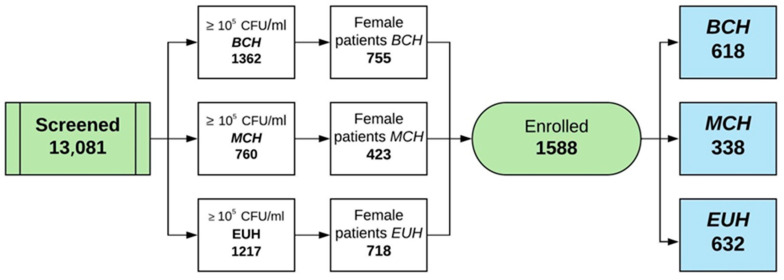
Urinary tract infections (UTIs) in women represent a common bacteriological finding, with negligible recent and consistent research on antimicrobial resistance (AMR) in the female population. We designed a retrospective study to observe the incidence of frequent uropathogens and their resistance rates to common antibiotics. We elaborated multicenter research in three different teaching hospitals in Romania, analyzing 13,081 urine samples, of which 1588 met the criteria of inclusion. Escherichia coli (58.37%) was the most frequent Gram-negative uropathogen, presenting high resistance rates to levofloxacin (R = 29.66%), amoxicillin-clavulanic ac. (R = 14.13%), and ceftazidime (R = 6.68%). We found good sensitivity to imipenem and meropenem (both 98.16%), amikacin (S = 96.0%), and fosfomycin (S = 90.39%). The second most prevalent uropathogen was Klebsiella (16.93%), with the highest resistance quota to amoxicillin-clavulanic ac. (R = 28.62%), levofloxacin and nitrofurantoin (both R = 15.61%), and ceftazidime (R = 15.24%), and good sensitivity to imipenem (S = 93.93%), meropenem (S = 91.91%), and amikacin (S = 88.47%). Enterococcus (13.35%) was the most encountered Gram-positive pathogen. It proved the highest resistance to levofloxacin (R = 32.07%), penicillin (R = 32.07%), and ampicillin (R = 14.62%) and good sensitivity to vancomycin (S = 91.98%), fosfomycin (S = 94.4%), and nitrofurantoin (S = 89.15%). Considering the lack of recent and consistent data on this topic, we find our survey a valuable starting research study in this area with high significance for an accurate clinical approach.
Keywords: AMR; Escherichia coli; Romania; antibiotic resistance; female population; levofloxacin; urinary tract infections; uropathogens.
Conflict of interest statement
The authors declare no conflict of interest.
Figures
References
LinkOut - more resources
Full Text Sources
Miscellaneous
