


The Psychological Impact of the COVID-19 Outbreak on Health Professionals: A Cross-Sectional Study
- PMID: 32754102
- PMCID: PMC7366071
- DOI: 10.3389/fpsyg.2020.01684
The Psychological Impact of the COVID-19 Outbreak on Health Professionals: A Cross-Sectional Study
Abstract
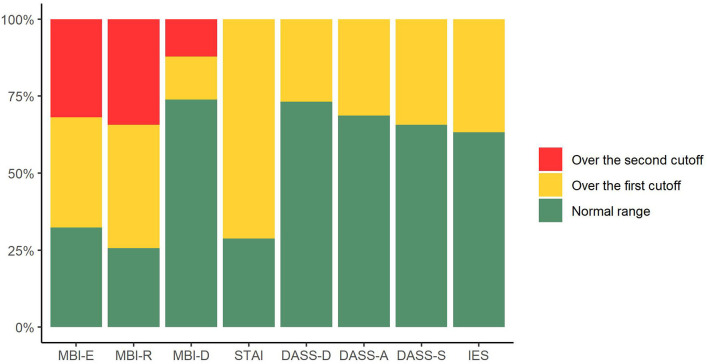
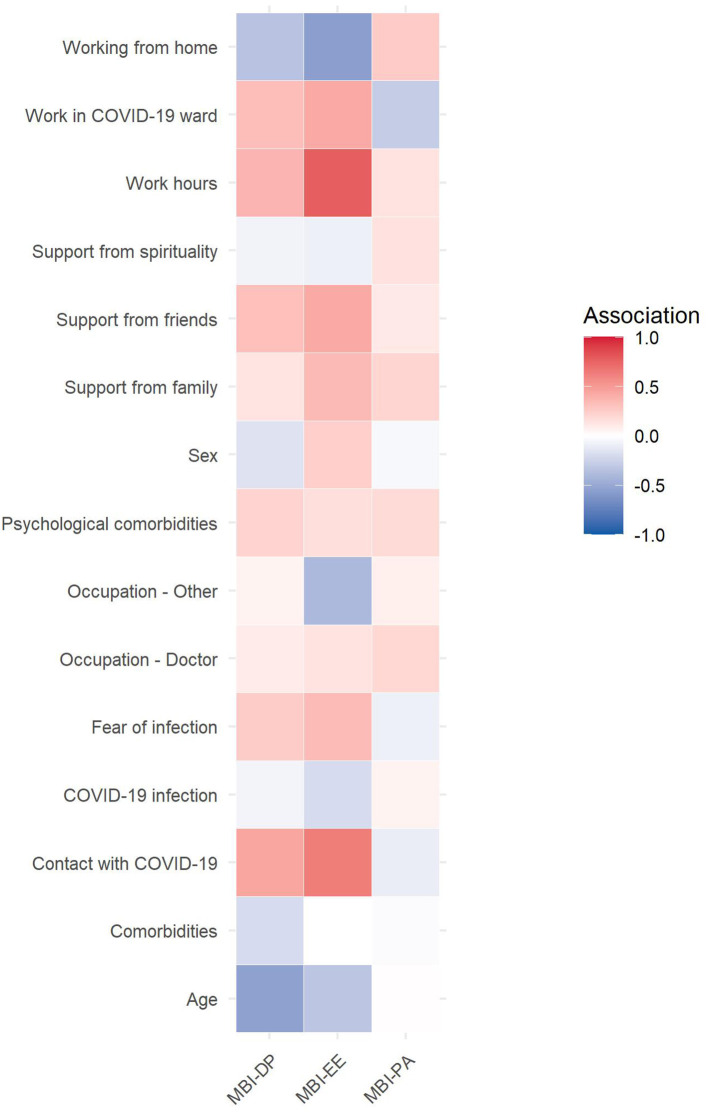
Background: The COVID-19 pandemic had a massive impact on health care systems, increasing the risks of psychological distress in health professionals. This study aims at assessing the prevalence of burnout and psychopathological conditions in health professionals working in a health institution in the Northern Italy, and to identify socio-demographic, work-related and psychological predictors of burnout. Methods: Health professionals working in the hospitals of the Istituto Auxologico Italiano were asked to participate to an online anonymous survey investigating socio-demographic data, COVID-19 emergency-related work and psychological factors, state anxiety, psychological distress, post-traumatic symptoms and burnout. Predictors of the three components of burnout were assessed using elastic net regression models. Results: Three hundred and thirty health professionals participated to the online survey. Two hundred and thirty-five health professionals (71.2%) had scores of state anxiety above the clinical cutoff, 88 (26.8%) had clinical levels of depression, 103 (31.3%) of anxiety, 113 (34.3%) of stress, 121 (36.7%) of post-traumatic stress. Regarding burnout, 107 (35.7%) had moderate and 105 (31.9%) severe levels of emotional exhaustion; 46 (14.0%) had moderate and 40 (12.1%) severe levels of depersonalization; 132 (40.1%) had moderate and 113 (34.3%) severe levels of reduced personal accomplishment. Predictors of all the three components of burnout were work hours, psychological comorbidities, fear of infection and perceived support by friends. Predictors of both emotional exhaustion and depersonalization were female gender, being a nurse, working in the hospital, being in contact with COVID-19 patients. Reduced personal accomplishment was also predicted by age. Conclusions: Health professionals had high levels of burnout and psychological symptoms during the COVID-19 emergency. Monitoring and timely treatment of these conditions is needed.
Keywords: COVID-19; anxiety; burnout; clinical psychology; cross-sectional study; depression; post-traumatic stress; predictors.
Copyright © 2020 Giusti, Pedroli, D'Aniello, Stramba Badiale, Pietrabissa, Manna, Stramba Badiale, Riva, Castelnuovo and Molinari.
Figures
References
LinkOut - more resources
Full Text Sources
