


Evaluation and diagnostic usefulness of saliva for detection of HIV antibodies: A cross-sectional study
- PMID: 32754516
- PMCID: PMC7380795
- DOI: 10.4103/jfmpc.jfmpc_138_20
Evaluation and diagnostic usefulness of saliva for detection of HIV antibodies: A cross-sectional study
Abstract
Background: Use of saliva as a specimen for detection of antibodies to infectious agents has generated particular interest in AIDS research community since 1980s. HIV specific antibodies of immunoglobulin isotypes IgA, IgG, and IgM are readily found in salivary secretions.
Aim and objectives: In the present study, HIV specific antibodies were detected in saliva and serum samples of HIV patients by ELISA in confirmed HIV seropositive patients and efficacy of saliva was established in diagnosis of HIV.
Methods: The 100 saliva and serum samples were collected from age and sex matched confirmed HIV seropositive subjects and 100 Healthy Controls without any infections. HIV antibodies were determined by enzyme-linked immunosorbent assay (ELISA) using Genscreen HIV 1/2 Kit.
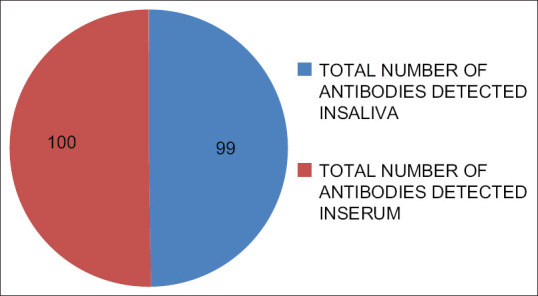
Results: The results were found to be 99% sensitive and 100% specific for saliva samples, while it was 100% sensitive and specific for serum samples.
Conclusion: Saliva can be used as alternative to blood for detection of HIV antibodies as saliva collection is painless, non-invasive, inexpensive, simple, and rapid. Salivary antibody testing may provide better access to epidemic outbreaks, children, large populations, hard-to-reach risk groups and may thus play a major role in the surveillance and control of highly infectious diseases.
Keywords: Antibodies; HIV; saliva; serum.
Copyright: © 2020 Journal of Family Medicine and Primary Care.
Conflict of interest statement
There are no conflicts of interest.
Figures
References
-
- UNAIDS data 2018. Available from: http://wwwunaidsorg .
-
- Chinnapolamada JR, Chiranjeevi SA, Tupalli AR, Erugula SR. ‘Sialodiagnosing’ HIV infection: A dissected review. J Indian Acad Oral Med Radiol. 2015;27:213–8.
-
- Greenspan JS, Greenspan D. Oral Manifestations of HIV Infection. In: Campo J, Perea MA, Romero J, Cano J, Hernando V, Bascones A, editors. Oral Transmission of HIV, reality or fiction An update Oral Dis 1997. Vol. 12. Hong Kong: Quintessence Publishers; 2006. pp. 219–28. - PubMed
LinkOut - more resources
Full Text Sources
Miscellaneous