


Efficacy of GAD-alum immunotherapy associated with HLA-DR3-DQ2 in recently diagnosed type 1 diabetes
- PMID: 32754804
- PMCID: PMC7476912
- DOI: 10.1007/s00125-020-05227-z
Efficacy of GAD-alum immunotherapy associated with HLA-DR3-DQ2 in recently diagnosed type 1 diabetes
Abstract
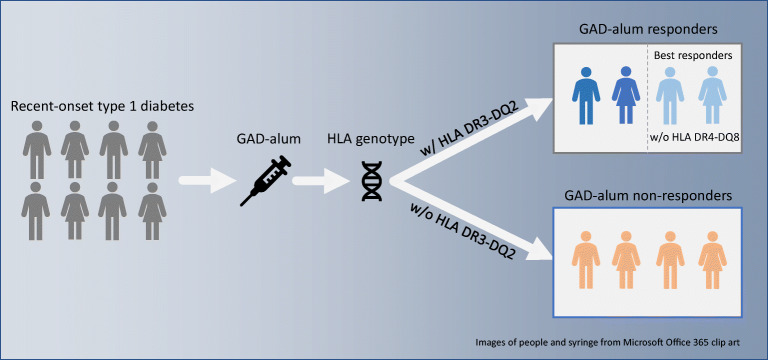
Aims/hypothesis: The aim of this study was to determine if retention of C-peptide following immunotherapy using recombinant GAD65 conjugated to aluminium hydroxide (GAD-alum) is influenced by HLA risk haplotypes DR3-DQ2 and DR4-DQ8.
Methods: HLA-dependent treatment effect of GAD-alum therapy on C-peptide retention in individuals with recent-onset type 1 diabetes was evaluated using individual-level patient data from three placebo-controlled, randomised clinical trials using a mixed repeated measures model.
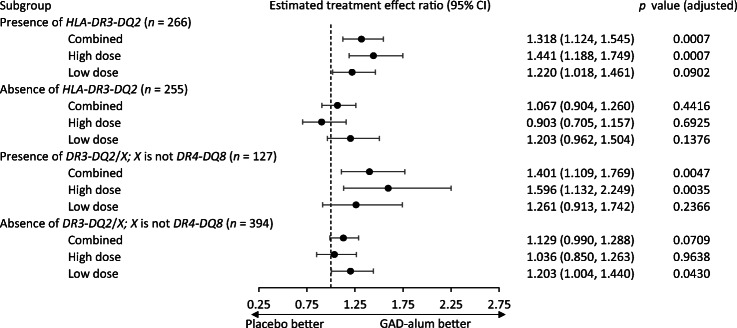
Results: A significant and dose-dependent effect was observed in individuals positive for the genotypes that include HLA-DR3-DQ2 but not HLA-DR4-DQ8 and in the broader subgroup of individuals positive for all genotypes that include HLA-DR3-DQ2 (i.e. including those also positive for HLA-DR4-DQ8). Higher doses (three or four injections) showed a treatment effect ratio of 1.596 (95% CI 1.132, 2.249; adjusted p = 0.0035) and 1.441 (95% CI 1.188, 1.749; adjusted p = 0.0007) vs placebo for the two respective HLA subgroups.
Conclusions/interpretation: GAD65-specific immunotherapy has a significant effect on C-peptide retention in individuals with recent-onset type 1 diabetes who have the DR3-DQ2 haplotype. Graphical abstract.
Keywords: Antigen-specific; Autoimmune diabetes; C-peptide; GAD; Glutamic acid decarboxylase; HLA; Immunotherapy; Type 1 diabetes; Vaccine.
Figures
References
Publication types
MeSH terms
Substances
LinkOut - more resources
Full Text Sources
Other Literature Sources
Medical
Research Materials
