. 2020 Aug 4;32(5):107981.
doi: 10.1016/j.celrep.2020.107981.

Immune Monitoring Reveals Fusion Peptide Priming to Imprint Cross-Clade HIV-Neutralizing Responses with a Characteristic Early B Cell Signature

Affiliations

Immune Monitoring Reveals Fusion Peptide Priming to Imprint Cross-Clade HIV-Neutralizing Responses with a Characteristic Early B Cell Signature

Cheng Cheng et al. Cell Rep. .

Abstract

The HIV fusion peptide (FP) is a promising vaccine target. FP-directed monoclonal antibodies from vaccinated macaques have been identified that neutralize up to ∼60% of HIV strains; these vaccinations, however, have involved ∼1 year with an extended neutralization-eclipse phase without measurable serum neutralization. Here, in 32 macaques, we test seven vaccination regimens, each comprising multiple immunizations of FP-carrier conjugates and HIV envelope (Env) trimers. Comparisons of vaccine regimens reveal FP-carrier conjugates to imprint cross-clade neutralizing responses and a cocktail of FP conjugate and Env trimer to elicit the earliest broad responses. We identify a signature, appearing as early as week 6 and involving the frequency of B cells recognizing both FP and Env trimer, predictive of vaccine-elicited breadth ∼1 year later. Immune monitoring of B cells in response to vaccination can thus enable vaccine insights even in the absence of serum neutralization, here identifying FP imprinting, cocktail approach, and early signature as means to improve FP-directed vaccine responses.

Keywords: HIV vaccine; NHP; early signature; envelope trimer; fusion peptide; immune monitoring; immunization regimen; immunogen cocktail; imprinting; prime-boost immunization.


Conflict of interest statement

Declaration of Interests The authors declare no competing interests.

Figures
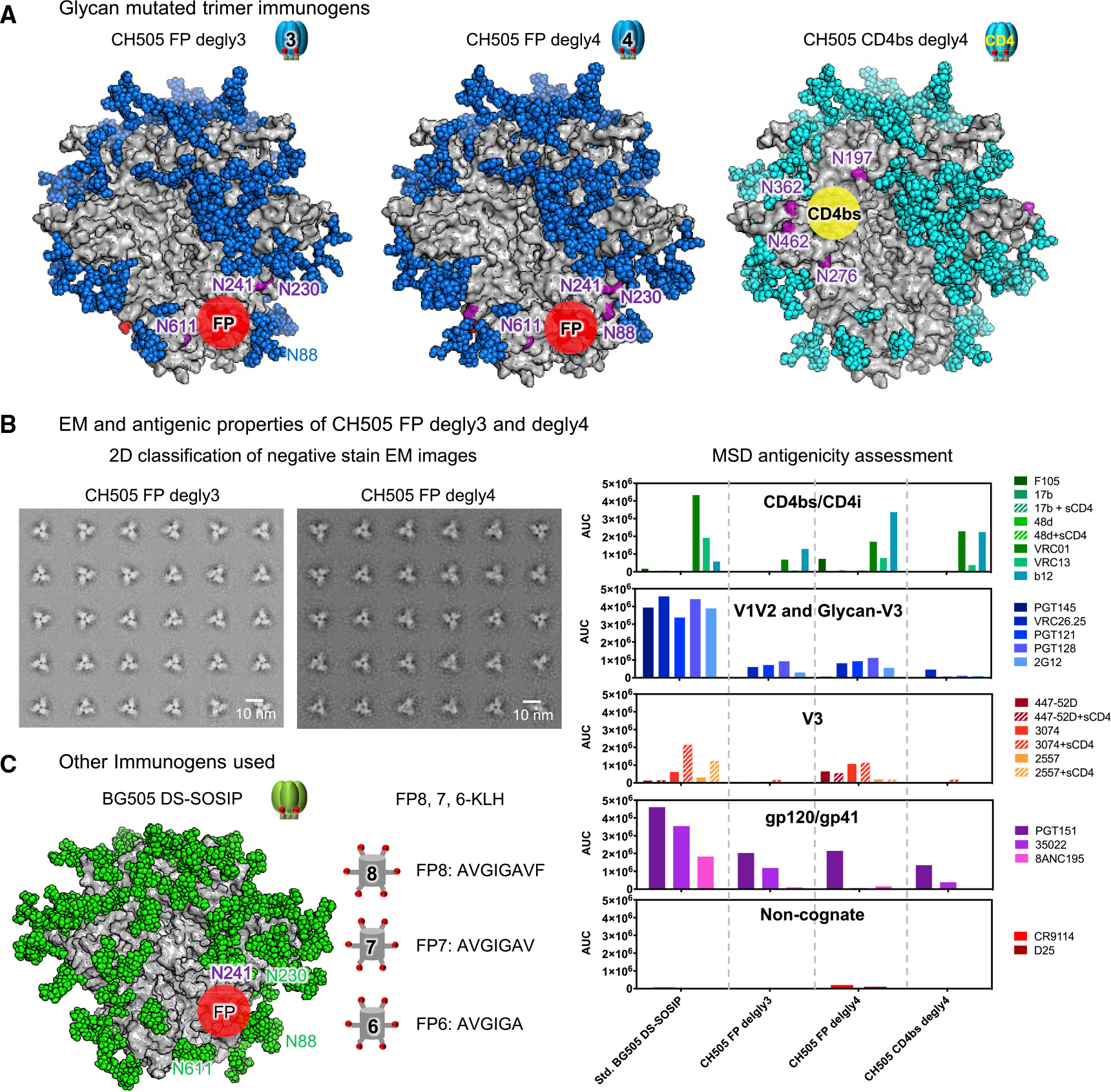
Figure 1.
Figure 1.. Immunogen Design and Characterization
(A) Glycan mutant trimer immunogens. Surface view of the three glycan-deleted CH505 Env-trimer constructs used in this paper. Env protein surface is colored in gray. Deleted N-linked glycans near FP and CD4bs to expose FP or CD4bs are labeled in purple. All other glycans are shown in either blue or cyan to match the immunogen symbols used in other figures. (B) Physical and antigenic properties of CH505 FP degly3 and degly4. (C) BG505 Env trimer and FP8–7-6-KLH are shown schematically. Env protein is colored gray, while glycans are colored green.
Figure 2.
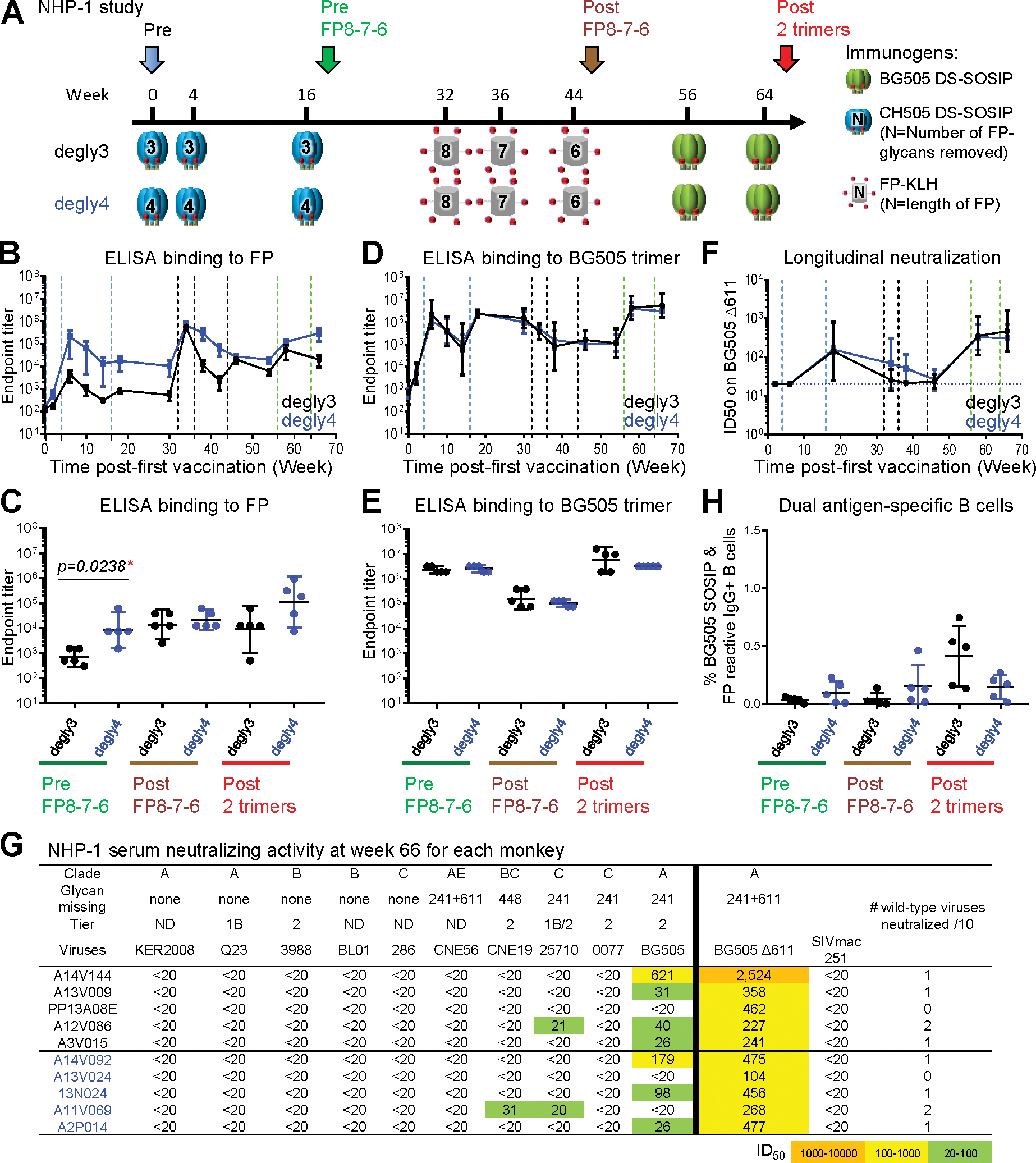
Figure 2.. Immunizations Using Trimers with Deleted FP-Proximal Glycans Consistently Induce FP-Directed Responses, but with Low Neutralizing Breadth
(A) Immunization schema. Two groups of animals were primed with three immunizations of CH505 degly3 or degly4, followed by a FP8–7-6-trimer-trimer boosting module. Key time points before immunization (Pre), before FP-KLH immunization (Pre FP8–7-6), after FP-KLH immunization (Post FP8–7-6), and the end of the study (Post two trimers) are indicated with different-colored arrows. (B and D) ELISA IgG endpoint titers of serum antibodies binding to FP (B) or BG505 trimer (D). Vertical dashed lines represent immunizations. (C and E) Comparison of serum antibody endpoint titers at three key time points to FP (C) or BG505 trimer (E). (F) Comparison of the kinetics of the two groups on serum neutralization titers against BG505 Δ611 after the first immunization. Horizontal dashed line indicates minimum detection level. (G) Neutralization ID50 titers on the 10-virus panel and BG505 Δ611 at week 66. Monkey ID is listed in the first column in black or blue letters representing the two groups. All FP8 sequences in the 10-strain panel were AVGIGAVF, the same as the immunogen, except 0077 (FP8:AVGIGAMF) and CNE56 (FP8:AVGIGAMI); this 10-strain panel was chosen as a sensitive means to detect neutralization by FP-targeting antibodies (Xu et al., 2018). ND, virus tier status has not been determined. (H) Frequency of FP+/BG505+ B cells at three key time points as mean ± SD. For all panels with error bars, geometric mean ± 95% CI are shown except where noted. p values calculated with Mann-Whitney two-tailed t test: *p < 0.05; **p < 0.01; ***p < 0.001; ****p < 0.0001. See also Figures S2–S6 and Tables S1 and S2.
Figure 3.
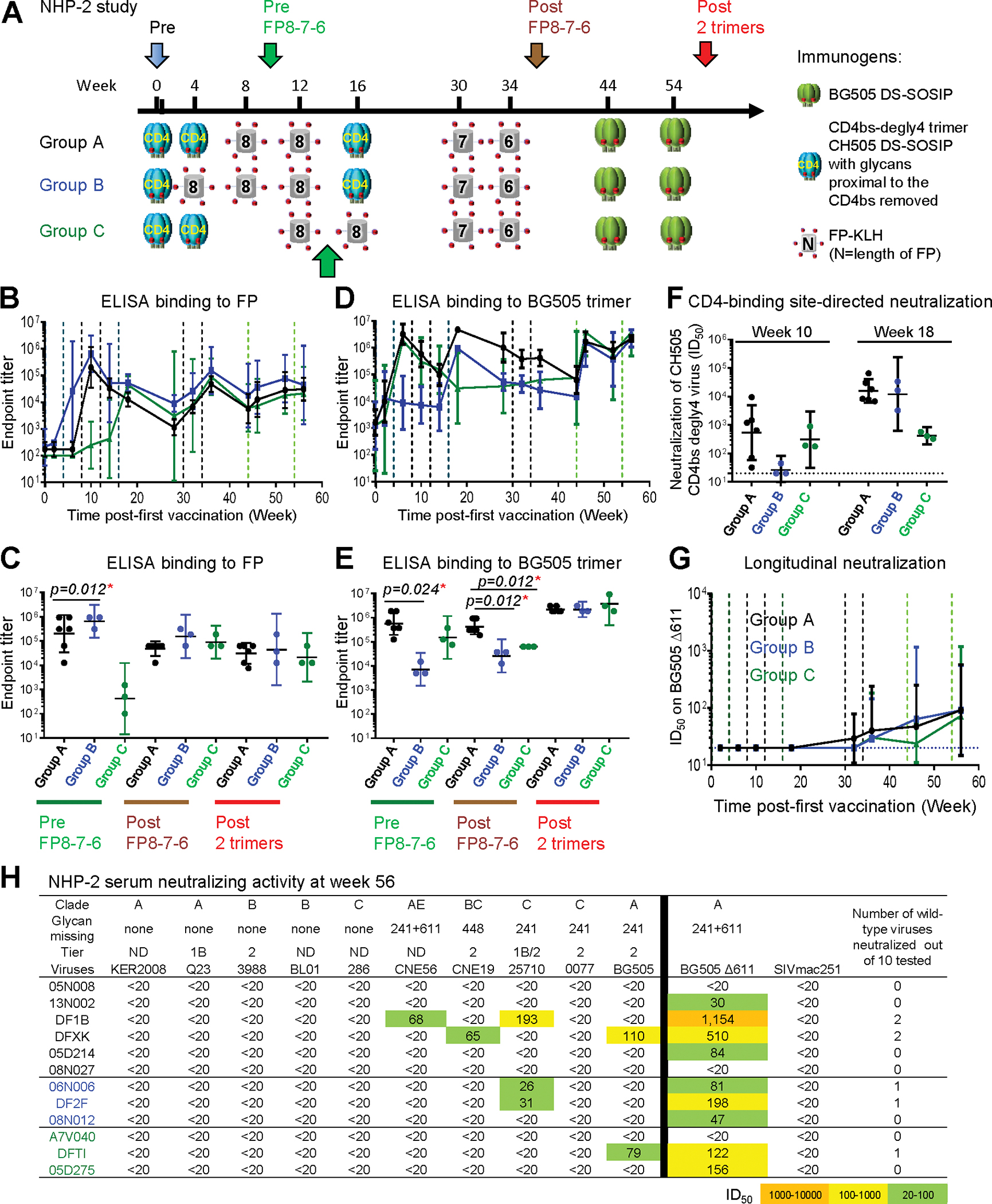
Figure 3.. Dual Targeting of CD4bs and FP Yields Consistent CD4bs-Directed and Sporadic FP-Directed Neutralizing Responses
(A) Immunization schema. Key time points for analysis are indicated with colored arrows. (B and D) ELISA IgG endpoint serum titers for binding FP (B) or BG505 trimer (D). Vertical dashed lines represent immunizations. (C and E) Comparison of the three groups for serum endpoint titer to FP (C) or BG505 trimer (E) at three key time points. (F) Neutralization ID50 titers of week 10 and 18 sera on CH505 CD4bs-degly4 virus. Horizontal dashed line indicates minimum detection level. (G) Comparison of the three groups on serum neutralization against BG505 Δ611 over the course of the study. (H) Neutralization ID50 titers on the 10-virus panel and BG505 D611 at the end of the study. This 10-strain panel was chosen as a sensitive means to detect neutralization by FP-targeting antibodies (Xu et al., 2018). Geometric mean ± 95% CI are shown. p values were calculated with Mann-Whitney two-tailed t test: *p < 0.05. ND, virus tier status has not been determined. See also Figures S2–S6 and Tables S1 and S3.
Figure 4.
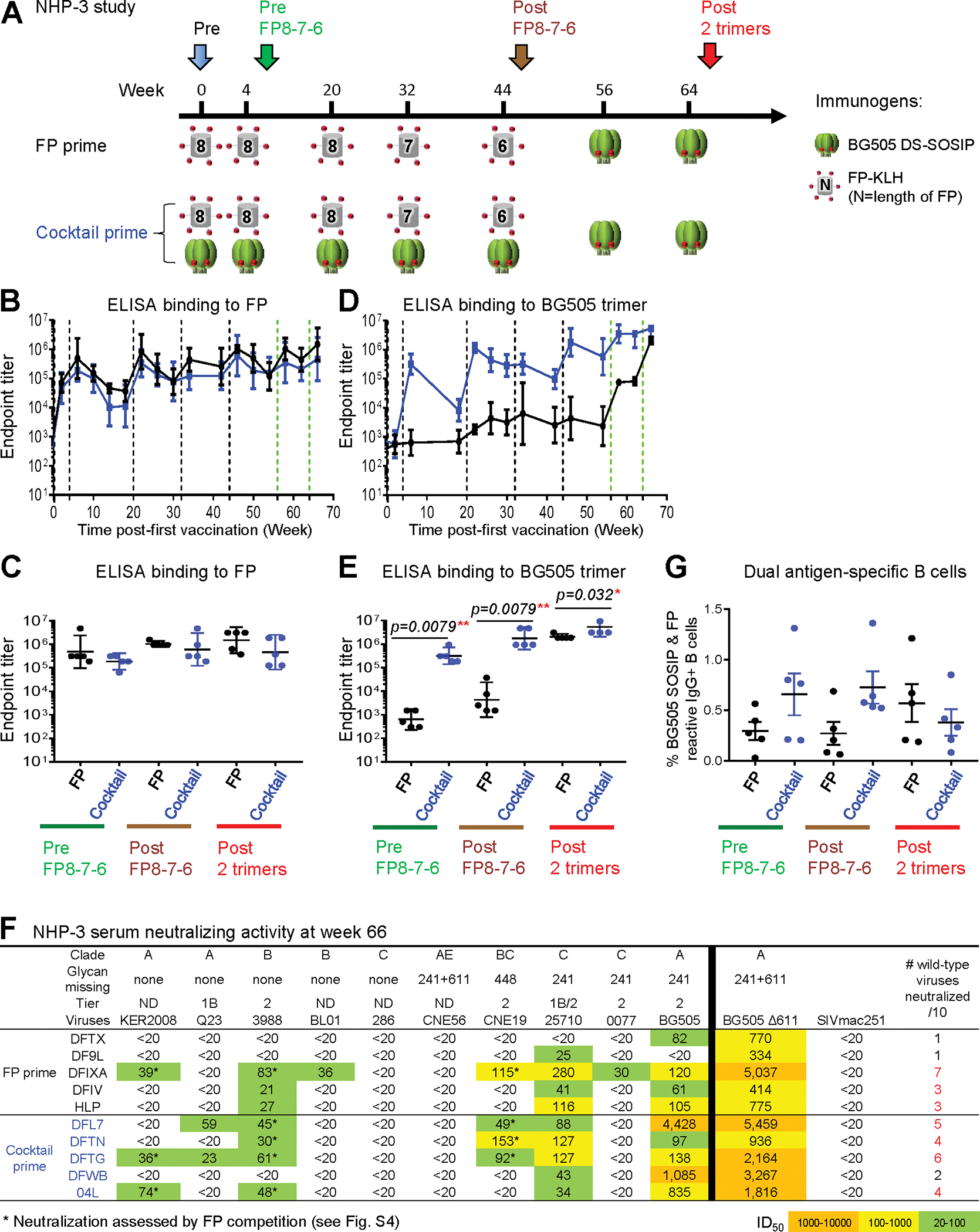
Figure 4.. Priming with FP-KLH, either Alone or in a Cocktail with Env Trimer, Induces Cross-Clade Neutralizing Responses
(A) Immunization schema. (B and D) ELISA IgG endpoint serum titers for binding FP8 (B) or BG505 trimer (D). Vertical dashed lines represent immunizations. (C and E) Comparison of the FP and cocktail groups for serum endpoint titer to FP (C) or BG505 trimer (E) at three key time points. (F) Serum neutralization ID50 titers on the 10-virus panel and BG505 D611 at the end of the study in each monkey. This 10-strain panel was chosen as a sensitive means to detect neutralization by FP-targeting antibodies (Xu et al., 2018). ND, virus tier status has not been determined. In the last column, red numbers indicate serum neutralization of three or more wild-type viruses on the 10-strain panel. Asterisks indicates neutralization assessed by FP competition. (G) Frequency of FP+/BG505+ B cells at three key time points. Geometric mean ± 95% CI are shown, except in (G), which shows mean ± SD. p values were calculated with Mann-Whitney two-tailed t test: *p < 0.05; **p < 0.01; ***p < 0.001; ****p < 0.0001. See also Figures S1–S6 and Tables S1, S4, and S5.
Figure 5.
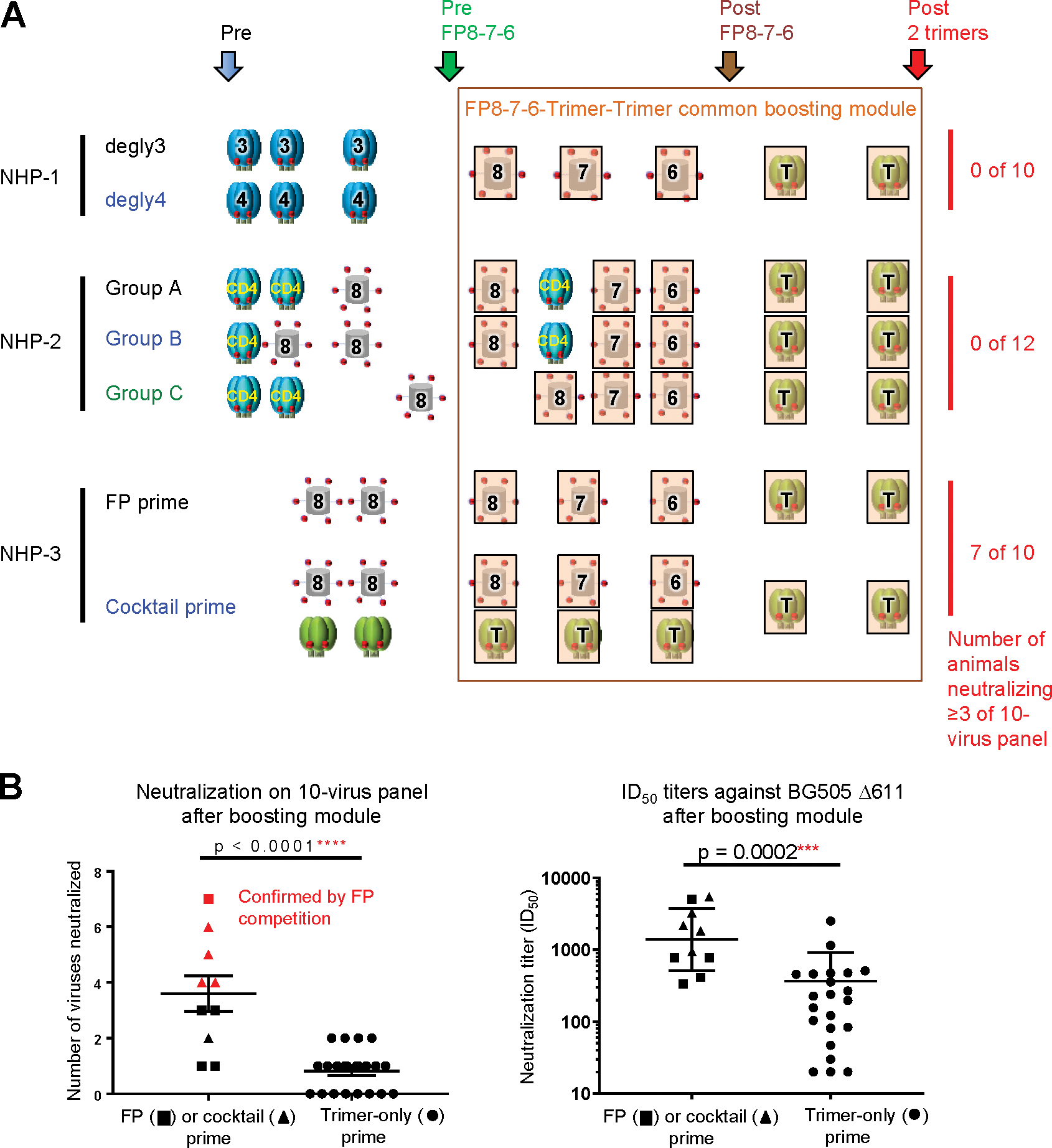
Figure 5.. Comparison of Different Vaccine Regimens that Use a Common Boosting Module Reveals FP or FP-Trimer Cocktail Priming to Imprint Broad FP-Directed HIV-Neutralizing Responses
(A) Summary of the seven vaccine groups with shared key time points for analysis. Number of animals in each study with serum neutralization of at least three viruses on the 10-strain panel are listed on the right column. Key time points are indicated by colored arrows, and the common bosting module is outlined in brown. (B) Comparison of neutralization breadth and titers after boosting module based on prime regimen. Neutralizing breadth at the end of the studies on the 10-virus panel and ID50 against BG505 D611 elicited with FP (squares) or cocktail (triangles) priming or trimer-only priming (circles) are shown. Mean ± SEM are shown for breadth, and geometric mean and SD are shown for ID50. p values were calculated with two-tailed, non-parametric Mann-Whitney t test. Points shown in red correspond to NHPs for which FP-directed neutralization has been confirmed by FP competition. See also Figures S1–S3 and S6 and Tables S4 and S5.
Figure 6.
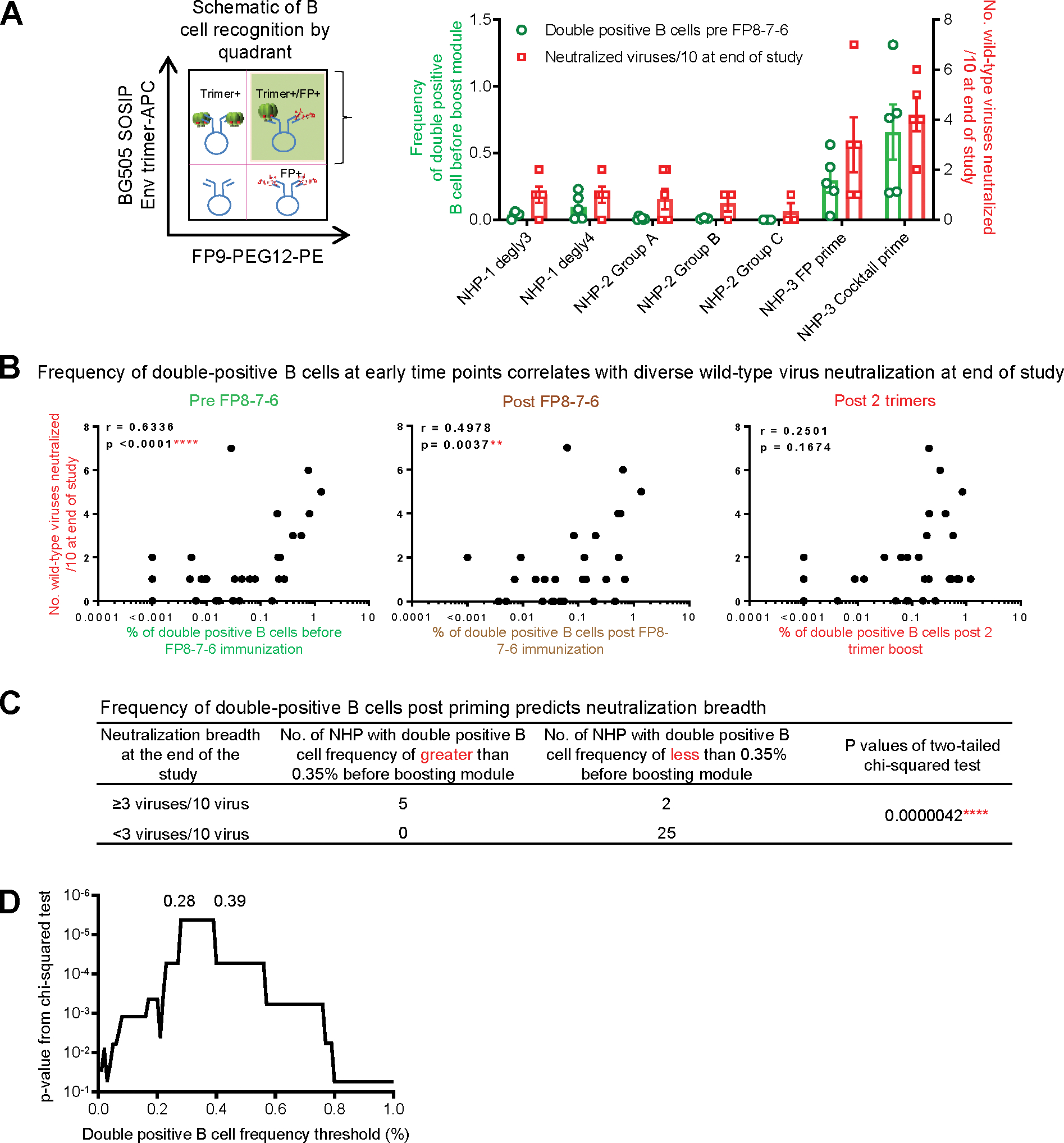
Figure 6.. Identification of an Early B Cell Signature that Correlates with FP-Directed Vaccine Outcome
(A) Left: Schematic quadrant based on probe specific binding by IgG+ B cells to BG505 SOSIP and FP peptide highlighting the double-positive quadrant (shaded) corresponding to dual antigen-specific B cells. Right: Frequency of double-positive B cells at pre FP8–7-6 and neutralization breadth on the 10-virus panel at the end of the study from seven immunization regimens. (B) Correlation of FP+/BG505+ double-positive B cells at pre FP8–7-6, post FP8–7-6, and post 2 trimer boost with neutralizing activity on the 10-virus panel at the end of the study. (C) NHPs with frequency of FP+/BG505++ B cells >0.35% at pre FP8–7-6 are more likely to have a higher neutralization activity at the end of the study. (D) Distribution of p value from (C) relative to frequency of double-positive B cells before FP8–7-6 immunization. For (A), neutralization breadths and B cell frequencies were calculated as mean ± SEM. For (B), r and p values were calculated with two-tailed Pearson correlation analysis. For (C) and (D), p values were calculated with the chi-square test. See also Figures S3 and S6.

References

    1. Akondy RS, Fitch M, Edupuganti S, Yang S, Kissick HT, Li KW, Youngblood BA, Abdelsamed HA, McGuire DJ, Cohen KW, et al. (2017). Origin and differentiation of human memory CD8 T cells after vaccination. Nature 552, 362–367. - PMC - PubMed
    1. Andrabi R, Bhiman JN, and Burton DR (2018). Strategies for a multi-stage neutralizing antibody-based HIV vaccine. Curr. Opin. Immunol. 53, 143–151. - PMC - PubMed
    1. Blattner C, Lee JH, Sliepen K, Derking R, Falkowska E, de la Peña AT, Cupo A, Julien JP, van Gils M, Lee PS, et al. (2014). Structural delineation of a quaternary, cleavage-dependent epitope at the gp41-gp120 interface on intact HIV-1 Env trimers. Immunity 40, 669–680. - PMC - PubMed
    1. Bonsignori M, Liao HX, Gao F, Williams WB, Alam SM, Montefiori DC, and Haynes BF (2017). Antibody-virus co-evolution in HIV infection: paths for HIV vaccine development. Immunol. Rev. 275, 145–160. - PMC - PubMed
    1. Burton DR (2002). Antibodies, viruses and vaccines. Nat. Rev. Immunol. 2, 706–713. - PubMed

Publication types

LinkOut - more resources