


Classification and treatment of lateral malleolar fractures - a single-center analysis of 439 ankle fractures using the Swedish Fracture Register
- PMID: 32758193
- PMCID: PMC7409659
- DOI: 10.1186/s12891-020-03542-5
Classification and treatment of lateral malleolar fractures - a single-center analysis of 439 ankle fractures using the Swedish Fracture Register
Abstract
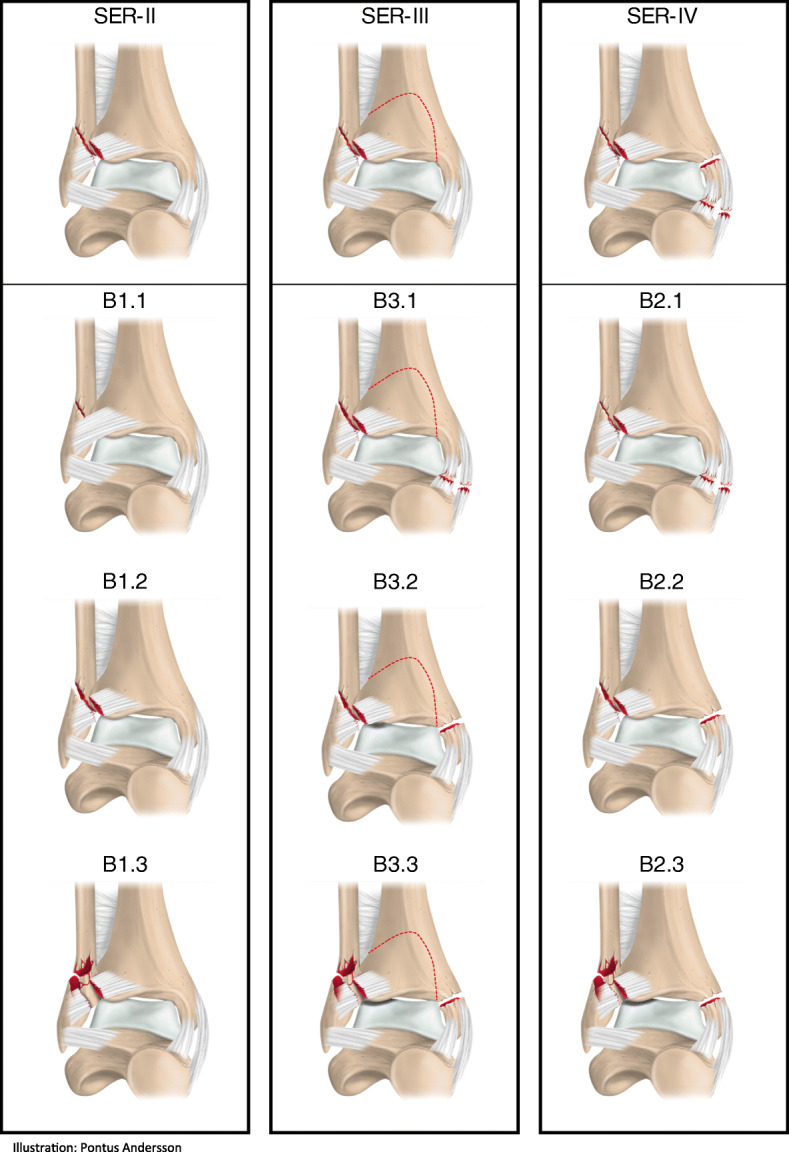
Background: The decision regarding which trans syndesmotic ankle fractures to treat surgically and which to treat non-surgically is a matter of debate. The aim of this study was to describe the epidemiology of ankle fractures treated at Sahlgrenska University Hospital (SU) during a 2-year period and analyze the current diagnostic process, classification and choice of treatment for lateral malleolar fractures at the level of the syndesmosis.
Methods: Observational data regarding all ankle fractures treated at SU between 1 April 2012 and 31 March 2014 was collected from the Swedish Fracture Register. For identified AO/OTA44-B1 fractures, medical records and radiographs were reviewed and analyzed.
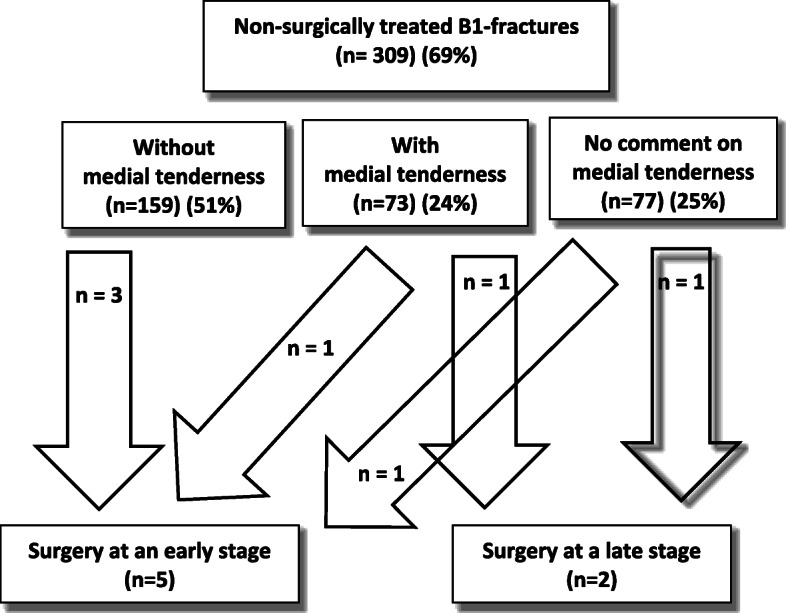
Results: The study included 1332 ankle fractures. 838 (63%) were B-fractures and 512 (38%) of these were B1 fractures. 439 of the patients with B1 fractures were included in the detailed study and of these 309 (70%) were treated non-surgically and 130 patients (30%) surgically. According to the preoperative physical examination described in the medical records, medial tenderness was found in 73 (24%) of the non-surgically treated patients. Among the surgically treated patients 18% (n = 24) were found to have no medial tenderness. For the non-surgically treated patients with medial tenderness, the treatment plan was changed to surgical treatment after the 1-week radiographic follow-up in 1 patient (1%) and 1 patient (1%) was treated surgically after 3 months due to non-union.
Conclusions: The current study demonstrates the difficulty involved in distinguishing whether or not a trans-syndesmotic lateral malleolar fracture has an associated medial ligament injury or not. As this distinguishes if the fracture is stable or not it affects the choice of subsequent treatment. The results of the study also indicate a lack of consensus on how to classify and treat lateral malleolar fractures at the level of the syndesmosis. The study further suggests that there is no need to check non-surgically treated stable fractures with follow-up radiographic examination at 1 week.
Keywords: Ankle fracture; Epidemiology; Fracture management; Swedish fracture Register.
Conflict of interest statement
For all authors, none was declared.
Figures


References
MeSH terms
LinkOut - more resources
Full Text Sources
Medical
Research Materials
Miscellaneous
