


Mental distress during the COVID-19 pandemic among US adults without a pre-existing mental health condition: Findings from American trend panel survey
- PMID: 32758507
- PMCID: PMC7846292
- DOI: 10.1016/j.ypmed.2020.106231
Mental distress during the COVID-19 pandemic among US adults without a pre-existing mental health condition: Findings from American trend panel survey
Abstract
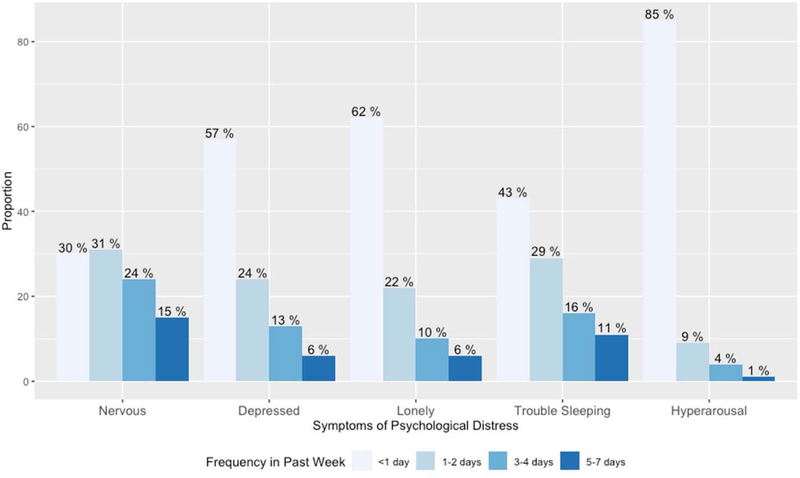
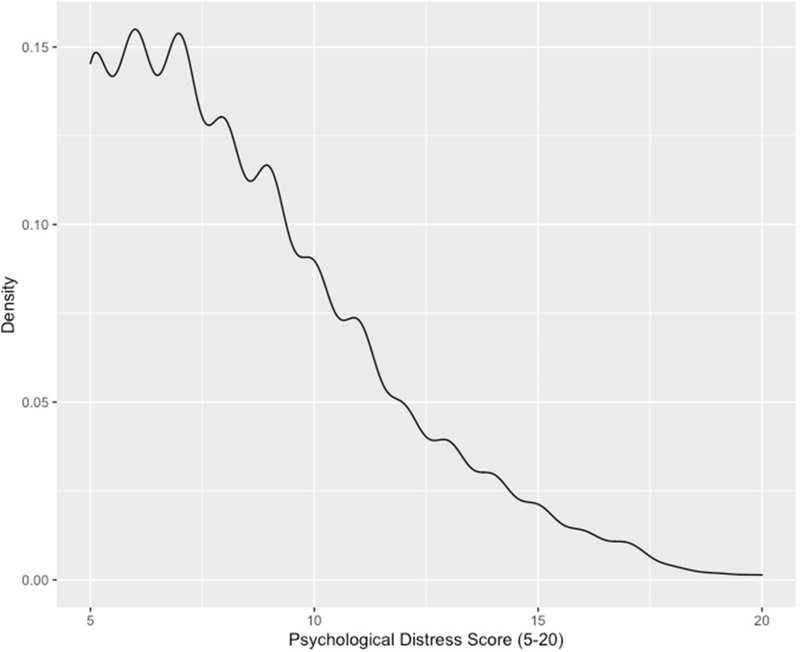
Most individuals in the United States have no history of a mental health condition yet are at risk for psychological distress due to the COVID-19 pandemic. The objective of this study was to assess the frequency and risk and protective factors of psychological distress, during the beginning of the COVID-19 pandemic, in this group. Data comes from the Pew Research Center's American Trends Panel (ATP), a probability-based online survey panel representative of the US adult population. The analytic sample consisted of 9687 individuals with no prior history of a mental health condition who completed the survey between March 19-24, 2020. Explanatory variables included sociodemographic factors and items related to behavior, perceptions, and experiences surrounding the pandemic. The outcome was psychological distress, measured by five items on symptoms of anxiety, depression, loneliness, sleep difficulties, and hyperarousal. A multivariable linear regression model was used to identify risk and protective factors for psychological distress. Fifteen percent of the sample experienced 2 psychological distress symptoms for at least 3 days over the past week; 13% had three or more symptoms. Risk factors for higher distress included searching online or using social media to post about coronavirus, reporting that the outbreak caused major changes to personal life, and perception that the virus was a threat to the US economy, the individual's personal health or finances. This has important implications for mental health service delivery.
Keywords: COVID-19; Epidemiology; Pandemic; Psychological distress.
Copyright © 2020 Elsevier Inc. All rights reserved.
Figures

References
-
- Altena E, Baglioni C, Espie CA, Ellis J, Gavriloff D, Holzinger B, Schlarb A, Frase L, Jernelöv S, & Riemann D (2020). Dealing with sleep problems during home confinement due to the COVID-19 outbreak: Practical recommendations from a task force of the European CBT-I Academy. Journal of Sleep Research, e13052. - PubMed
-
- Bathje G, & Pryor J (2011). The relationships of public and self-stigma to seeking mental health services. Journal of Mental Health Counseling, 33(2), 161–176.
-
- Bonanno GA, Galea S, Bucciarelli A, & Vlahov D (2007). What predicts psychological resilience after disaster? The role of demographics, resources, and life stress. Journal of Consulting and Clinical Psychology, 75(5), 671. - PubMed
Publication types
MeSH terms
Grants and funding
LinkOut - more resources
Full Text Sources
Medical
Miscellaneous
