. 2020 Aug 4;25(15):3554.
doi: 10.3390/molecules25153554.

Genoprotective Properties and Metabolites of β-Glucan-Rich Edible Mushrooms Following Their In Vitro Fermentation by Human Faecal Microbiota

Affiliations

Genoprotective Properties and Metabolites of β-Glucan-Rich Edible Mushrooms Following Their In Vitro Fermentation by Human Faecal Microbiota

Athina Boulaka et al. Molecules. .

Erratum in

Abstract

A variety of bioactive compounds, constituents of edible mushrooms, in particular β-glucans, i.e., a group of β-d-glucose polysaccharides abundant in the fungal cell walls, have been linked to immunomodulating, anticancer and prebiotic activities. The aim of the study was the investigation of the genoprotective effects of edible mushrooms produced by Pleurotus eryngii, Pleurotus ostreatus and Cyclocybe cylindracea (Basidiomycota). Mushrooms from selected strains of the species mentioned above were fermented in vitro using faecal inocula from healthy volunteers. The cytotoxic and anti-genotoxic properties of the fermentation supernatants (FSs) were investigated in Caco-2 human colon adenocarcinoma cells. The FSs were cytotoxic in a dose-dependent manner. Non-cytotoxic concentrations were used for the genotoxicity studies, which revealed that mushrooms' FSs have the ability to protect Caco-2 cells against tert-butyl hydroperoxide (t-BOOH), a known genotoxic agent. Their global metabolic profiling was assessed by 1H-NMR spectroscopy. A total of 37 metabolites were identified with the use of two-dimensional (2D) homo- and hetero-nuclear NMR experiments. Multivariate data analysis monitored the metabolic variability of gut microbiota and probed to biomarkers potentially associated with the health-promoting effects of edible mushrooms.

Keywords: NMR-based metabolomics; edible mushrooms; faecal microbiota; genoprotection; in vitro fermentation; β-glucans.


Conflict of interest statement

The authors declare no conflict of interest. The funders had no role in the design of the study; in the collection, analyses, or interpretation of data; in the writing of the manuscript, or in the decision to publish the results.

Figures
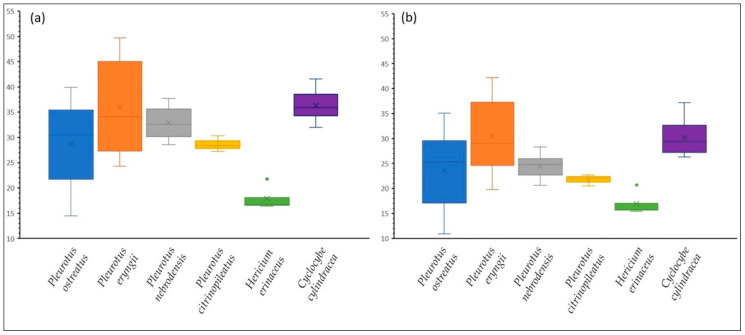
Figure 1
Figure 1
Box plots depicting (a) total and (b) β-glucan content (%, dry weight [d.w.]) of mushroom species cultivated in various substrates. The horizontal line in each box represents the median, the x represents the mean, the rectangle represents the second and third quartile. An outlier (green dot) is shown among Hericium erinaceus cases.
Figure 2
Figure 2
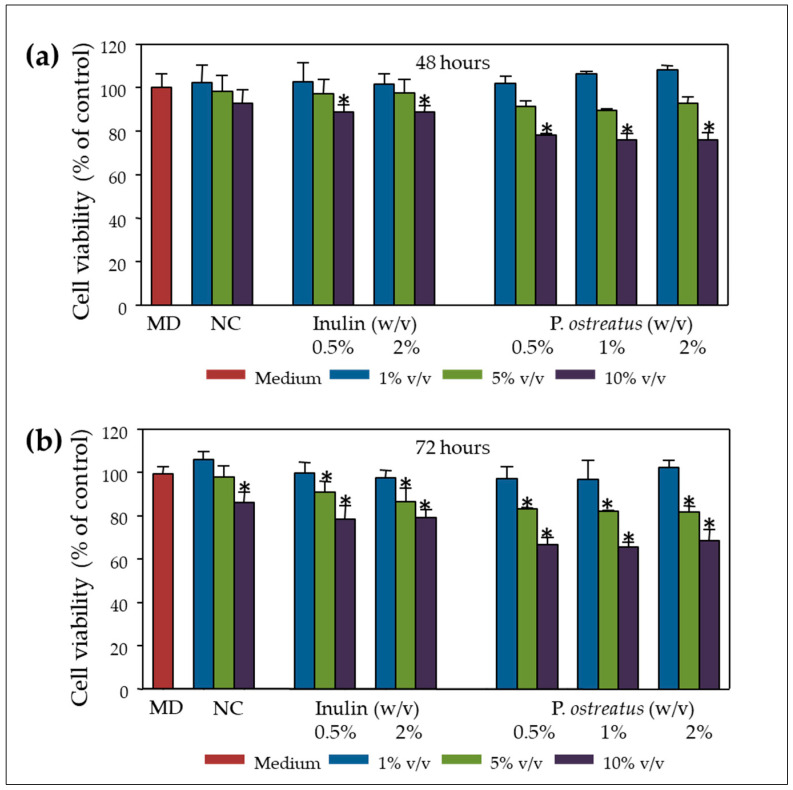
Inhibition of cell proliferation by post-fermentation supernatants (FSs): FSs with different concentrations of the prebiotic inulin (0.5% w/v and 2% w/v) and lyophilized P. ostreatus 1123 powder (0.5% w/v, 1% w/v and 2% w/v), fermented by fecal inocula from one healthy donor were incubated with Caco-2 cells at 1%, 5% and 10% v/v for 48 (a) and 72 h (b). Cells treated with medium only (MD) served as control. NC: basal medium with no additional carbohydrate source. All values are expressed as the mean ± standard deviation (SD) of at least two independent experiments. * p < 0.05 versus control/non-treated cells. Associations were not significant unless otherwise indicated.
Figure 3
Figure 3
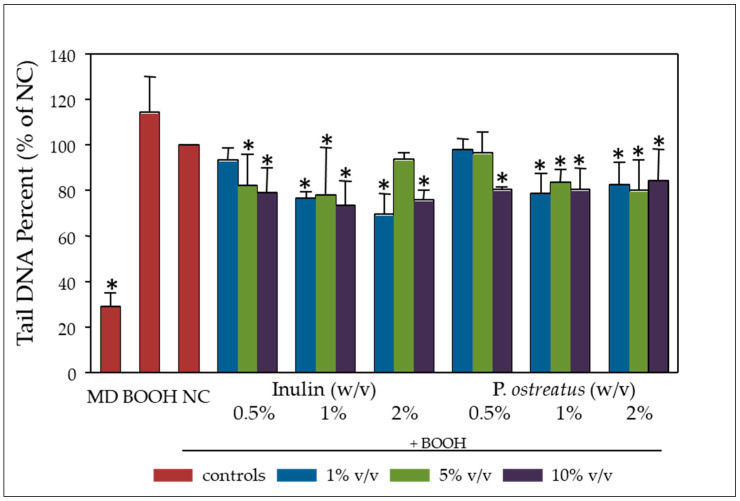
Genoprotective effect of fermentation supernatants (FSs): Fermentations were performed at increasing concentrations 0.5%, 1% and 2% w/v inulin or lyophilized P. ostreatus 1123 and with no additional carbohydrate source (NC) as a control. Caco-2 cells were incubated with NC, inulin (INU) and P. ostreatus (PO) FS at 1%, 5% and 10% v/v of culture medium for 48 h. The genotoxic agent tert-butyl hydroperoxide (BOOH) (500 μΜ) was added one hour prior to harvesting. Cells in medium (MD) and cells treated only with BOOH were used as negative and positive controls, respectively. All values are expressed as the mean ± SD of two independent experiments. * p < 0.05 versus NC. NC: basal medium with no additional carbohydrate source. Associations were not significant unless otherwise indicated.
Figure 4
Figure 4
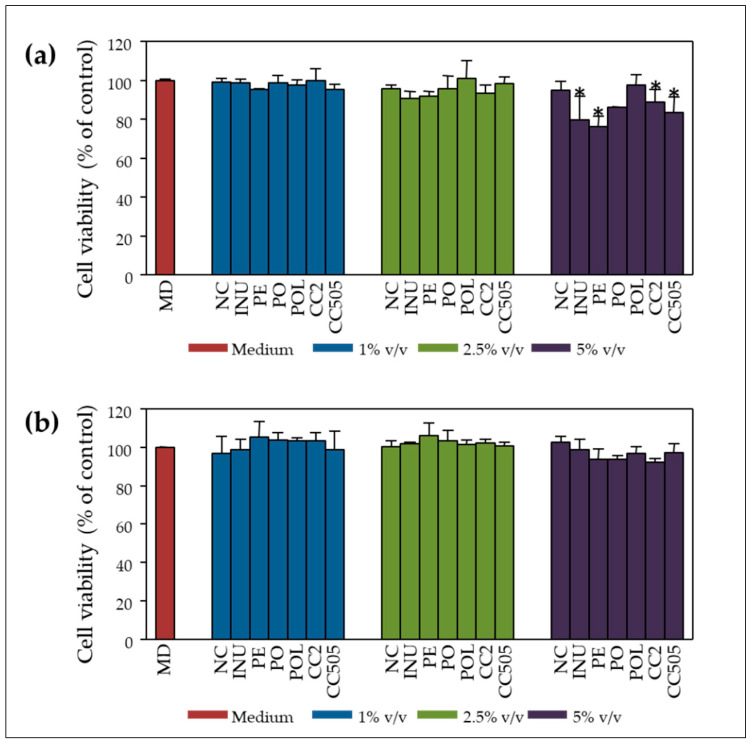
Inhibition of cell proliferation by pre- and post-fermentation supernatants (FSs): Caco-2 cells were treated with 1%, 2.5% and 5% v/v of (a) pre-fermentation (t = 0 h) and (b) post-fermentation (t = 24 h) supernatants of selected mushrooms for 48 h. Cells treated with medium only served as control (MD). NC: basal medium with no additional carbohydrate source, INU: inulin, PO: P. ostreatus strain 1123, POL: P. ostreatus strain LGM 22, PE: P. eryngii strain LGAM 216, CC2: C. cylindracea strain CC2, CC505: C. cylindracea strain 505. Faecal inocula derived from 8 donors and the fermentation supernatants were pooled for this process. All values are expressed as the mean ± SD of at least two independent experiments. * p < 0.05 versus control/non-treated cells. Associations were not significant unless otherwise indicated.
Figure 5
Figure 5
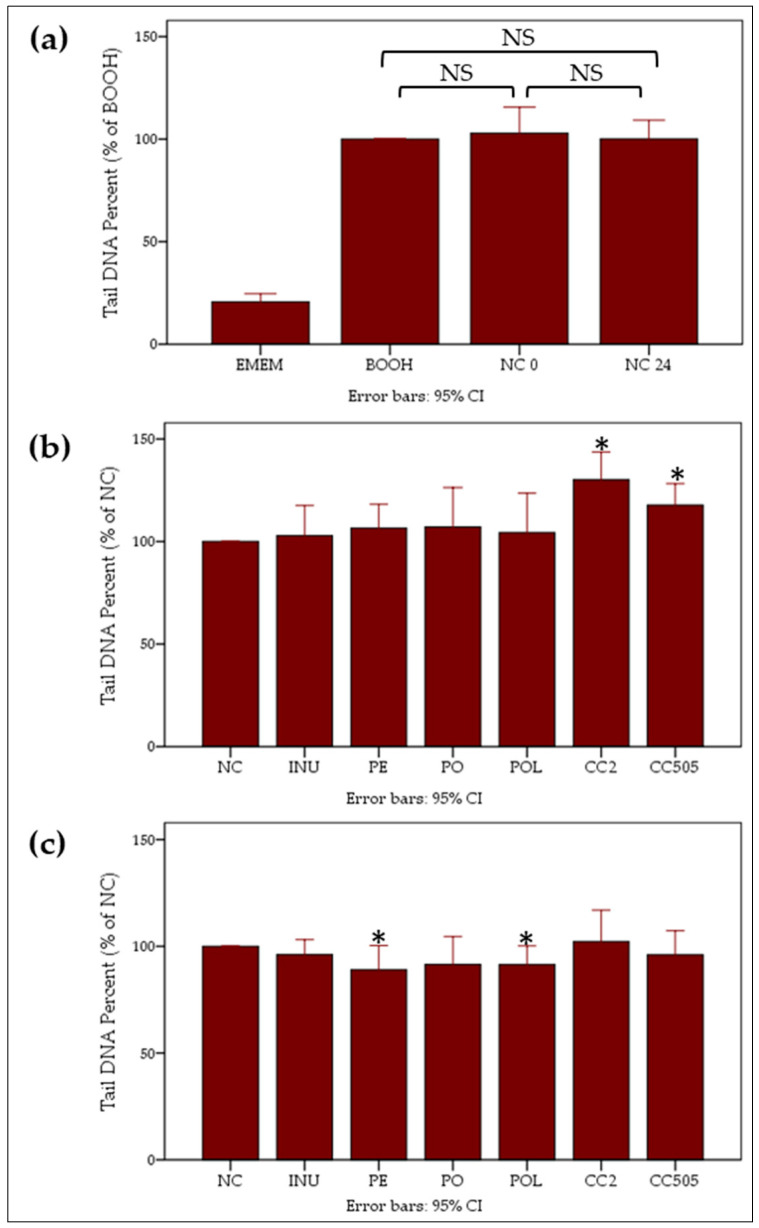
Genotoxic and genoprotective effects of pre- and post-fermentation supernatants. Caco-2 cells were treated with 1% v/v pre- and post-fermentation supernatants of NC, INU, PO, POL, PE, CC2 and CC505 for 24 h. The genotoxic agent BOOH (500 μM) was added for one hour. (a) genotoxic effect of BOOH, NC 0 and NC 24 (% of BOOH), (b) genotoxic effect of pre-fermentation supernatants (% NC t = 0 h), (c) genoprotective effect of post-fermentation supernatants (% NC t = 24 h). NC: basal medium with no additional carbohydrate source, INU: inulin, PO: P. ostreatus strain 1123, POL: P. ostreatus strain LGM 22, PE: P. eryngii strain LGAM 216, CC2: C. cylindracea strain CC2, CC505: C. cylindracea strain CC505. All values are expressed as the mean ± 95% CI (Confidence Interval). * p < 0.05 versus control (paired t-test). Associations were not significant unless otherwise indicated.
Figure 6
Figure 6
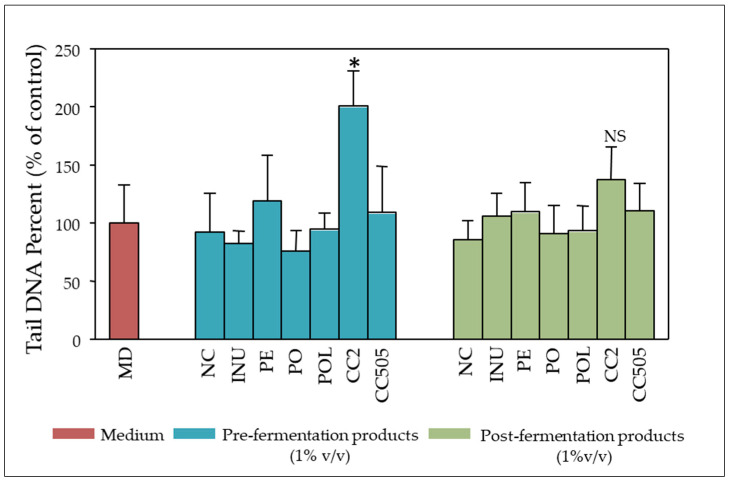
Direct genotoxic effects of pre- and post-fermentation samples: Caco-2 cells were treated with 1% v/v pre- and post-fermentation samples of NC, INU, PO, POL, PE, CC2 and CC505. Cells treated with culture medium only served as control (MD). NC: basal medium with no additional carbohydrate source, INU: inulin, PO: P. ostreatus strain 1123, POL: P. ostreatus strain LGM 22, PE: P. eryngii strain LGAM 216, CC2: C. cylindracea strain CC2, CC505: C. cylindracea strain CC505. All values are expressed as the mean ± SD of two independent experiments. * p < 0.05 versus medium. Pooled samples from 8 donors were used. Associations were not significant unless otherwise indicated.
Figure 7
Figure 7
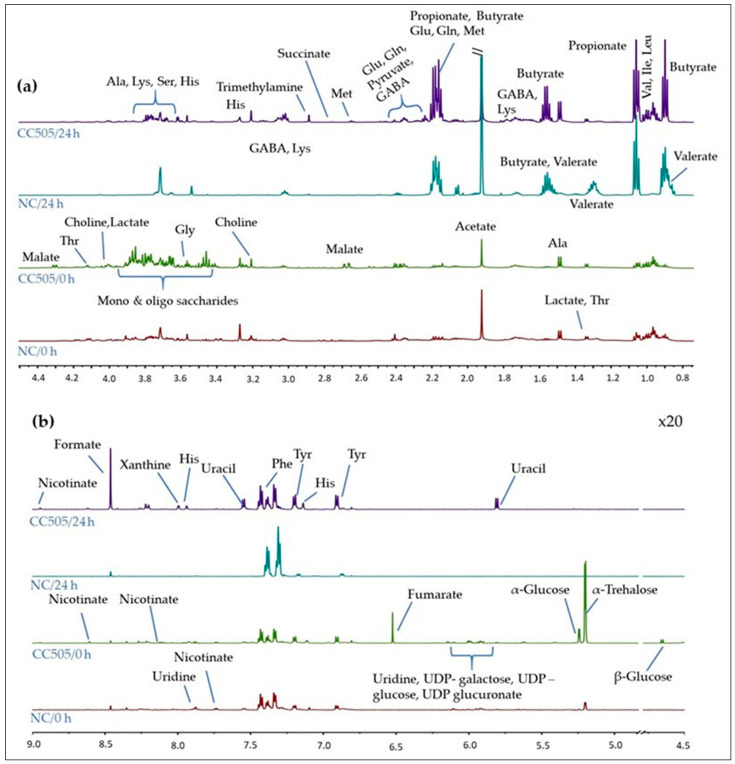
Representative 1H-NMR spectra of the pre- (t = 0 h) and post-fermentation (t = 24 h) supernatants from one volunteer, for both NC (basal medium with no additional carbohydrate source) and C. cylindracea CC505 (a) 0.8–4.4 ppm, and (b) 4.5–9.0 ppm. NC: basal medium with no additional carbohydrate source, CC505: C. cylindracea strain 505.
Figure 8
Figure 8
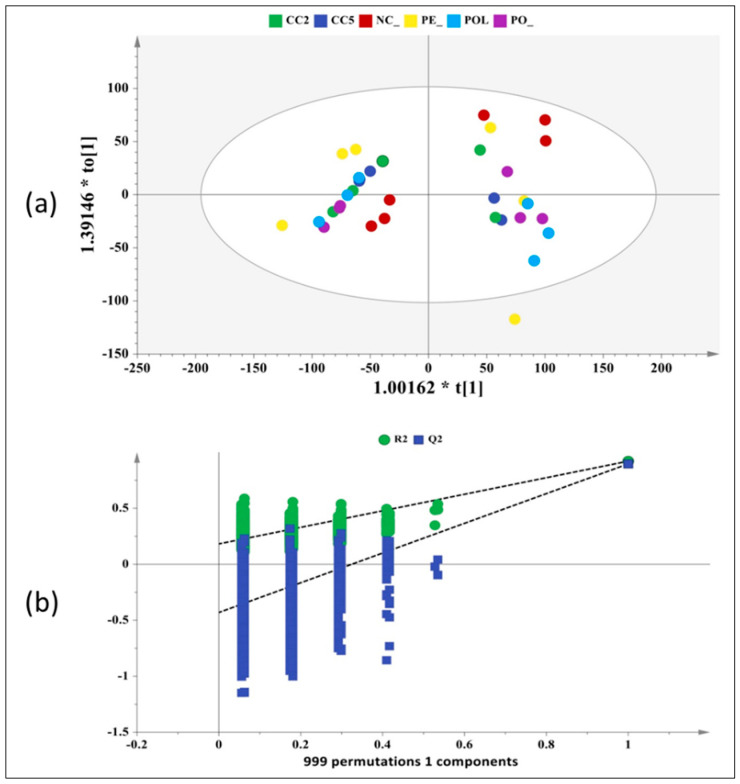
Illustration of multivariate statistical analysis of the 1H-NMR data for the pre- and post-fermentation samples from 3 randomly selected volunteers. (a) Orthogonal projections to latent structures with discriminant analysis (OPLS-DA) scores map. (R2X(cum) = 0.68, (R2X(cum) = 0.92, Q2(cum) = 0.90, Pareto scaling, Hotelling T2 = 95%). (b) Validation of the OPLS-DA model by permutation analysis indicating that the extracted model is significantly different from a model built on random data. The permutation tests were carried out with 999 random permutations, thus providing significance of the model at the 0.05 level. PO: P. ostreatus strain 1123, POL: P. ostreatus strain LGM 22, PE: P. eryngii strain LGAM 216, CC2: C. cylindracea strain CC2, CC505: C. cylindracea strain CC505.
Figure 9
Figure 9
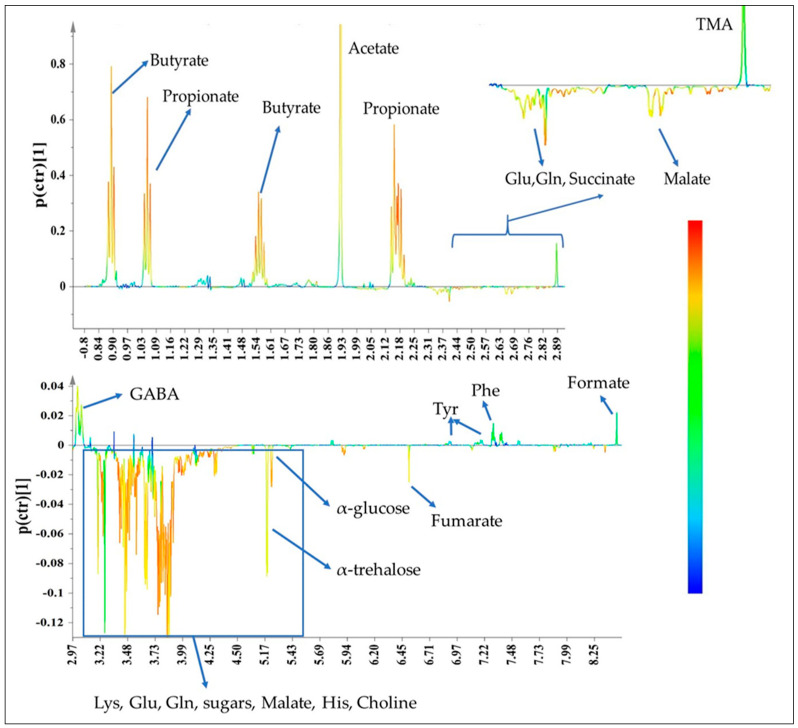
S-line plot based on the OPLS-DA model in order to visualise the most discriminative metabolites. The colour coding corresponds to the significance of their contribution with the red colour depicting the metabolites that most influence the separation of the groups. Resonance lines with positive values correspond to the most characteristic metabolites for the post-fermentation supernatants, and those with negative values constitute the most discriminative for the pre-fermented supernatants. PO: P. ostreatus strain 1123, POL: P. ostreatus strain LGM 22, PE: P. eryngii strain LGAM 216, CC2: C. cylindracea strain CC2, CC505: C. cylindracea strain CC505.

References

    1. Gargano M.L., van Griensven L.J., Isikhuemhen O.S., Lindequist U., Venturella G., Wasser S.P., Zervakis G.I. Medicinal mushrooms: Valuable biological resources of high exploitation potential. Plant Biosyst. 2017;151:548–565. doi: 10.1080/11263504.2017.1301590. - DOI
    1. Xie J.H., Jin M.L., Morris G.A., Zha X.Q., Chen H.Q., Yi Y., Li J.E., Wang Z.J., Gao J., Nie S.P., et al. Advances on Bioactive Polysaccharides from Medicinal Plants. Crit. Rev. Food Sci. Nutr. 2016;56(Suppl. 1):S60–S84. doi: 10.1080/10408398.2015.1069255. - DOI - PubMed
    1. Giavasis I. Bioactive fungal polysaccharides as potential functional ingredients in food and nutraceuticals. Curr. Opin. Biotechnol. 2014;26:162–173. doi: 10.1016/j.copbio.2014.01.010. - DOI - PubMed
    1. Ooi V.E., Liu F. Immunomodulation and anticancer activity of polysaccharide-protein complexes. Curr. Med. Chem. 2000;7:715–729. doi: 10.2174/0929867003374705. - DOI - PubMed
    1. Wasser S.P., Weis A.L. Therapeutic effects of substances occurring in higher Basidiomycetes mushrooms: A modern perspective. Crit. Rev. Immunol. 1999;19:65–96. - PubMed