


Room for improvement in non-pharmacological systemic sclerosis care? - a cross-sectional online survey of 650 patients
- PMID: 32760879
- PMCID: PMC7393838
- DOI: 10.1186/s41927-020-00142-7
Room for improvement in non-pharmacological systemic sclerosis care? - a cross-sectional online survey of 650 patients
Abstract
Background/ objective: To gain insight in the use of current systemic sclerosis (SSc) care provided by health professionals from the patient perspective. We focused on referral reasons, treatment goals, the alignment with unmet care needs, and outcome satisfaction.
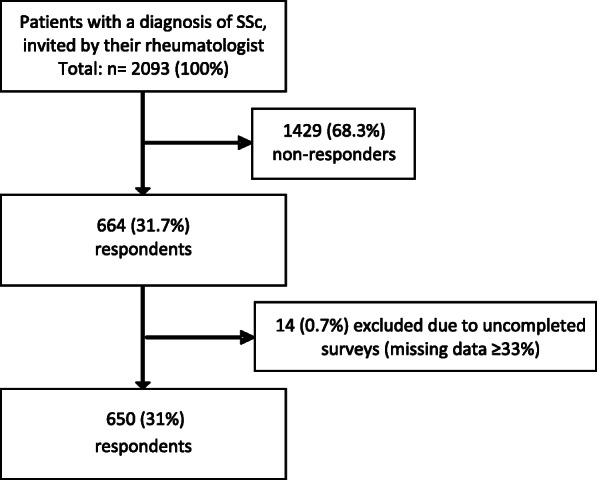
Methods: Dutch SSc patients from 13 participating rheumatology departments were invited to complete an online survey. Descriptive statistics were used to describe current use of non-pharmacological care and outcome satisfaction. Reasons for referral and treatment goals were encoded in International Classification of Function and Disability (ICF) terms.
Results: We included 650 patients (mean (standard deviation [SD]) age, 59.4 (11.4) years. 50% had contact with a health professional in the past year; 76.3% since disease onset. Physiotherapists were the most frequently visited in the past year (40.0%), followed by dental hygienists (11.4%) and podiatrists (9.2%). The three most common referral reasons were pain, joint mobility and cardiovascular functions. Fatigue, Raynaud's phenomenon, physical limitations, reduced hand function and joint problems were mentioned by more than 25% of all respondents as unmet needs. The proportion of patients treated in the past year by a health professional who were satisfied with knowledge and expertise of their health professionals was 74.4%; 73% reported improved daily activities and better coping with complaints. However, 48.9% perceived that the collaboration between rheumatologist and health professional was never or only sometimes sufficient.
Conclusion: Despite the high outcome satisfaction and good accessibility of health professionals, there are obstacles in the access to non-pharmacological care and communication barriers between health professionals and rheumatologists.
Keywords: Cross sectional survey; Health care use; Health professionals; Systemic sclerosis.
© The Author(s) 2020.
Conflict of interest statement
Competing interestsThe authors declare: There are no benefits from commercial sources, no other financial interests and no conflicts of interest.
Figures
References
LinkOut - more resources
Full Text Sources
Miscellaneous
