


The efficacy of transcutaneous electrical nerve stimulation therapy in pain control after cesarean section delivery associated with uterine contractions and abdominal incision
- PMID: 32760894
- PMCID: PMC7401685
- DOI: 10.5606/tftrd.2020.3225
The efficacy of transcutaneous electrical nerve stimulation therapy in pain control after cesarean section delivery associated with uterine contractions and abdominal incision
Abstract
Objectives: This study aims to investigate the effects of transcutaneous electrical nerve stimulation (TENS) therapy on the intensity of pain associated with uterine contractions and abdominal incision in patients undergoing cesarean section (C-section) delivery.
Patients and methods: This single-blind, prospective, randomized-controlled study included a total of 90 female patients (mean age 30.5 years; range, 25 to 36 years) who had a scheduled C-section delivery between November 2017 and April 2018. Forty-five postpartum patients were randomly assigned into the treatment group (Group 1) and TENS electrodes were placed below and above the abdominal incision. The control group (n=45) consisted of 45 patients who had a scheduled C-section (Group 2) (n=45) and received routine follow-up care. The Visual Numeric Scale (VNS) scores were obtained separately for abdominal, low back, and groin pain at baseline (within 1 h after C-section before the TENS replacement), at postpartum 2, 6, 24, and 48 h. In addition to instant scoring, the percentages of change in pain scores from baseline were also calculated for each time points.
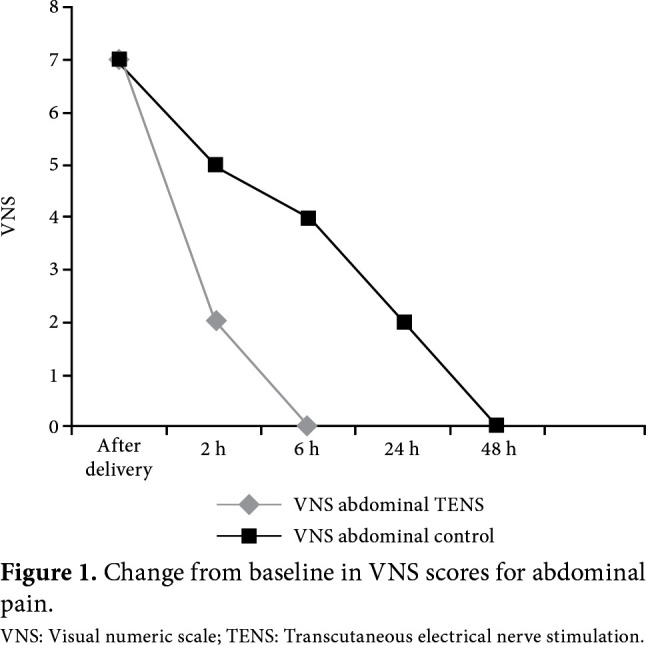
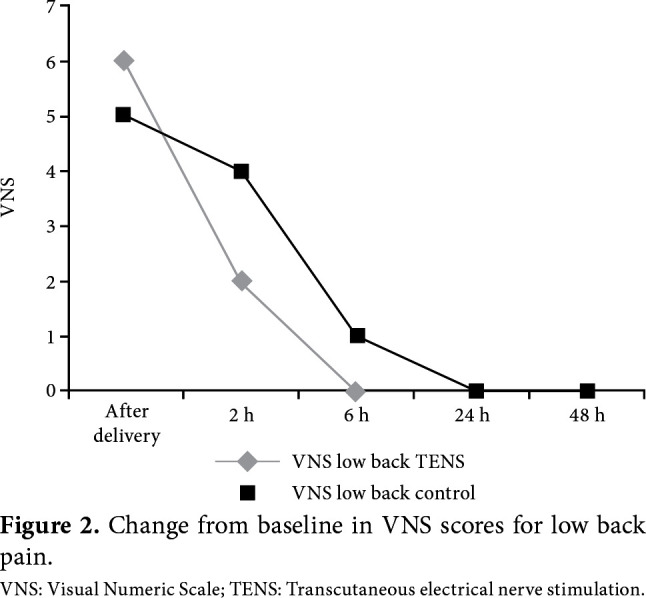
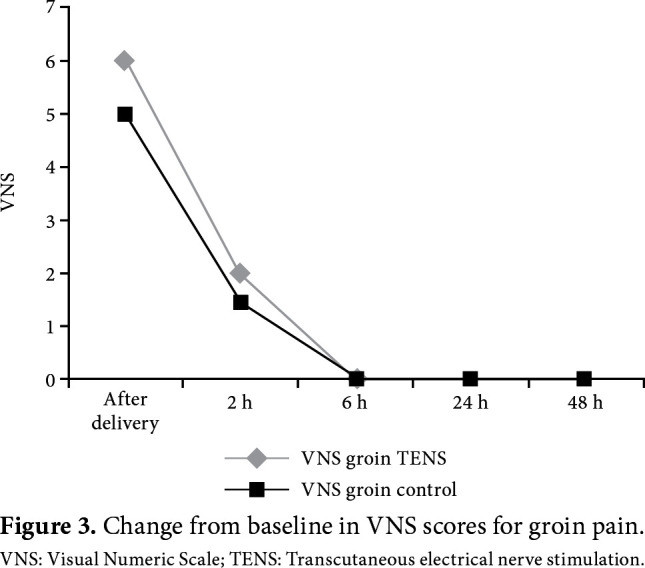
Results: Data of a total of 87 patients were analyzed. No statistically significant difference was found in the baseline VNS scores measured in any body regions between the groups (p>0.05). However, there was a statistically significant difference in the instant VNS scores for abdominal pain at 2, 6, 24, and 48 h in favor of Group 1 (p<0.05). No significant differences were found in the instant VNS scores for low back and groin pain (p>0.05). The comparison of changes in pain scores from baseline (% change) over time between the groups revealed a statistically significant difference in favor of Group 1 in all VNS scores for abdominal, low back, and groin pain at 2, 6, 24, and 48 h (p<0.05).
Conclusion: Our study results suggest that TENS is an effective and safe non-invasive, non-pharmacological treatment modality. It may be preferred as an alternative method in pain control in postpartum women after C-section delivery.
Keywords: Analgesia; cesarean section; pain control; transcutaneous electrical nerve stimulation.
Copyright © 2020, Turkish Society of Physical Medicine and Rehabilitation.
Conflict of interest statement
Conflict of Interest: The authors declared no conflicts of interest with respect to the authorship and/or publication of this article.
Figures
References
-
- Siddik SM, Aouad MT, Jalbout MI, Rizk LB, Kamar GH, Baraka AS. Diclofenac and/or propacetamol for postoperative pain management after cesarean delivery in patients receiving patient controlled analgesia morphine. Reg Anesth Pain Med. 2001;26:310–315. - PubMed
-
- Karlström A, Engström-Olofsson R, Norbergh KG, Sjöling M, Hildingsson I. Postoperative pain after cesarean birth affects breastfeeding and infant care. J Obstet Gynecol Neonatal Nurs. 2007;36:430–440. - PubMed
-
- Berkman ND, Thorp JM Jr, Lohr KN, Carey TS, Hartmann KE, Gavin NI, et al. Tocolytic treatment for the management of preterm labor: a review of the evidence. Am J Obstet Gynecol. 2003;188:1648–1659. - PubMed
-
- Woolf CJ, Thompson SW. The induction and maintenance of central sensitization is dependent on N-methyl-D-aspartic acid receptor activation; implications for the treatment of post-injury pain hypersensitivity states. Pain. 1991;44:293–299. - PubMed
-
- Bonnet F, Marret E. Postoperative pain management and outcome after surgery. Best Pract Res Clin Anaesthesiol. 2007;21:99–107. - PubMed
LinkOut - more resources
Full Text Sources
Miscellaneous