


Effect of Experiential Vegetable Education Program on Mediating Factors of Vegetable Consumption in Australian Primary School Students: A Cluster-Randomized Controlled Trial
- PMID: 32764474
- PMCID: PMC7468916
- DOI: 10.3390/nu12082343
Effect of Experiential Vegetable Education Program on Mediating Factors of Vegetable Consumption in Australian Primary School Students: A Cluster-Randomized Controlled Trial
Abstract
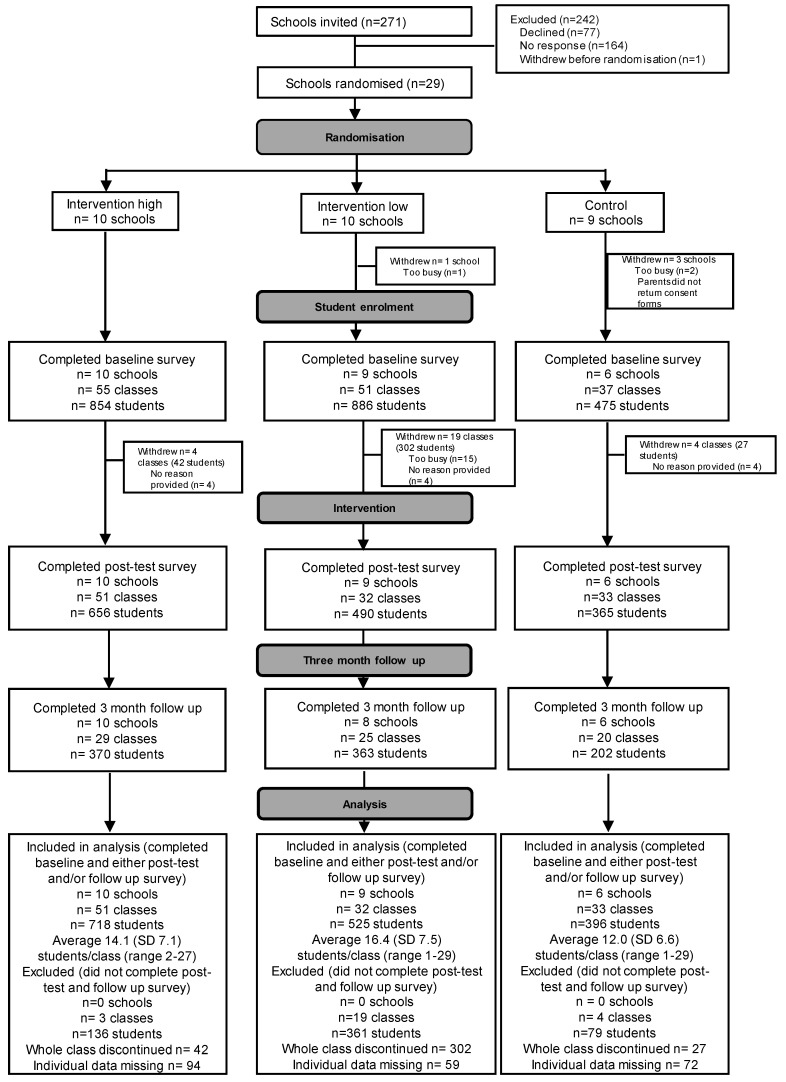
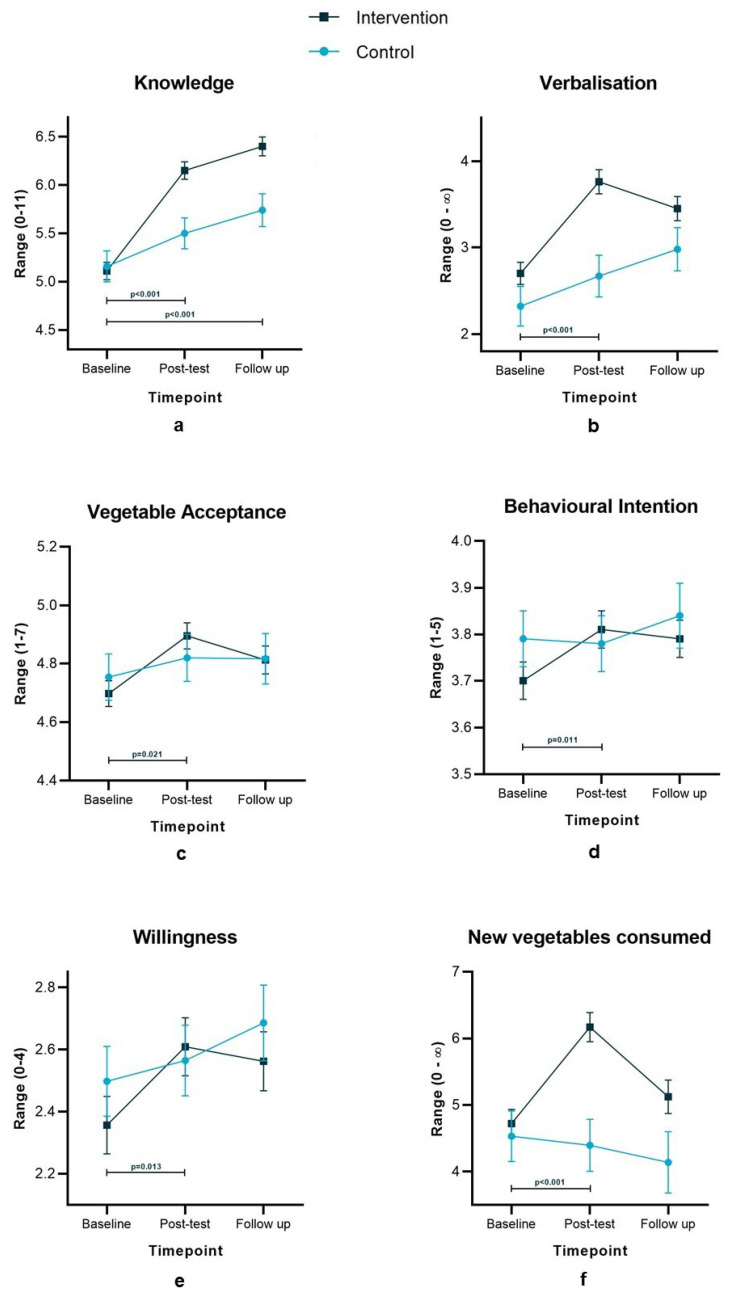
Schools provide a relevant and equitable environment to influence students towards increased vegetable consumption. This study aimed to evaluate the effectiveness of a Vegetable Education Resource To Increase Children's Acceptance and Liking (VERTICAL) for Australian primary schools (curriculum aligned and based on a framework of food preference development and sensory experiential learning) on positively influencing factors predisposing children towards increased vegetable consumption. The secondary aim was to evaluate two levels of teacher training intensity on intervention effectiveness. A cluster-RCT amongst schools with three conditions was conducted: 1 = teaching VERTICAL preceded by online teacher training; 2 = as per 1 with additional face-to-face teacher training; 3 = Control. Pre-test, post-test and 3-month follow-up measures (knowledge, verbalization ability, vegetable acceptance, behavioural intentions, willing to taste, new vegetables consumed) were collected from students (n = 1639 from 25 schools in Sydney/Adelaide, Australia). Data were analyzed using mixed model analysis. No difference in intervention effectiveness was found between the two training methods. Compared to the Control, VERTICAL positively affected all outcome measures after intervention (p < 0.01) with knowledge sustained at 3-month follow-up (p < 0.001). In conclusion, VERTICAL was effective in achieving change amongst students in mediating factors known to be positively associated with vegetable consumption.
Keywords: acceptance; children; cluster-randomized controlled trial (cluster-RCT); education program; experiential learning; primary (elementary) school; sensory; vegetable.
Conflict of interest statement
The authors declare no conflict of interest. The funders had no role in the design of the study; in the collection, analyses, or interpretation of data; in the writing of the manuscript, or in the decision to publish the results.
Figures
References
-
- U.S. Department of Health and Human Services and U.S. Department of Agriculture . 2015–2020 Dietary Guidelines for Americans. 8th ed. U.S. Department of Health and Human Services and U.S. Department of Agriculture; Washington, DC, USA: 2015. [(accessed on 2 January 2020)]. Available online: https://health.gov/dietaryguidelines/2015/guidelines/
-
- Wang X., Ouyang Y., Liu J., Zhu M., Zhao G., Bao W., Hu F.B. Fruit and vegetable consumption and mortality from all causes, cardiovascular disease, and cancer: Systematic review and dose-response meta-analysis of prospective cohort studies. BMJ. 2014;349:g4490. doi: 10.1136/bmj.g4490. - DOI - PMC - PubMed
Publication types
MeSH terms
Grants and funding
LinkOut - more resources
Full Text Sources
