


Systematic Review on the Impact of Intelligence on Cognitive Decline and Dementia Risk
- PMID: 32765312
- PMCID: PMC7378785
- DOI: 10.3389/fpsyt.2020.00658
Systematic Review on the Impact of Intelligence on Cognitive Decline and Dementia Risk
Abstract
Background: Previous studies have shown that an intellectually stimulating lifestyle is associated with a lower risk for cognitive decline and Alzheimer's disease and related dementia (ADRD). It is unclear so far whether higher intelligence may protect against this. The aim of this study was to conduct a systematic review on the association between intelligence and cognitive decline and ADRD risk.
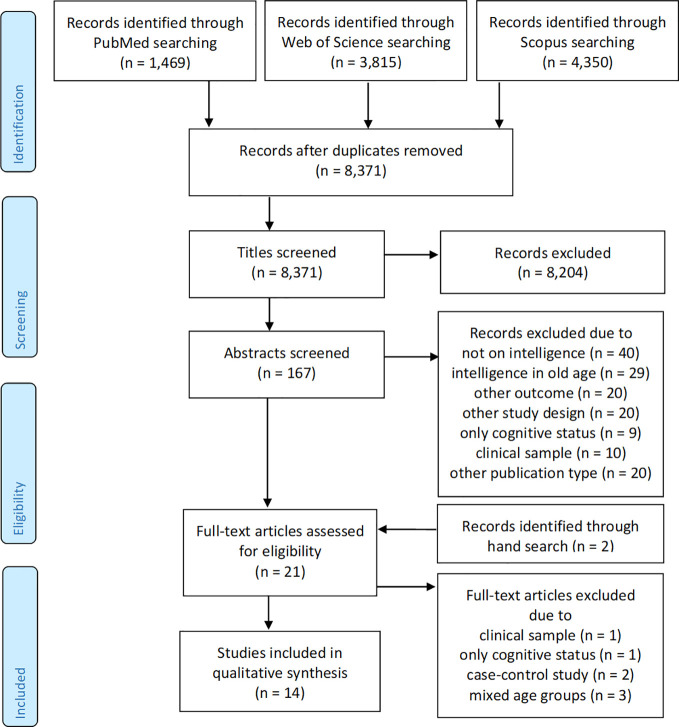
Methods: We searched the PubMed, web of science, and Scopus databases following the Preferred Reporting Items for Systematic reviews and Meta-Analyses (PRISMA) and Population, Intervention, Comparison, and Outcome (PICO) criteria. Quality of evidence was assessed using Critical Appraisal Skills Programme (CASP) checklists.
Results: From an initial n=8,371 search hits, n= 14 studies met the inclusion criteria and had sufficient quality. Evidence indicates that cognitive decline in old age is not significantly associated with childhood intelligence (n=9). Evidence with regard to ADRD risk is inconclusive (n=5) with some studies showing no effects and other studies with significant effects having limitations in their design.
Conclusions: Even though the majority of the studies show no significant association, we cannot exclude a possible effect that might be moderated by other, so far unknown factors. Further studies are necessary to systematically assess the influence of intelligence on ADRD risk and what factors moderate this association.
Keywords: Alzheimer disease; cognitive aging; dementia; intelligence; review.
Copyright © 2020 Rodriguez and Lachmann.
Figures
References
-
- Organization WH World Report on aging and health. Geneva: World Health Organization; (2015).
-
- American Psychiatric A. Diagnostic and Statistical Manual of Mental Disorders. DSM IV-TR. Washington DC: American Psychiatric Association; (2000).
Publication types
LinkOut - more resources
Full Text Sources
Miscellaneous
