This is a preprint.
Household transmission of SARS-CoV-2: a systematic review and meta-analysis of secondary attack rate
- PMID: 32766596
- PMCID: PMC7402051
- DOI: 10.1101/2020.07.29.20164590
Household transmission of SARS-CoV-2: a systematic review and meta-analysis of secondary attack rate
Update in
-
Household Transmission of SARS-CoV-2: A Systematic Review and Meta-analysis.JAMA Netw Open. 2020 Dec 1;3(12):e2031756. doi: 10.1001/jamanetworkopen.2020.31756. JAMA Netw Open. 2020. PMID: 33315116 Free PMC article.
Abstract
Background: Severe acute respiratory syndrome coronavirus 2 (SARS-CoV-2) is spread by direct, indirect, or close contact with infected people via infected respiratory droplets or saliva. Crowded indoor environments with sustained close contact and conversations are a particularly high-risk setting.
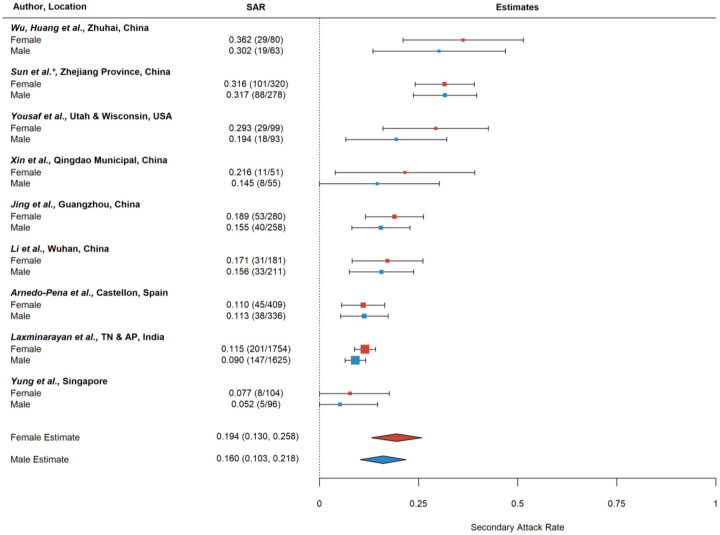
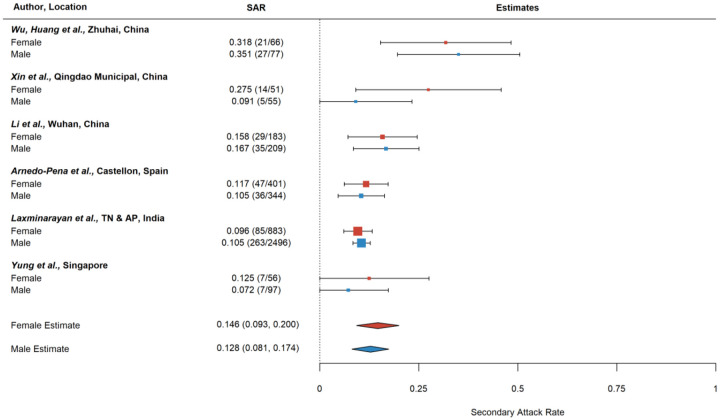
Methods: We performed a meta-analysis through July 29, 2020 of SARS-CoV-2 household secondary attack rate (SAR), disaggregating by several covariates (contact type, symptom status, adult/child contacts, contact sex, relationship to index case, index case sex, number of contacts in household, coronavirus).
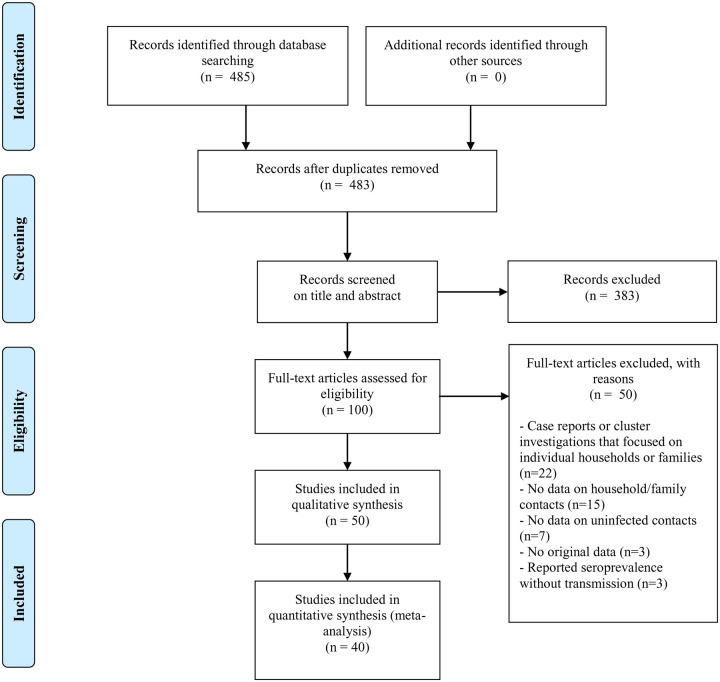
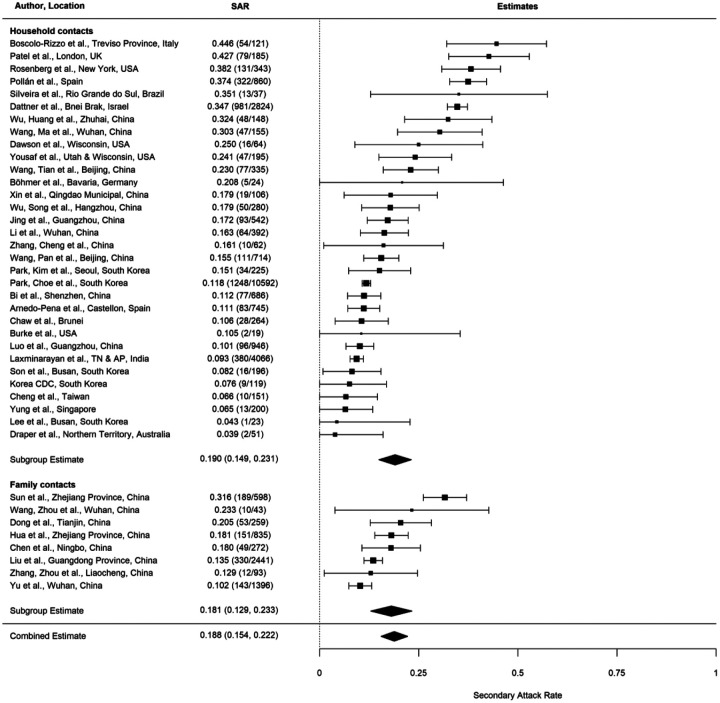
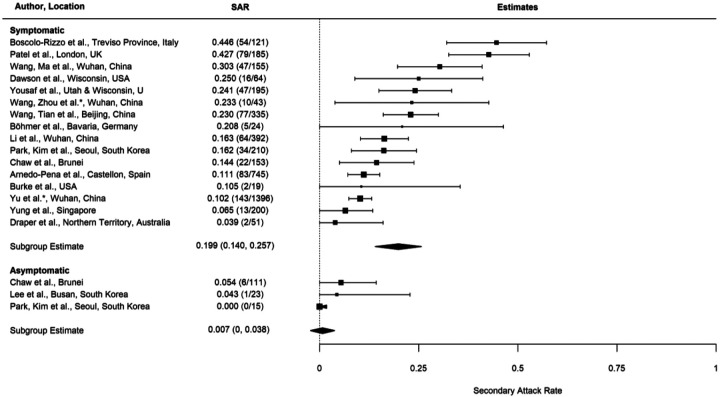
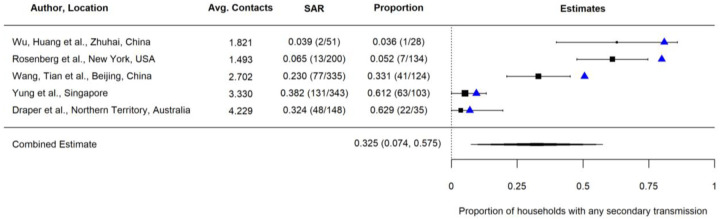
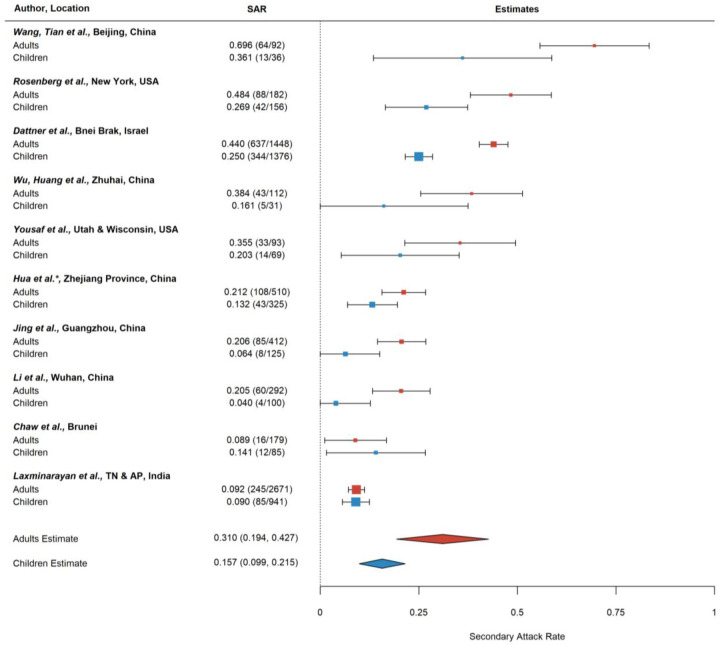
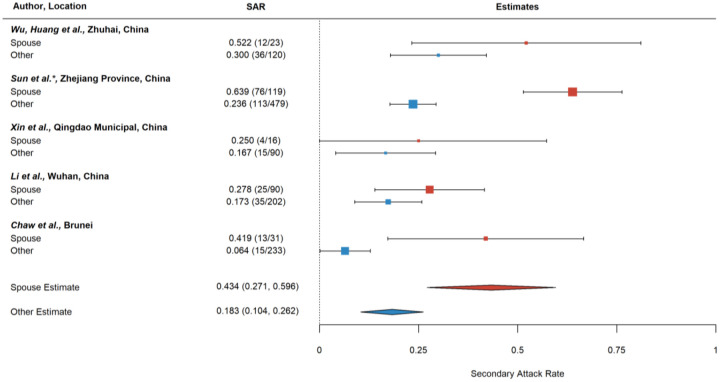
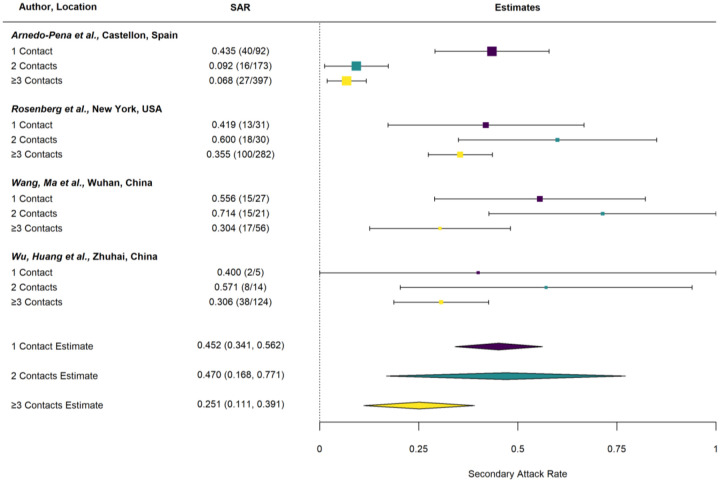
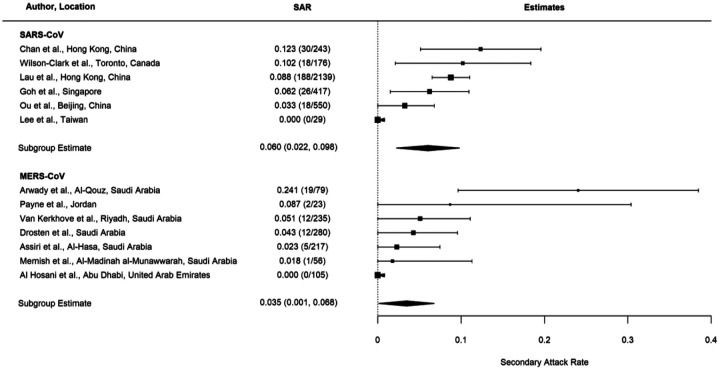
Findings: We identified 40 relevant published studies that report household secondary transmission. The estimated overall household SAR was 18.8% (95% confidence interval [CI]: 15.4%-22.2%), which is higher than previously observed SARs for SARS-CoV and MERS-CoV. We observed that household SARs were significantly higher from symptomatic index cases than asymptomatic index cases, to adult contacts than children contacts, to spouses than other family contacts, and in households with one contact than households with three or more contacts.
Interpretation: To prevent the spread of SARS-CoV-2, people are being asked to stay at home worldwide. With suspected or confirmed infections referred to isolate at home, household transmission will continue to be a significant source of transmission.
Conflict of interest statement
Declaration of interests
We declare no competing interests.
Figures
References
-
- Centers for Disease Control and Prevention. Coronavirus Disease 2019 (COVID-19): World Map. 2020. https://www.cdc.gov/coronavirus/2019-ncov/global-covid-19/world-map.html.
-
- Wu Z, McGoogan JM. Characteristics of and important lessons from the coronavirus disease 2019 (COVID-19) outbreak in China: summary of a report of 72 314 cases from the Chinese Center for Disease Control and Prevention. JAMA 2020; 323(13): 1239–42. - PubMed
-
- World Health Organization. Transmission of SARS-CoV-2: implications for infection prevention precautions. 2020. https://www.who.int/news-room/commentaries/detail/transmission-of-sars-h....
Publication types
Grants and funding
LinkOut - more resources
Full Text Sources
Miscellaneous