This is a preprint.
A blueprint for academic labs to produce SARS-CoV-2 RT-qPCR test kits
- PMID: 32766604
- PMCID: PMC7402063
- DOI: 10.1101/2020.07.29.20163949
A blueprint for academic labs to produce SARS-CoV-2 RT-qPCR test kits
Update in
-
A blueprint for academic laboratories to produce SARS-CoV-2 quantitative RT-PCR test kits.J Biol Chem. 2020 Nov 13;295(46):15438-15453. doi: 10.1074/jbc.RA120.015434. Epub 2020 Sep 3. J Biol Chem. 2020. PMID: 32883809 Free PMC article.
Abstract
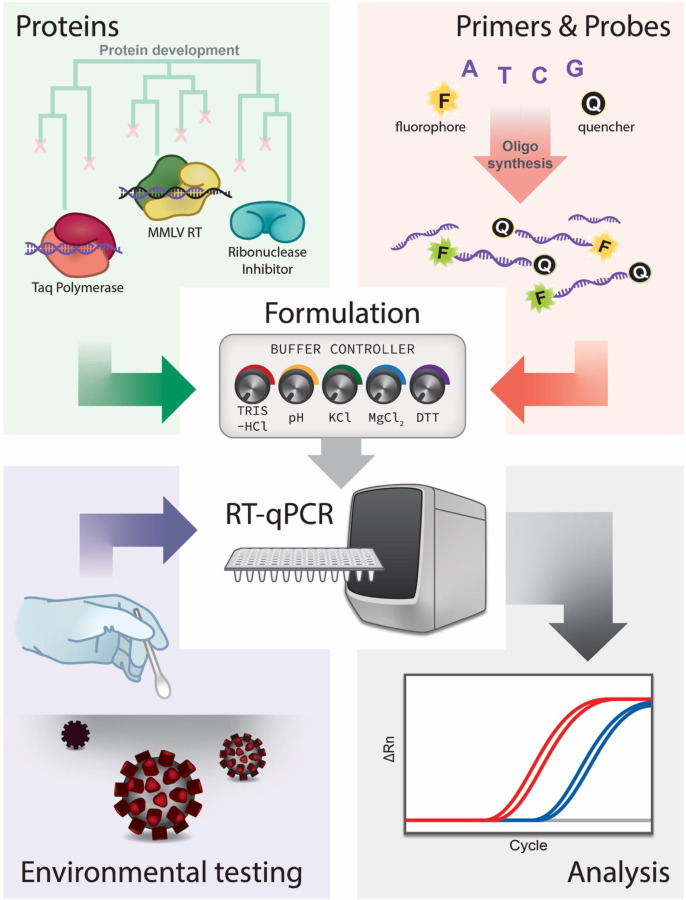
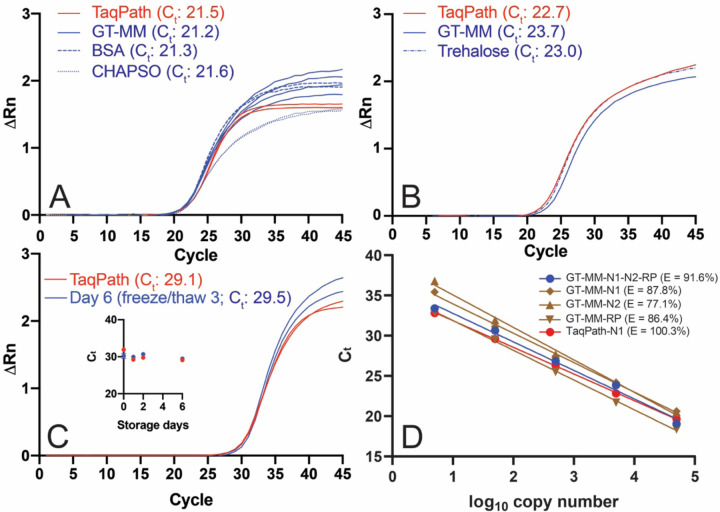
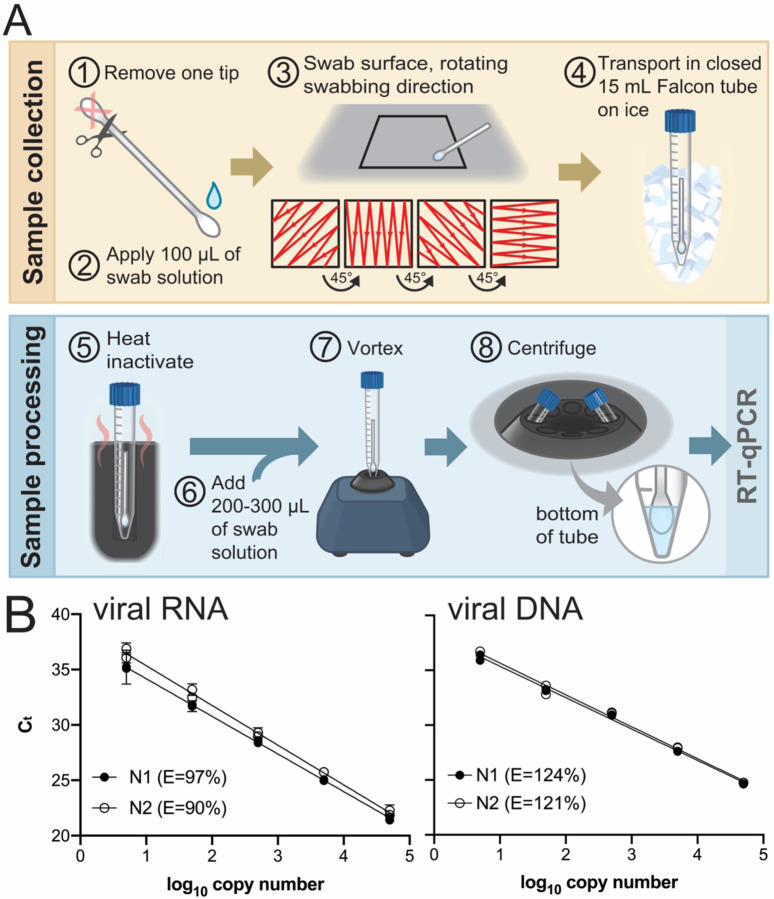
Widespread testing for the presence of the novel coronavirus SARS-CoV-2 in individuals remains vital for controlling the COVID-19 pandemic prior to the advent of an effective treatment. Challenges in testing can be traced to an initial shortage of supplies, expertise and/or instrumentation necessary to detect the virus by quantitative reverse transcription polymerase chain reaction (RT-qPCR), the most robust, sensitive, and specific assay currently available. Here we show that academic biochemistry and molecular biology laboratories equipped with appropriate expertise and infrastructure can replicate commercially available SARS-CoV-2 RT-qPCR test kits and backfill pipeline shortages. The Georgia Tech COVID-19 Test Kit Support Group, composed of faculty, staff, and trainees across the biotechnology quad at Georgia Institute of Technology, synthesized multiplexed primers and probes and formulated a master mix composed of enzymes and proteins produced in-house. Our in-house kit compares favorably to a commercial product used for diagnostic testing. We also developed an environmental testing protocol to readily monitor surfaces across various campus laboratories for the presence of SARS-CoV-2. Our blueprint should be readily reproducible by research teams at other institutions, and our protocols may be modified and adapted to enable SARS-CoV-2 detection in more resource-limited settings.
Keywords: DNA polymerase; SARS-CoV-2; formulation; polymerase chain reaction; reverse transcriptase; ribonuclease inhibitor; virus.
Conflict of interest statement
Conflict of interest The authors declare that they have no conflicts of interest with the contents of this article.
Figures
References
Publication types
Grants and funding
LinkOut - more resources
Full Text Sources
Miscellaneous