


Early Life Exposure to Nicotine: Postnatal Metabolic, Neurobehavioral and Respiratory Outcomes and the Development of Childhood Cancers
- PMID: 32766841
- PMCID: PMC7850035
- DOI: 10.1093/toxsci/kfaa127
Early Life Exposure to Nicotine: Postnatal Metabolic, Neurobehavioral and Respiratory Outcomes and the Development of Childhood Cancers
Abstract
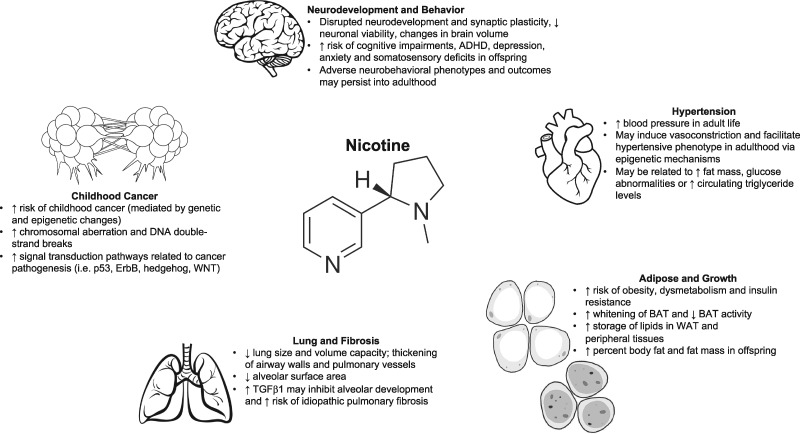
Cigarette smoking during pregnancy is associated with numerous obstetrical, fetal, and developmental complications, as well as an increased risk of adverse health consequences in the adult offspring. Nicotine replacement therapy and electronic nicotine delivery systems (e-cigarettes) have been developed as a pharmacotherapy for smoking cessation and are considered safer alternatives for women to smoke during pregnancy. The safety of nicotine replacement therapy use during pregnancy has been evaluated in a limited number of short-term human trials, but there is currently no information on the long-term effects of developmental nicotine exposure in humans. However, animal studies suggest that nicotine alone may be a key chemical responsible for many of the long-term effects associated with maternal cigarette smoking on the offspring and increases the risk of adverse neurobehavioral outcomes, dysmetabolism, respiratory illness, and cancer. This review will examine the long-term effects of fetal and neonatal nicotine exposure on postnatal health.
Keywords: childhood cancer; dysmetabolism; electronic nicotine delivery system (e-cigarettes); fetal programming of adult disease; lung development; neurotoxicity; nicotine; nicotine replacement therapy (NRT); pregnancy.
© The Author(s) 2020. Published by Oxford University Press on behalf of the Society of Toxicology. All rights reserved. For permissions, please e-mail: journals.permissions@oup.com.
Figures
References
-
- Abbott L. C., Winzer-Serhan U. H. (2012). Smoking during pregnancy: Lessons learned from epidemiological studies and experimental studies using animal models. Crit. Rev. Toxicol. 42, 279–303. - PubMed
-
- Anderson T. M., Ferres J. M. L., Ren S. Y., Moon R. Y., Goldstein R. D., Ramirez J.-M., Mitchell E. A. (2019). Maternal smoking before and during pregnancy and the risk of sudden unexpected infant death. Pediatrics 143, e20183325 Available at: https://pediatrics.aappublications.org/content/143/4/e20183325. - PMC - PubMed
-
- Balsevich G., Poon A., Goldowitz D., Wilking J. A. (2014). The effects of pre- and post-natal nicotine exposure and genetic background on the striatum and behavioral phenotypes in the mouse. Behav. Brain Res. 266, 7–18. - PubMed
-
- Baraona L. K., Lovelace D., Daniels J. L., McDaniel L. (2017). Tobacco harms, nicotine pharmacology, and pharmacologic tobacco cessation interventions for women. J. Midwifery Womens Health 62, 253–269. - PubMed
Publication types
MeSH terms
Substances
LinkOut - more resources
Full Text Sources
Medical
