


Hymenoptera venom-induced anaphylaxis and hereditary alpha-tryptasemia
- PMID: 32769710
- PMCID: PMC8162786
- DOI: 10.1097/ACI.0000000000000678
Hymenoptera venom-induced anaphylaxis and hereditary alpha-tryptasemia
Abstract
Purpose of review: To discuss the association between the common dominantly inherited genetic trait hereditary alpha-tryptasemia (HαT) and hymenoptera venom-induced anaphylaxis (HVA).
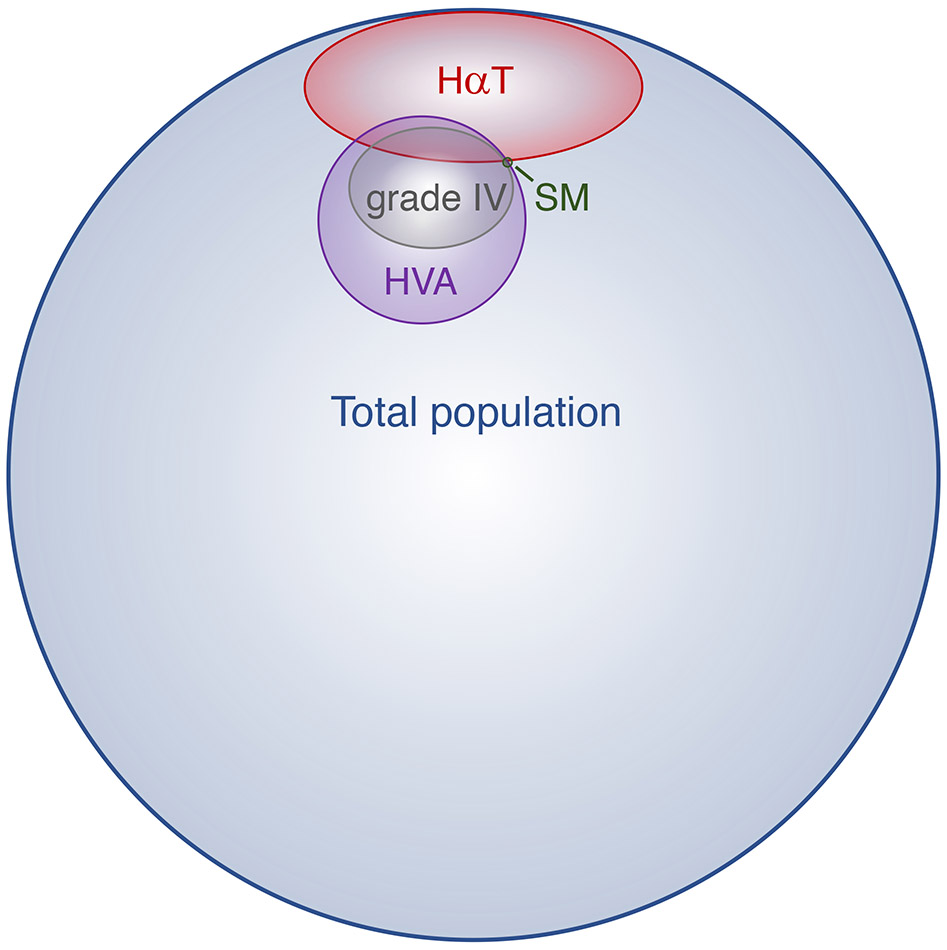
Recent findings: Elevated BST has been correlated with more severe systemic anaphylaxis in humans in a number of settings - most notably in HVA. Clonal mast cell disease, in particular, systemic mastocytosis, is frequently associated with elevated BST, and is a major risk factor for severe HVA. However, clonal mast cell diseases are believed to be rare, whereas HVA is relatively more common. HαT affects an estimated 3-5% of Western populations and is the common cause for elevated BST in these individuals. An association between HαT and severe HVA, as well as clonal mast cell disease has recently been demonstrated wherein this trait modifies reaction severity in venom allergic individuals. A mechanism underlying this association has been proposed through the identification of naturally occurring heterotetrameric tryptases and characterization of their unique physical attributes.
Summary: Here we discuss the long-standing association between elevated BST and HVA severity, how HαT fits into this landscape, and review the clinical and mechanistic evidence that supports HαT as a modifier of HVA.
Conflict of interest statement
Conflicts of interest
The authors have no potential conflicts of interest to disclose.
Figures
References
-
- Guenova E, Volz T, Eichner M, Hoetzenecker W, Caroli U, Griesinger G, et al. Basal serum tryptase as risk assessment for severe Hymenoptera sting reactions in elderly. Allergy. 2010;65(7):919–23. - PubMed
-
- Rueff F, Przybilla B, Bilo MB, Muller U, Scheipl F, Aberer W, et al. Predictors of severe systemic anaphylactic reactions in patients with Hymenoptera venom allergy: importance of baseline serum tryptase-a study of the European Academy of Allergology and Clinical Immunology Interest Group on Insect Venom Hypersensitivity. J Allergy Clin Immunol. 2009;124(5):1047–54. - PubMed
-
- Castells MC, Hornick JL, Akin C. Anaphylaxis after hymenoptera sting: is it venom allergy, a clonal disorder, or both? J Allergy Clin Immunol Pract. 2015;3(3):350–5. - PubMed
-
- Khoury P, Lyons JJ. Mast cell activation in the context of elevated basal serum tryptase: genetics and presentations. Curr Allergy Asthma Rep. 2019;19(12):55. - PubMed
-
-
Lyons JJ, Chovanec J, O'Connell MP, Liu Y, Selb J, Zanotti R, et al. Heritable risk for severe anaphylaxis associated with increased α-tryptase-encoding germline copy number at TPSAB1. J Allergy Clin Immunol. 2020;In press.
Demonstrated for the first time HαT is associated with increased risk of severe HVA and clonal and non-clonal mast cell disorders, potentially resulting from unique activities of α/β-tryptase heterotetramers.
-
Publication types
MeSH terms
Substances
Grants and funding
LinkOut - more resources
Full Text Sources
Medical
Research Materials
