


Internalized HIV stigma predicts subsequent viremia in US HIV patients through depressive symptoms and antiretroviral therapy adherence
- PMID: 32769764
- PMCID: PMC8514116
- DOI: 10.1097/QAD.0000000000002595
Internalized HIV stigma predicts subsequent viremia in US HIV patients through depressive symptoms and antiretroviral therapy adherence
Abstract
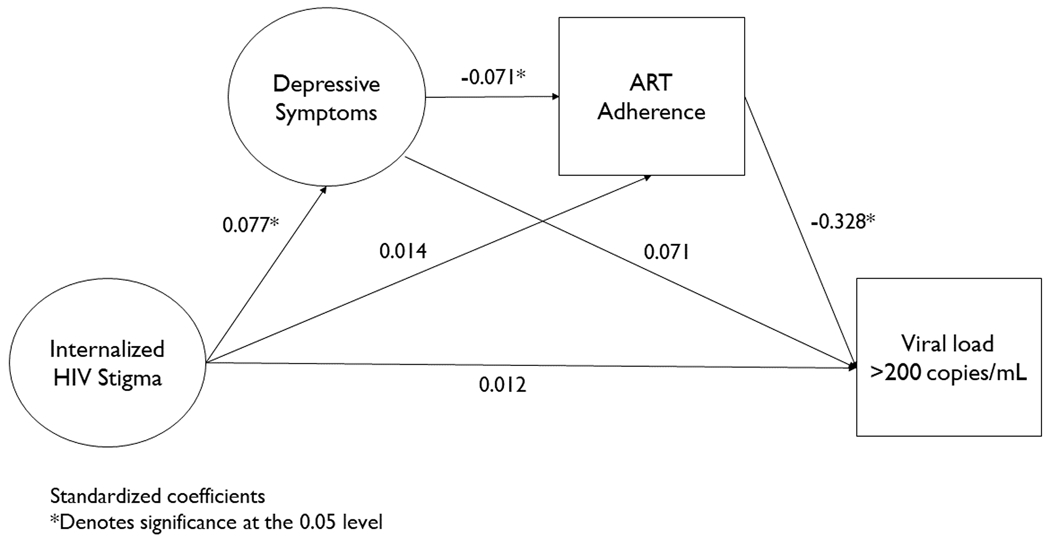
Objective: We sought to examine the prospective association between internalized HIV stigma and unsuppressed viral load and to investigate whether this relationship was sequentially mediated by depressive symptoms and antiretroviral therapy (ART) adherence.
Design: Longitudinal study in a multisite observational clinical cohort.
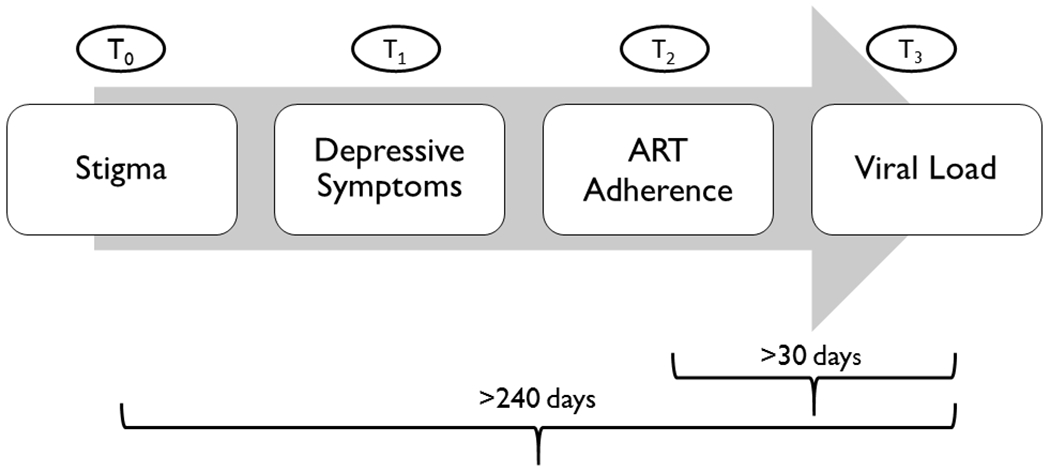
Methods: The Center for AIDS Research Network of Integrated Clinical Systems patient-reported outcomes survey measures internalized HIV stigma yearly using a four-item assessment (response scale 1 = strongly disagree to 5 = strongly agree). We obtained patient-reported outcome, lab, and appointment data from six center for AIDS research network of integrated clinical systems sites. We used multivariable logistic regression to examine the association between mean stigma and subsequent viremia. We then used Bayesian sequential mediation to fit a longitudinal sequential path model spanning four time points to test if depressive symptoms at T1 and ART adherence at T2 mediated the effect of stigma at T0 on viral load at T3, adjusting for baseline covariates.
Results: Between February 2016 and November 2018, 6859 patients underwent stigma assessment and were 81% cis-men, 38% Black, 16% Latinx, 32% heterosexual-identified, and 49% at least 50 years of age. Mean stigma level was 2.00 (SD 1.08). Stigma was significantly associated with subsequent viremia (adjusted odds ratio = 1.16, 95% confidence interval: 1.05-1.28, P = 0.004), as were younger age and Black race. The chained indirect effect from stigma to unsuppressed viral load through depressive symptoms and then adherence was significant (standardized β = 0.002; SD = 0.001).
Conclusion: Internalized HIV stigma positively predicts subsequent viremia through depressive symptoms and ART adherence. Addressing the link between stigma and depressive symptoms could help improve viral suppression.
Figures
References
-
- Sweeney SM, Vanable PA. The Association of HIV-Related Stigma to HIV Medication Adherence: A Systematic Review and Synthesis of the Literature. AIDS Behav. 2016;20(1):29–50. - PubMed
-
- Reif S, Wilson E, McAllaster C, Pence B. The Relationship of HIV-related Stigma and Health Care Outcomes in the US Deep South. AIDS Behav. 2019;23(Suppl 3):242–250. - PubMed
Publication types
MeSH terms
Grants and funding
LinkOut - more resources
Full Text Sources
Medical
Miscellaneous
