


National diabetes registries: do they make a difference?
- PMID: 32770407
- PMCID: PMC7907019
- DOI: 10.1007/s00592-020-01576-8
National diabetes registries: do they make a difference?
Abstract
Aims: The global epidemic of diabetes mellitus continues to expand, including its large impact on national health care. Measuring diabetes outcomes and their causes of variation highlights areas for improvement in care and efficiency gains; large registries carry this potential. By means of a systematic review, we aimed to give an overview of national registries worldwide by quantifying their data and assessing their influence on diabetes care.
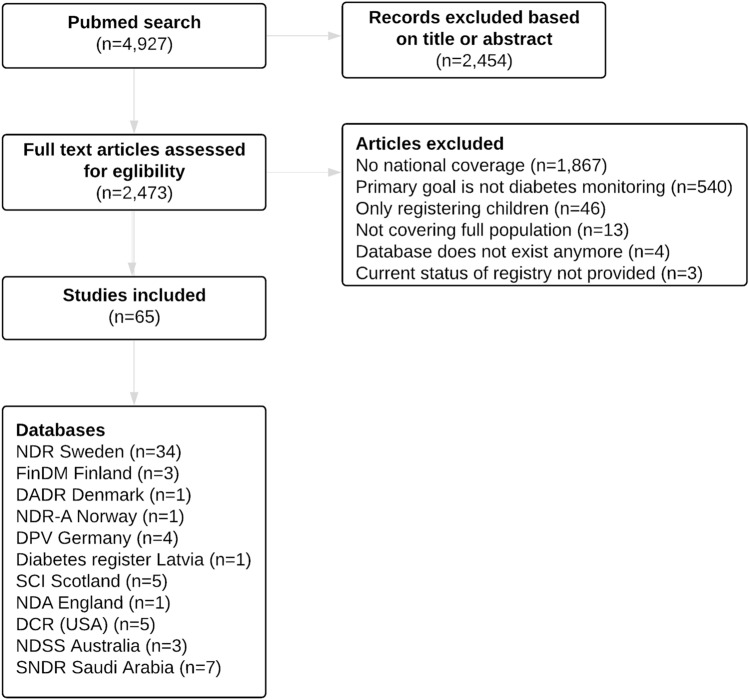
Methods: The literature on MEDLINE up to March 31, 2020, was searched, using keywords diabetes mellitus, national, registry, registration, and/or database. National disease-specific registries from corresponding articles were included. Database characteristics and clinical variables were obtained. All registries were compared to the ICHOM standard set of outcomes.
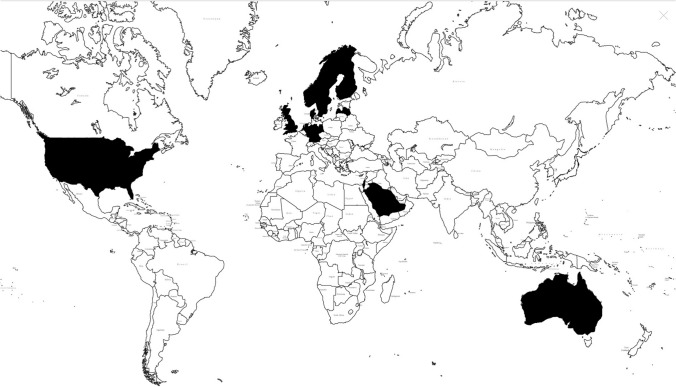
Results: We identified 12 national clinical diabetes registries, comprising a total of 7,181,356 diabetic patients worldwide. Nearly all registries recorded weight, HbA1c, lipid profile, and insulin treatment; the recording of other variables varied to a great extent. Overall, registries corresponded fairly well with the ICHOM set. Most registries proved to monitor and improve the quality of diabetes care using guidelines as a benchmark. The effects on national healthcare policy were more variable and often less clear.
Conclusions: National diabetes registries confer clear insights into diagnostics, complications, and treatment. The extent to which registries influenced national healthcare policy was less clear. A globally implemented standard outcome set has the potential to improve concordance between national registries, enhance the comparison and exchange of diabetes outcomes, and allocate resources and interventions where most needed.
Conflict of interest statement
The authors declare they have no conflict of interest.
Figures
References
-
- International Diabetes Federation Europe (2017) Integrating diabetes evidence into practice, p 34. Available from: https://idf.org/our-activities/advocacy-awareness/resources-and-tools/14...
-
- Williams R, Colagiuri SAR (2019) IDF diabetes atlas, pp 34–39. Available from: https://www.diabetesatlas.org/upload/resources/2019/IDF_Atlas_9th_Editio...
-
- Richardson E, Zaletel J, Nolte E (2016) National diabetes plans in Europe what lessons are there for the prevention and control of chronic diseases in Europe?. Available from: www.nijz.si
Publication types
MeSH terms
LinkOut - more resources
Full Text Sources
Medical
