


Autopsy or anatomical dissection: evidence of a craniotomy in a 17th-eighteenth century burial site (Ravenna, Italy)
- PMID: 32770494
- PMCID: PMC7889548
- DOI: 10.1007/s12024-020-00285-6
Autopsy or anatomical dissection: evidence of a craniotomy in a 17th-eighteenth century burial site (Ravenna, Italy)
Abstract
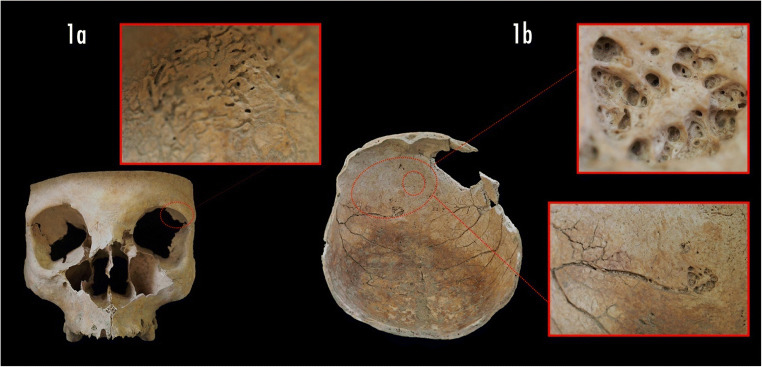
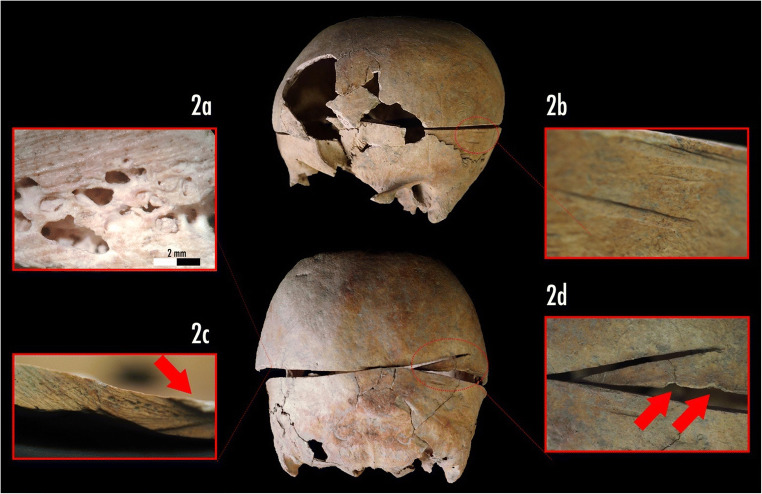
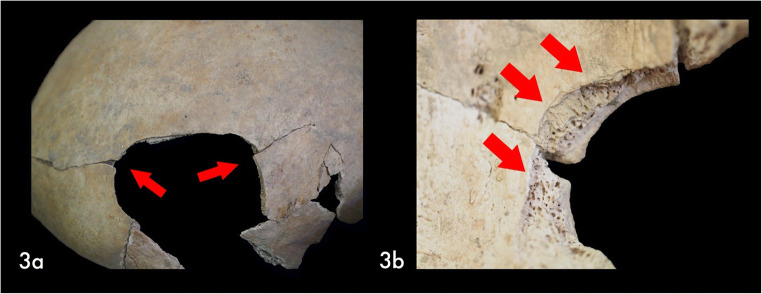
Surgical procedures undergone in life, autopsies and anatomical preparations can all leave clearly identifiable traces on human skeletal remains. Several studies on skeletons from archeological contexts have identified traces of these practices. However, the distinction between medical/forensic autopsy and anatomical dissections for scientific research can be challenging. We report the case of a middle-aged female skeleton from the cemetery of the church of San Biagio (Ravenna, Italy), dating back to the 17th-19th centuries, that shows signs of a complete craniotomy. In an attempt to clarify the reason for this practice, we analyzed all pathological and non-pathological markers on the skeleton. We carried out anthropological analyses and osteometric measurements to determine the biological profile and the cranial capacity of the individual. Paleopathological investigation and analyses of traumatic injury patterns were carried out using both a morphological and a microscopic approach. While we observed that the craniotomy was performed with a rip saw, we identified perimortem blunt force trauma to the frontal bone and an osteolytic lesion on the inner surface of the frontal bone. No other pathology was recognizable on the skeleton. Our differential diagnosis confidently proved that the craniotomy was due to an autoptsy procedure and was not the result of an anatomical dissection. We believe that, among other possible reasons, failed surgery could likely be the motive behind the ordering of the autopsy.
Keywords: Autopsy; Craniotomy; Forensic anthropology; Pathology.
Figures
References
-
- Dittmar JM, Mitchell PD. A new method for identifying and differentiating human dissection and autopsy in archaeological human skeletal remains. J Archaeol Sci Rep. 2015;3:73–79.
-
- Buikstra JE, Ubelaker DH, editors. Standards for data collection from human skeletal remains. Fayetteville: Arkansas Archeological Survey Reserach Series 44; 1994.
-
- Brooks S, Suchey JM. Skeletal age determination based on the os pubis: a comparison of the Acsádi-Nemeskéri and Suchey-Brooks methods. Hum Evol. 1990;5:227–238. doi: 10.1007/BF02437238. - DOI
Publication types
MeSH terms
LinkOut - more resources
Full Text Sources
Miscellaneous
