


Randomised clinical study: oral aspirin 325 mg daily vs placebo alters gut microbial composition and bacterial taxa associated with colorectal cancer risk
- PMID: 32770859
- PMCID: PMC7719064
- DOI: 10.1111/apt.16013
Randomised clinical study: oral aspirin 325 mg daily vs placebo alters gut microbial composition and bacterial taxa associated with colorectal cancer risk
Abstract
Background: Aspirin is associated with decreased risk of colorectal cancer (CRC), potentially by modulating the gut microbiome.
Aims: To evaluate the effect of aspirin on the gut microbiome in a double-blinded, randomised placebo-controlled pilot trial.
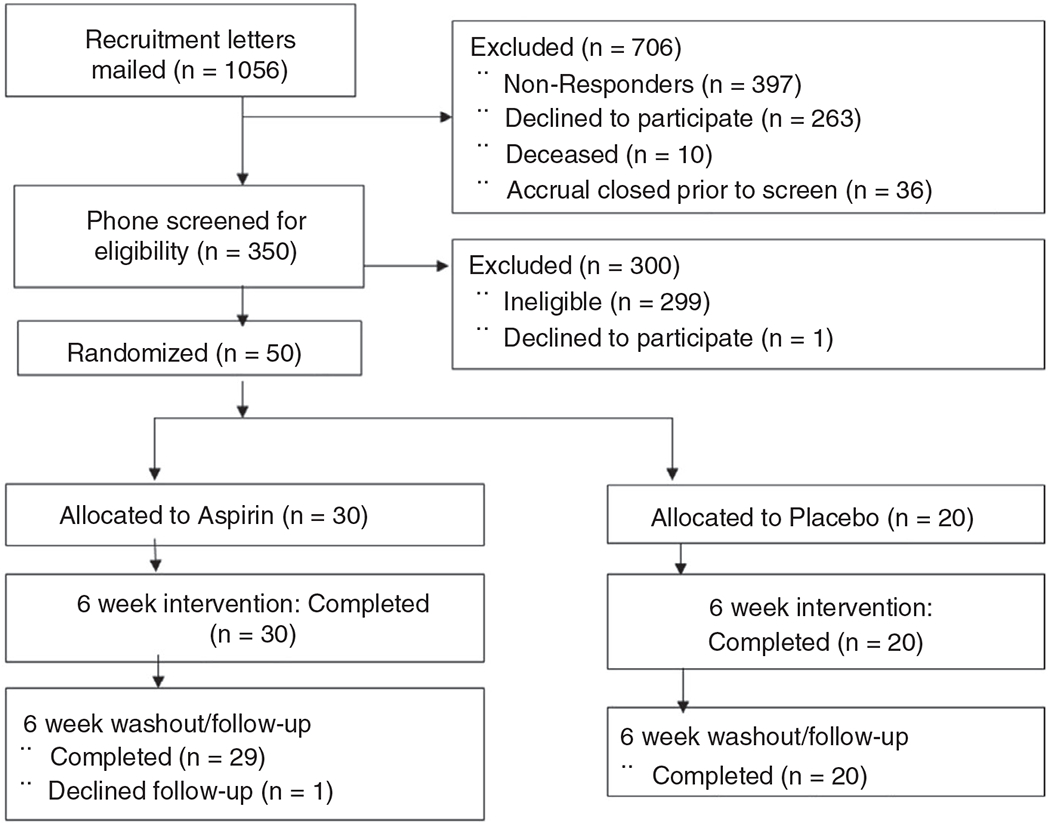
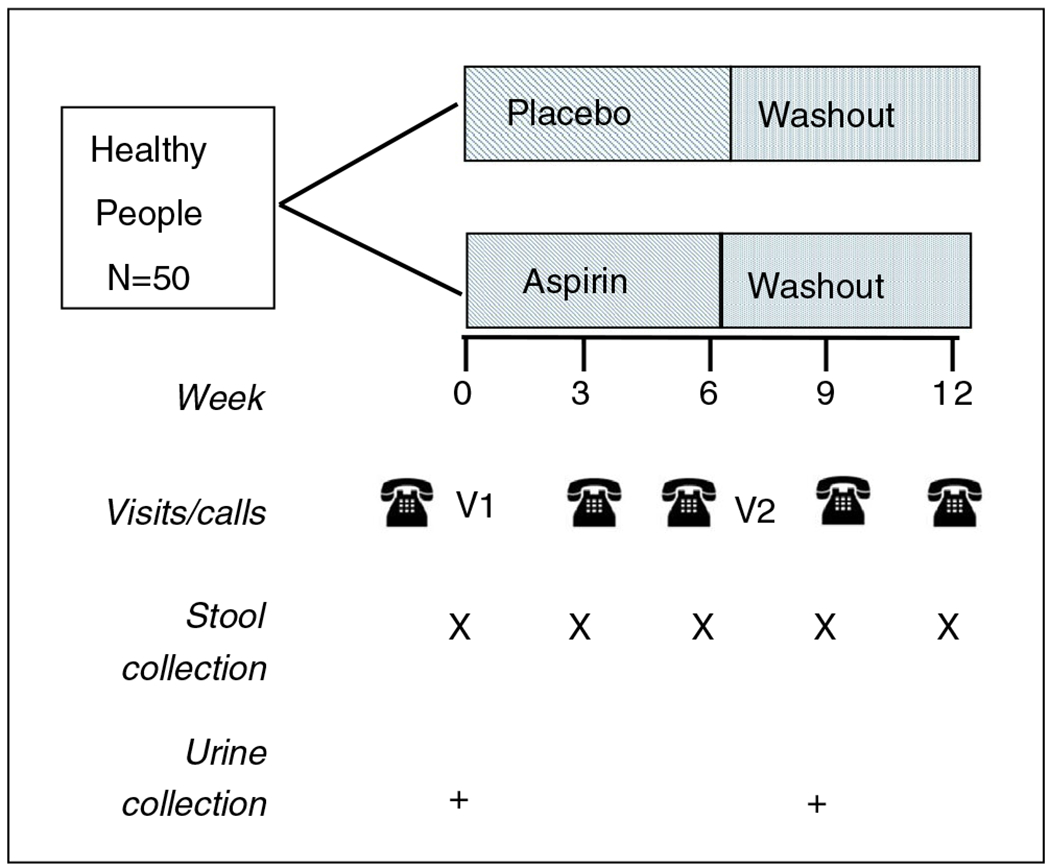
Methods: Healthy volunteers aged 50-75 received a standard dose of aspirin (325 mg, N = 30) or placebo (N = 20) once daily for 6 weeks and provided stool samples every 3 weeks for 12 weeks. Serial measurements of gut microbial community composition and bacterial abundance were derived from 16S rRNA sequences. Linear discriminant analysis of effect size (LEfSe) was tested for between-arm differences in bacterial abundance. Mixed-effect regression with binomial distribution estimated the effect of aspirin use on changes in the relative abundance of individual bacterial taxa via an interaction term (treatment × time).
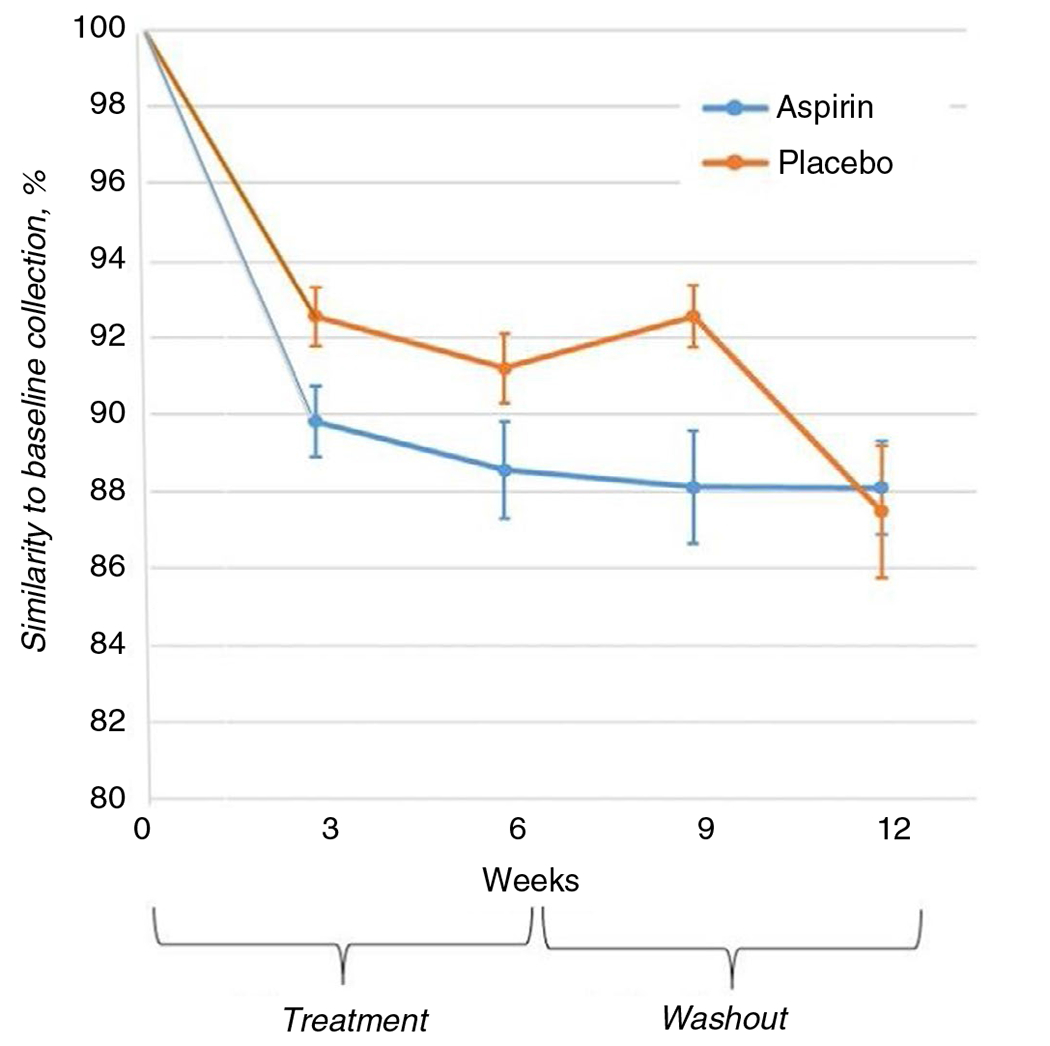
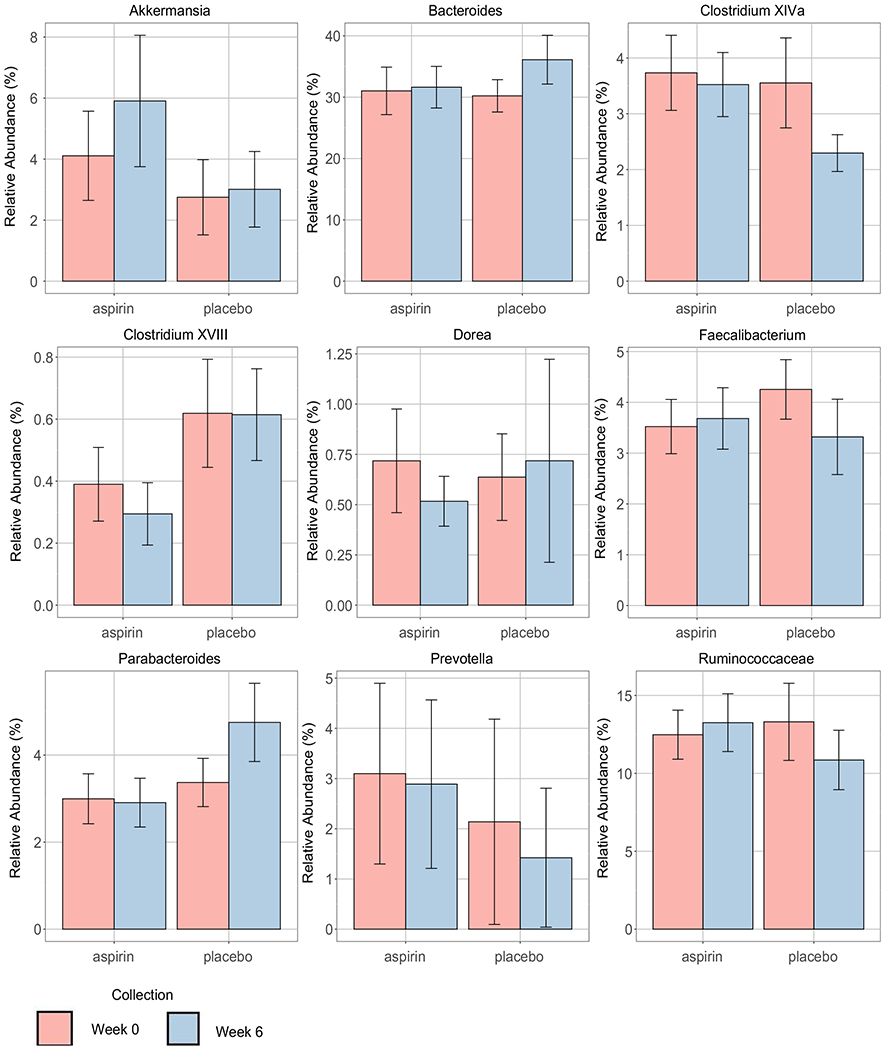
Results: Over the study period, there were differences in microbial composition in the aspirin vs placebo arm. After treatment, four taxa were differentially abundant across arms: Prevotella, Veillonella, Clostridium XlVa and Clostridium XVIII clusters. Of pre-specified bacteria associated with CRC (n = 8) or aspirin intake (n = 4) in published studies, interactions were significant for four taxa, suggesting relative increases in Akkermansia, Prevotella and Ruminococcaceae and relative decreases in Parabacteroides, Bacteroides and Dorea in the aspirin vs placebo arm.
Conclusion: Compared to placebo, aspirin intake influenced several microbial taxa (Ruminococcaceae, Clostridium XlVa, Parabacteroides and Dorea) in a direction consistent with a priori hypothesis based on their association with CRC. This suggests that aspirin may influence CRC development through an effect on the gut microbiome. The findings need replication in a larger trial.
© 2020 John Wiley & Sons Ltd.
Conflict of interest statement
Figures
Comment in
-
Letter: synergistic role of gut flora with aspirin to prevent colorectal cancers-authors' reply.Aliment Pharmacol Ther. 2020 Dec;52(11-12):1758. doi: 10.1111/apt.16141. Aliment Pharmacol Ther. 2020. PMID: 33205866 No abstract available.
-
Editorial: the microbiome, aspirin and colorectal cancer.Aliment Pharmacol Ther. 2020 Dec;52(11-12):1740-1741. doi: 10.1111/apt.16071. Aliment Pharmacol Ther. 2020. PMID: 33205868 No abstract available.
-
Letter: synergistic role of gut flora with aspirin to prevent colorectal cancers.Aliment Pharmacol Ther. 2020 Dec;52(11-12):1756-1757. doi: 10.1111/apt.16093. Aliment Pharmacol Ther. 2020. PMID: 33205869 No abstract available.
-
Editorial: the microbiome, aspirin and colorectal cancer-authors' reply.Aliment Pharmacol Ther. 2020 Dec;52(11-12):1742-1743. doi: 10.1111/apt.16115. Aliment Pharmacol Ther. 2020. PMID: 33205872 No abstract available.
References
-
- USPSTF. Final Update Summary: Aspirin Use to Prevent Cardiovascular Disease and Colorectal Cancer: Preventive Medication.: U.S. Preventive Services Task Force; April 2016. https://www.uspreventiveservicestaskforce.org/Page/Document/UpdateSummar...; Accessed 10/01/2016
-
- Arnett DK, Blumenthal RS, Albert MA, et al. 2019 ACC/AHA guideline on the primary prevention of cardiovascular disease: executive summary: a report of the American College of Cardiology/American Heart Association Task Force on Clinical Practice Guidelines. Journal of the American College of Cardiology. 2019;74(10):1376–1414. - PMC - PubMed
Publication types
MeSH terms
Substances
Grants and funding
LinkOut - more resources
Full Text Sources