


A survey on the attitudes of Chinese medical students towards current pathology education
- PMID: 32771019
- PMCID: PMC7414265
- DOI: 10.1186/s12909-020-02167-5
A survey on the attitudes of Chinese medical students towards current pathology education
Abstract
Background: Pathology education provides information on pathology and guides students to become pathologists. Recently, the Ministry of Education of the People's Republic of China required the establishment of the system of 'High-quality Online and Offline Courses', which indicates that online courses will play an important role in higher education. Furthermore, the number of pathologists currently cannot satisfy clinical needs. To solve this health issue and implement the policy from the Ministry of Education, it is necessary to improve the current state of pathology education. First, we need to know students' opinions of the current courses and their professional choices.
Methods: Online questionnaires covering the quality of traditional courses, attitudes towards online courses, and suggestions for optimizing courses were designed and applied. Whether students want to become pathologists and the underlying reasons for this interest are also included in this survey. Participants are medical students from certain colleges in Nanjing. The collected data were assessed by statistical analyses, and p-values less than 0.05 were considered significant.
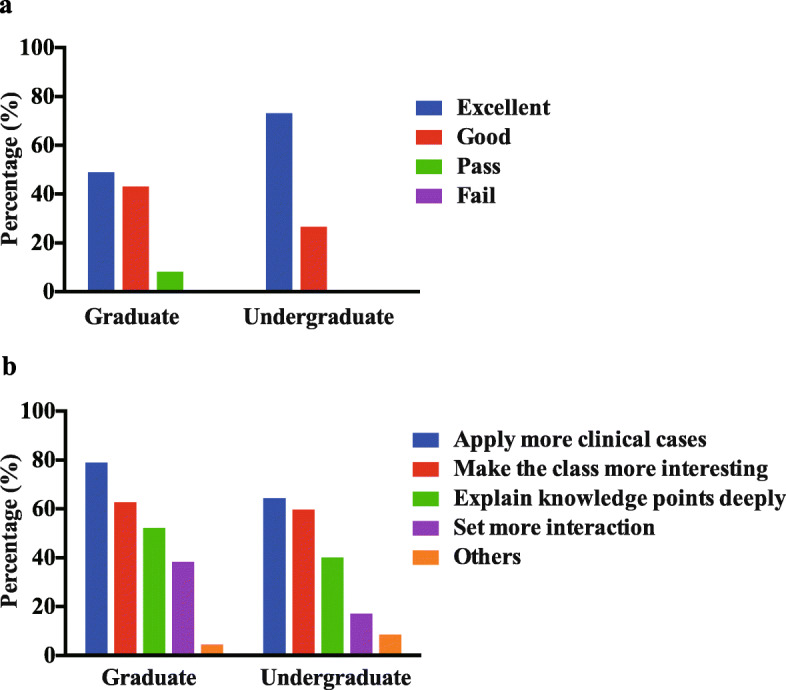
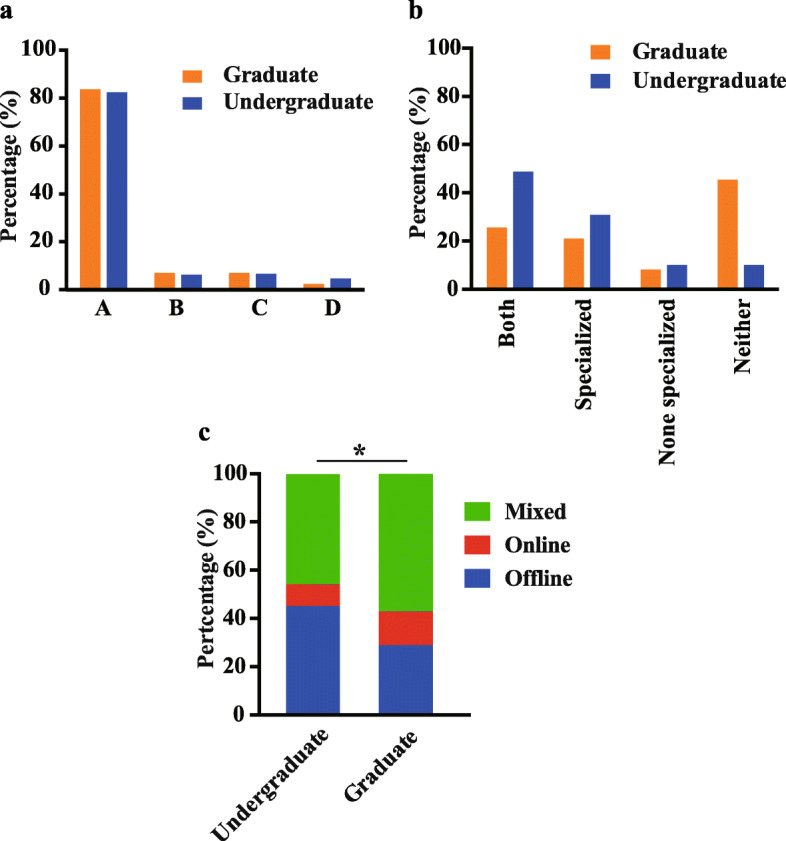
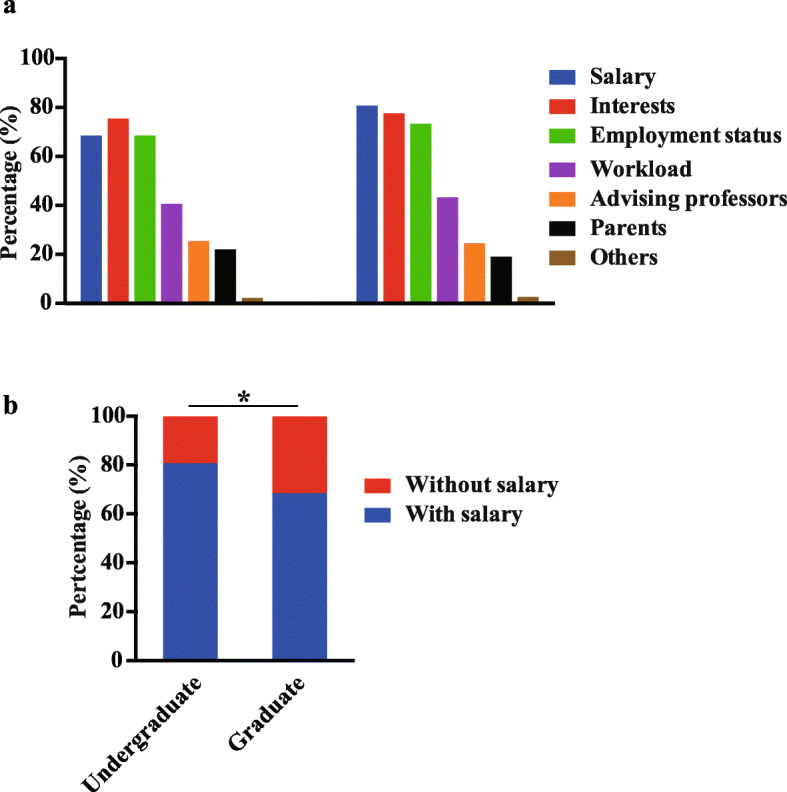
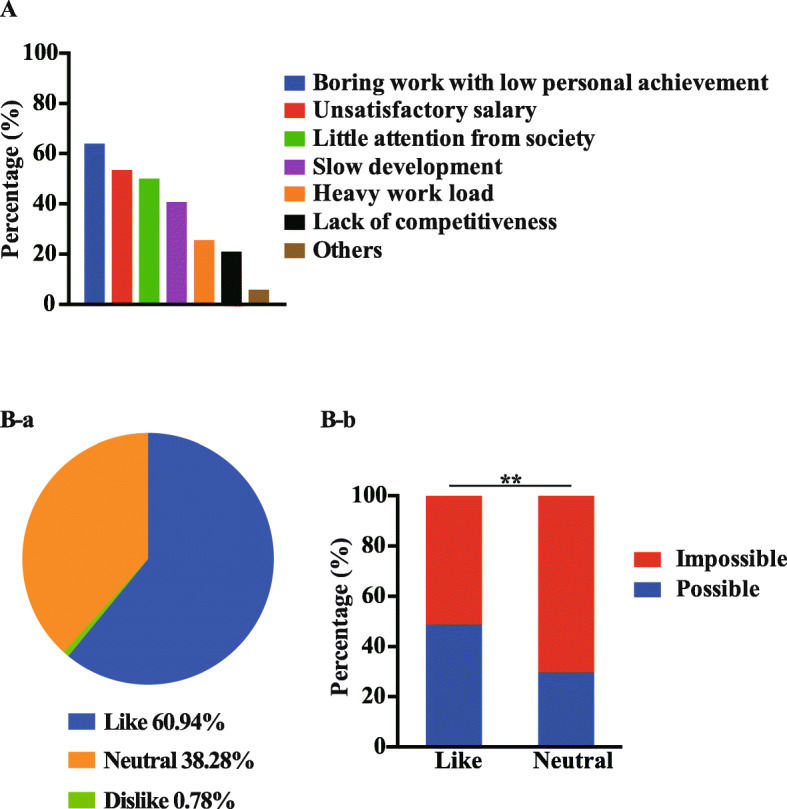
Results: Of the 342 valid responses, 60.94% of undergraduate students showed their interest in pathology courses, and among them, 48.72% expressed that they may become pathologists. However, the corresponding percentage is only 29.59% in the group without interest. To optimize curricula, the top two suggestions are introducing more clinical cases (undergraduate students, 64.45%; graduate students, 79.09%) and making the classes lively and interesting (undergraduate students, 59.77%; graduate students, 62.79%). Approximately 80.00% of students consider online courses to be good supplementary materials to traditional courses, and approximately half prefer an online-offline mixed learning model. Salary, interest, and employment status are the main factors influencing students' professional choices.
Conclusions: Students are generally satisfied with traditional pathology courses, and online courses are good supplementary materials in their opinions. It has been suggested that clinical cases be introduced in classes. It is more likely that students who have an interest in pathology will become pathologists. The data from this survey also show that the main causes of the shortage of pathologists are a lack of engaging work and an unsatisfactory salary.
Keywords: Chinese medical students; Pathology education; Professional choice; Survey; Traditional and online courses.
Conflict of interest statement
The authors declare that they have no competing interests.
Figures
References
-
- Policy from the Ministry of Education of the People's Republic of China. 2019. www.moe.gov.cn/srcsite/A08/s7056/201910/t20191011_402759.html. Accessed 13 Oct 2019.
-
- Shortage of Pathologists in China. CCTV News. 2018 http://news.cctv.com/2018/05/08/ARTIyxDHJH9Fz2bkabDTv4DR180508.shtml. Accessed 17 Jan 2020.
-
- Royal College of Pathologists . Meeting pathology demand histopathology workforce census. London, England: Royal College of Pathologists; 2018.
-
- National shortage of pathologists causes concerns. CTV News. 2008. https://www.ctvnews.ca/national-shortage-of-pathologists-causes-concerns.... Accessed 17 Jan 2020.
MeSH terms
Grants and funding
LinkOut - more resources
Full Text Sources
