


Gut microbes in neurocognitive and mental health disorders
- PMID: 32772900
- PMCID: PMC7877977
- DOI: 10.1080/07853890.2020.1808239
Gut microbes in neurocognitive and mental health disorders
Abstract
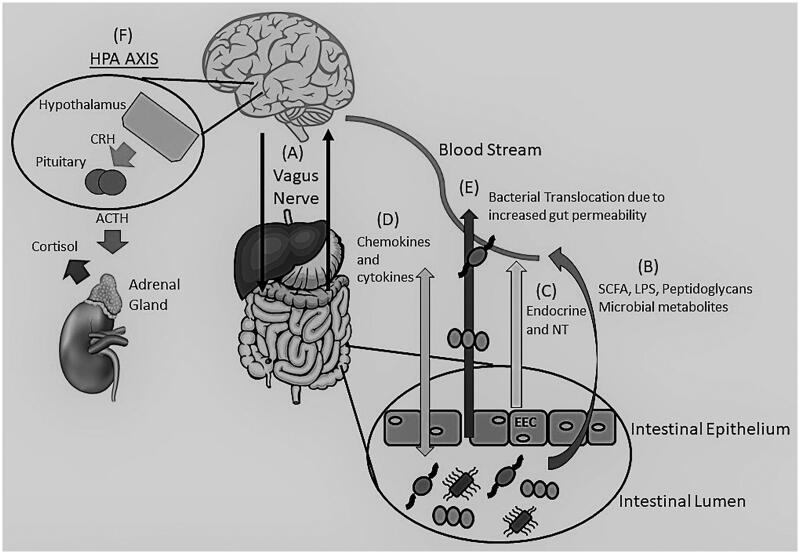
Introduction: As individuals age, the prevalence of neurocognitive and mental health disorders increases. Current biomedical treatments do not completely address the management of these conditions. Despite new pharmacological therapy the challenges of managing these diseases remain.There is increasing evidence that the Gut Microbiome (GM) and microbial dysbiosis contribute to some of the more prevalent mental health and neurocognitive disorders, such as depression, anxiety, obsessive-compulsive disorder (OCD), post-traumatic stress disorder (PTSD), schizophrenia, bipolar disorder (BP), and dementia as well as the behavioural and psychological symptoms of dementia (BPSD) through the microbiota-gut-brain axis. Methodology: Scoping review about the effect of gut microbiota on neurocognitive and mental health disorders.
Results: This scoping review found there is an evolving evidence of the involvement of the gut microbiota in the pathophysiology of neurocognitive and mental health disorders. This manuscript also discusses how the psychotropics used to treat these conditions may have an antimicrobial effect on GM, and the potential for new strategies of management with probiotics and faecal transplantation.
Conclusions: This understanding can open up the need for a gut related approach in these disorders as well as unlock the door for the role of gut related microbiota management. KEY MESSAGES Challenges of managing mental health conditions remain in spite of new pharmacological therapy. Gut dysbiosis is seen in various mental health conditions. Various psychotropic medications can have an influence on the gut microbiota by their antimicrobial effect.
Keywords: Gut microbiota; antimicrobial activity; mental health.
Conflict of interest statement
No potential conflict of interest was reported by the author(s).
Figures
References
-
- Wittchen HU, Jacobi F, Rehm J, et al. The size and burden of mental disorders and other disorders of the brain in Europe 2010. Eur Neuropsychopharmacol. 2011; 21(9):655–679 - PubMed
-
- American Psychiatric Association. (2013) Diagnostic and statistical manual of mental disorders (5th ed). Arlington, VA: American Psychiatric Association
-
- James SL, Geleijnse JM.. Global, regional, and national incidence, prevalence, and years lived with disability for 354 diseases and injuries for 195 countries and territories, 1990–2017: A systematic analysis for the global burden of disease study 2017. The Lancet (British Edition). 2018;392(10159):1789–1858. - PMC - PubMed
-
- Benbow SM. Older people, mental health and learning. Int Psychogeriatr. 2009;21(5):799–804. - PubMed
Publication types
MeSH terms
Substances
LinkOut - more resources
Full Text Sources
Medical
Research Materials
