


Genomic variance of Open Reading Frames (ORFs) and Spike protein in severe acute respiratory syndrome coronavirus 2 (SARS-CoV-2)
- PMID: 32773643
- PMCID: PMC7493783
- DOI: 10.1097/JCMA.0000000000000387
Genomic variance of Open Reading Frames (ORFs) and Spike protein in severe acute respiratory syndrome coronavirus 2 (SARS-CoV-2)
Abstract
Background: The outbreak of severe acute respiratory syndrome coronavirus 2 (SARS-CoV-2) has caused severe pneumonia at December 2019. Since then, it has been wildly spread from Wuhan, China, to Asia, European, and United States to become the pandemic worldwide. Now coronavirus disease 2019 were globally diagnosed over 3 084 740 cases with mortality of 212 561 toll. Current reports variants are found in SARS-CoV-2, majoring in functional ribonucleic acid (RNA) to transcribe into structural proteins as transmembrane spike (S) glycoprotein and the nucleocapsid (N) protein holds the virus RNA genome; the envelope (E) and membrane (M) alone with spike protein form viral envelope. The nonstructural RNA genome includes ORF1ab, ORF3, ORF6, 7a, 8, and ORF10 with highly conserved information for genome synthesis and replication in ORF1ab.
Methods: We apply genomic alignment analysis to observe SARS-CoV-2 sequences from GenBank (http://www.ncbi.nim.nih.gov/genebank/): MN 908947 (China, C1); MN985325 (United States: WA, UW); MN996527 (China, C2); MT007544 (Australia: Victoria, A1); MT027064 (United States: CA, UC); MT039890 (South Korea, K1); MT066175 (Taiwan, T1); MT066176 (Taiwan, T2); LC528232 (Japan, J1); and LC528233 (Japan, J2) and Global Initiative on Sharing All Influenza Data database (https://www.gisaid.org). We adopt Multiple Sequence Alignments web from Clustalw (https://www.genome.jp/tools-bin/clustalw) and Geneious web (https://www.geneious.com.
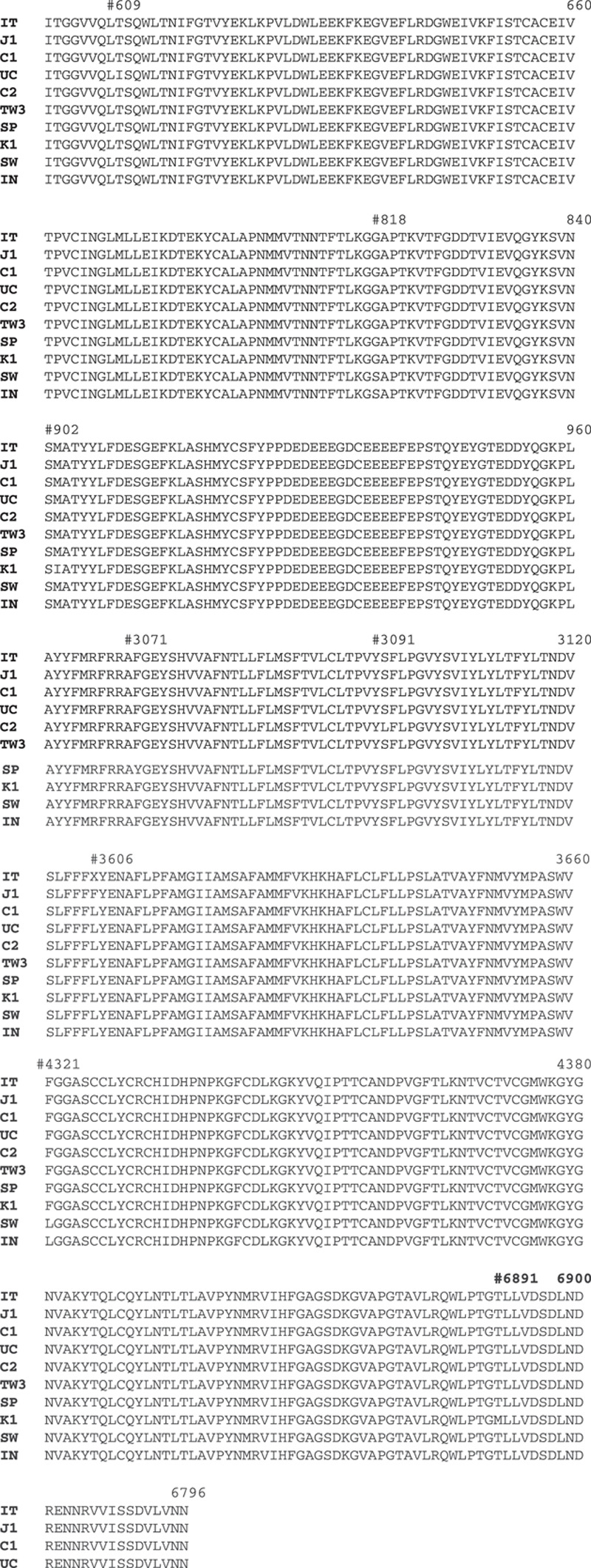
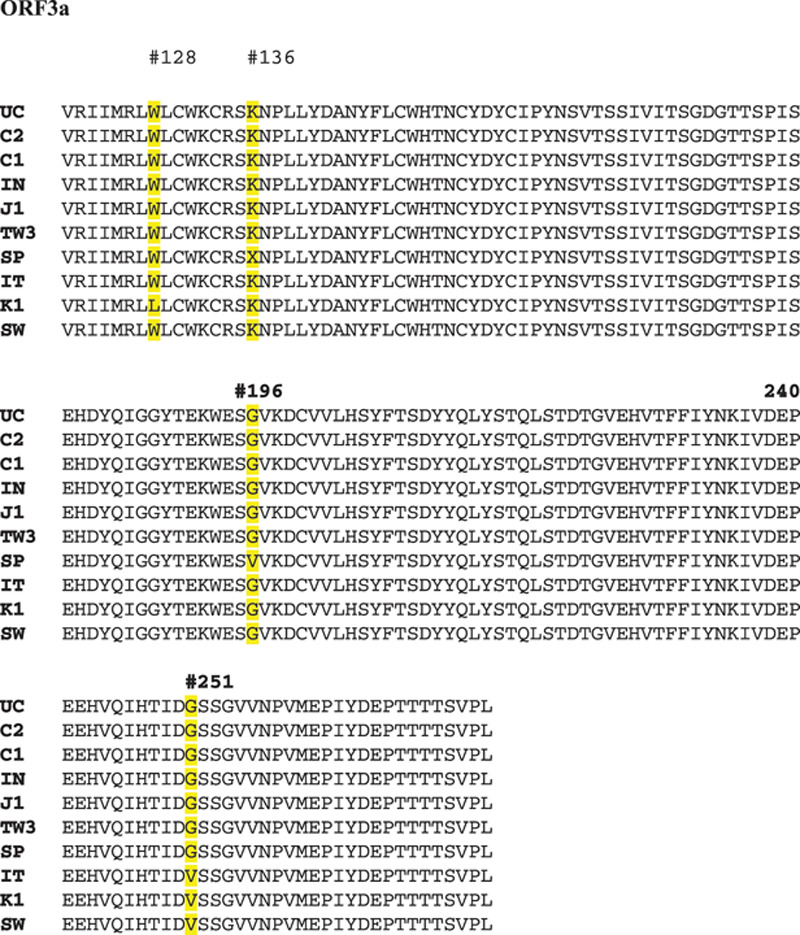
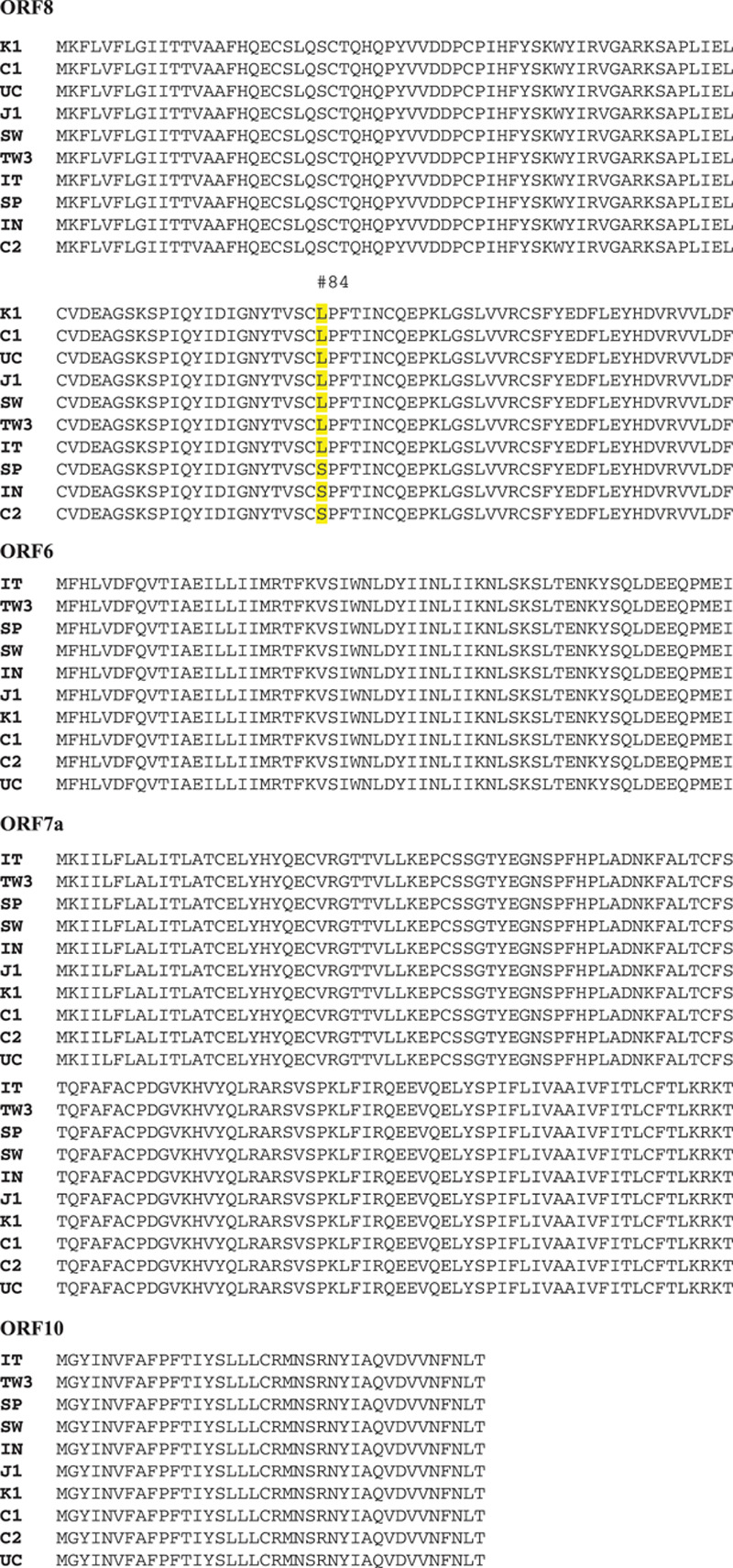
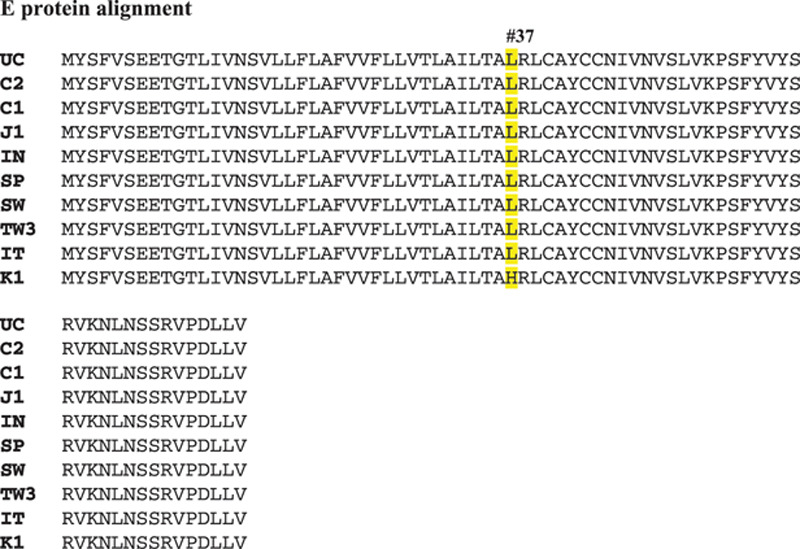
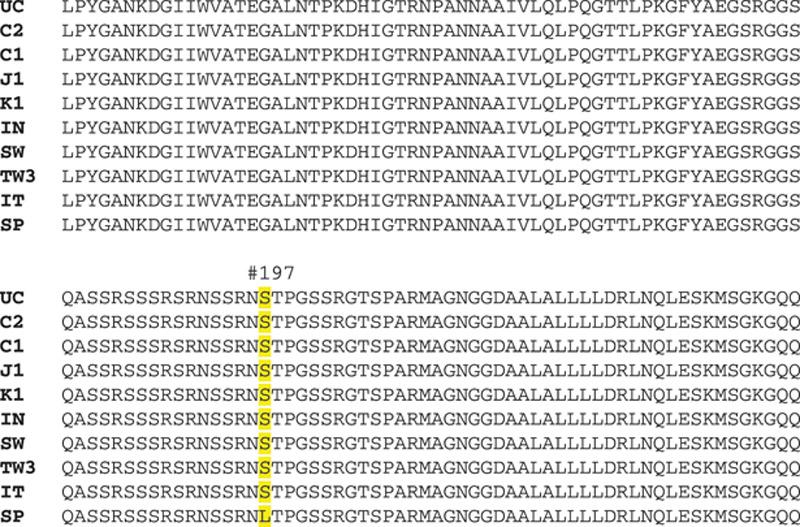
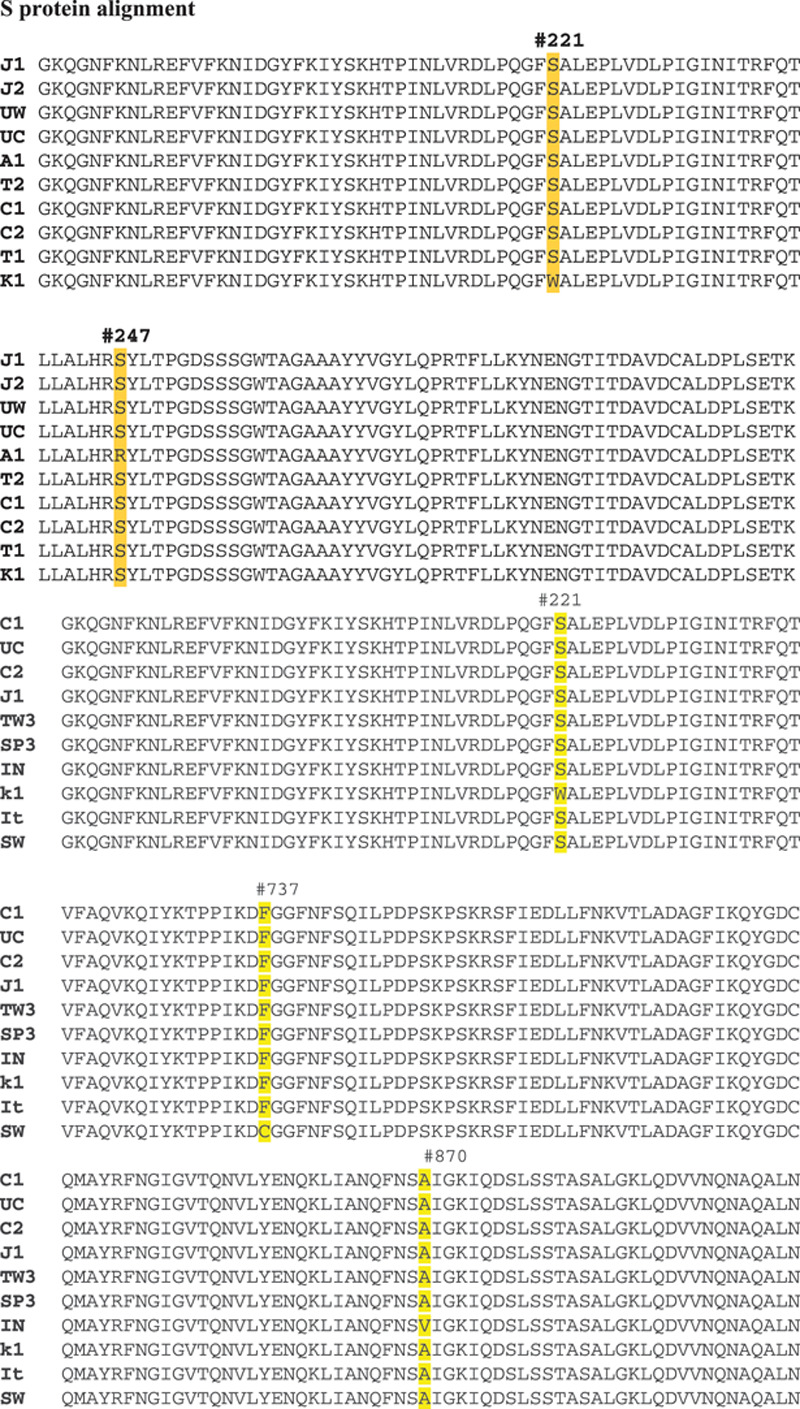
Results: We analyze database by genome alignment search for nonstructural ORFs and structural E, M, N, and S proteins. Mutations in ORF1ab, ORF3, and ORF6 are observed; specific variants in spike region are detected.
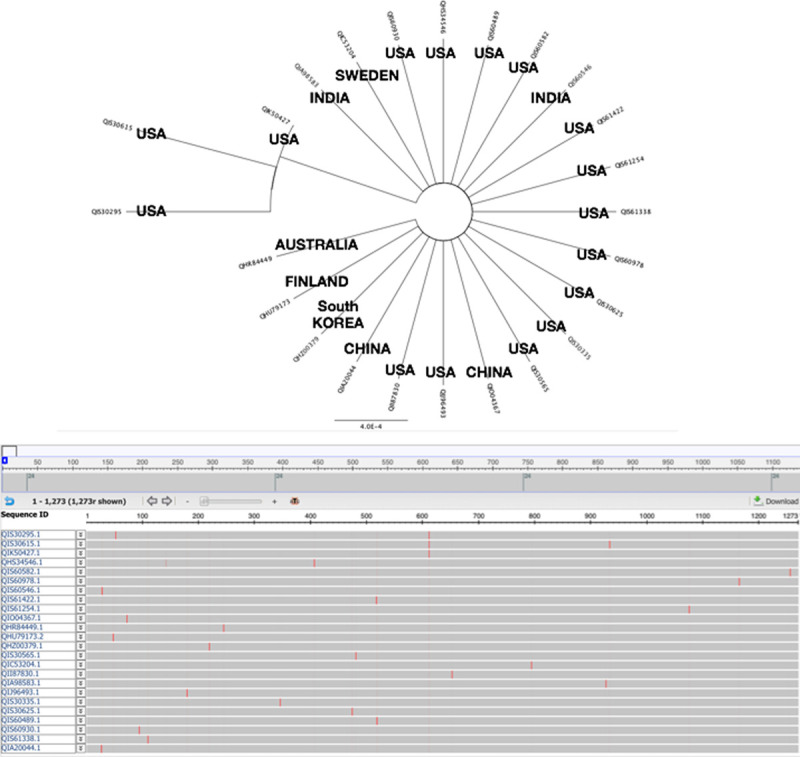
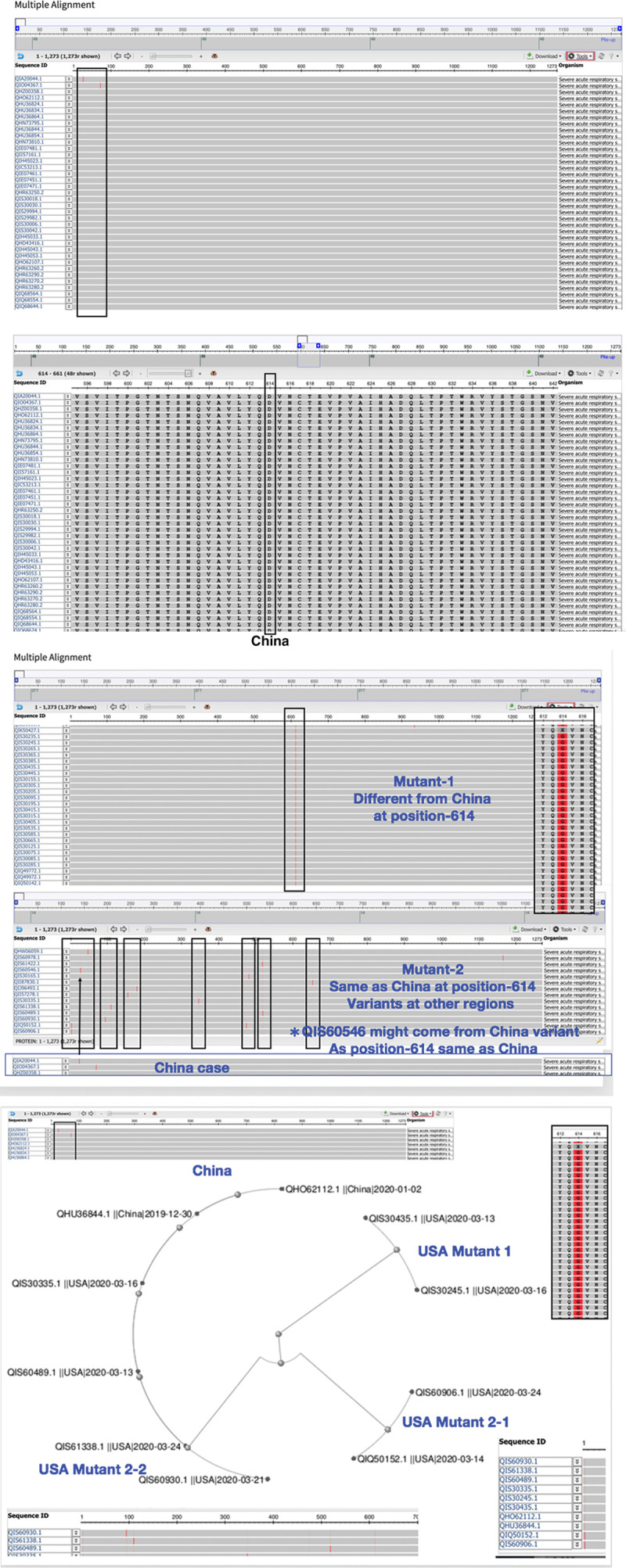
Conclusion: We perform genomic analysis and comparative multiple sequence of SARS-CoV-2. Large scaling sequence alignments trace to localize and catch different mutant strains in United possibly to transmit severe deadly threat to humans. Studies about the biological symptom of SARS-CoV-2 in clinic animal and humans will be applied and manipulated to find mechanisms and shield the light for understanding the origin of pandemic crisis.
Conflict of interest statement
Conflicts of interest: The authors declare that they have no conflicts of interest related to the subject matter or materials discussed in this article.
Figures
References
-
- World Health Organization. Novel coronavirus (2019-nCoV) situation report 23. 2020Available at https://www.who.int/emergencies/diseases/novel-coronavirus-2019.
-
- World Health Organization. Coronavirus disease 2019. Retrieved March 15, 2020. Available at https://covid19.who.int.
-
- ICTV website. The International Committee on Taxonomy of Viruses (ICTV).February 5, 2020Available at https://talk.ictvonline.org.
Publication types
MeSH terms
Substances
LinkOut - more resources
Full Text Sources
Miscellaneous
