


A Rare Case of Acquired Hemolytic Anemia and Pancytopenia Secondary to Pernicious Anemia
- PMID: 32774276
- PMCID: PMC7383151
- DOI: 10.1159/000507981
A Rare Case of Acquired Hemolytic Anemia and Pancytopenia Secondary to Pernicious Anemia
Abstract
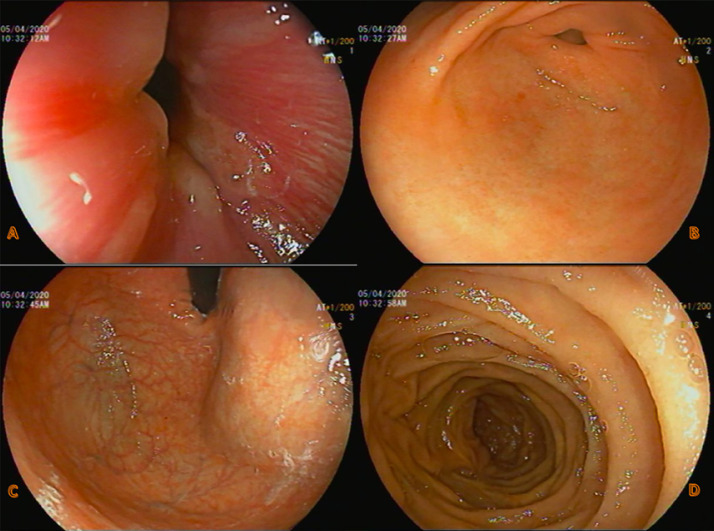
The commonest etiologies of new-onset pancytopenia are congenital bone marrow failure syndromes, marrow space-occupying lesions, infections, and peripheral destruction. Nutritional deficiencies, including folate and vitamin B12, can occasionally cause pancytopenia. We report a 48-year-old gentleman who presented with a 1-week history of dizziness and upper gastrointestinal bleeding. Laboratory evaluation revealed pancytopenia, macrocytosis, toxic neutrophils, hemolysis, suppressed reticulocyte count, positive direct anti-globulin test (DAT), severely reduced B12 levels, and positive anti-intrinsic factor and anti-parietal cell antibodies. He was started on weekly intramuscular B12 supplementation and showed improvement in blood cell counts during follow-up. Recognition of B12 deficiency as a cause of pancytopenia and DAT-positive autoimmune hemolytic anemia can help to avoid unwanted investigations and aid in early diagnosis and treatment.
Keywords: B12 deficiency; Megaloblastic anemia; Pancytopenia; Pernicious anemia.
Copyright © 2020 by S. Karger AG, Basel.
Conflict of interest statement
The authors have no conflicts of interest to declare.
Figures

References
-
- Weinzierl EP, Arber DA. Bone marrow evaluation in new-onset pancytopenia. Hum Pathol. 2013 Jan 1;44((6)):1154–64. - PubMed
-
- Green R. Vitamin B12 deficiency from the perspective of a practicing hematologist. Blood. 2017 Nov;129((19)):2603–11. - PubMed
-
- Langan RC, Goodbred AJ. Vitamin B12 deficiency: recognition and management. Am Fam Physician. 2017 Sep 15;96((6)):384–9. - PubMed
Publication types
LinkOut - more resources
Full Text Sources
