


Unusual Case of Anaplastic Large Cell Lymphoma Presenting as a Breast Mass in a Patient with no History of Breast Implants
- PMID: 32774970
- PMCID: PMC7396074
- DOI: 10.1155/2020/7543836
Unusual Case of Anaplastic Large Cell Lymphoma Presenting as a Breast Mass in a Patient with no History of Breast Implants
Abstract
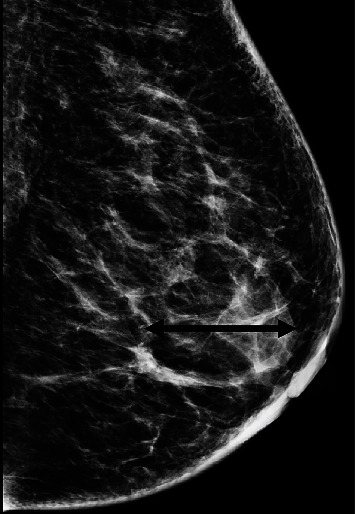
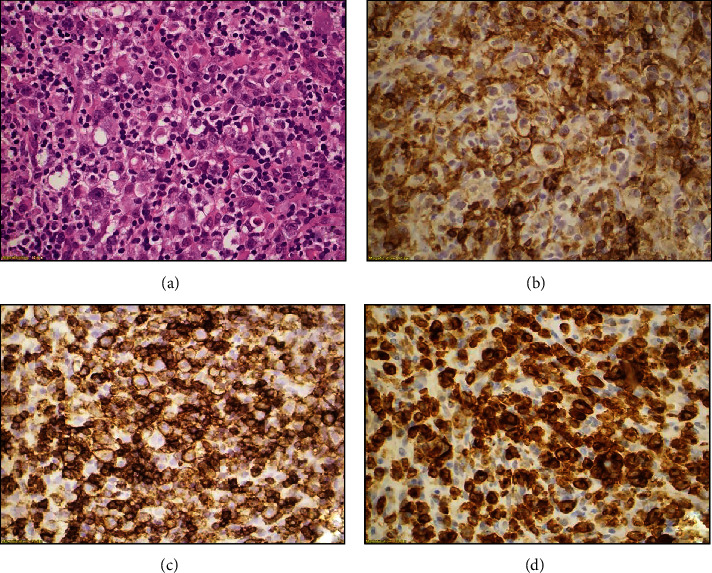
Adenocarcinoma is the most common malignant neoplasm involving breast tissue. In contrast to carcinomas, the other types of malignant neoplasms involving the breast are relatively uncommon. One of the examples of this rare entity is lymphoma. Traditionally, non-Hodgkin lymphomas (NHL) involving the breast are divided into primary lymphoma of the breast and systemic lymphoma, although the distinction could be challenging. Most of NHL involving breast tissue have B cell origin; T cell NHL represents less than 20% of all lymphoma cases. Anaplastic large cell lymphomas (ALCL) involving the breast accounts for even lower percentage of cases. Similar to ALCL involving other sites, there are several main types of ALCL identified: primary cutaneous ALCL and systemic ALCL, which is subdivided into ALK positive and ALK negative subtypes. Relatively recently, an additional distinct subtype of ALK-negative ALCL was described, which is associated with textured breast implants and needs to be considered as a differential diagnosis if patient has a history of breast implants. Here, we report a case of ALCL presented as a breast mass without history of breast implant and discuss similar cases published in the literature.
Copyright © 2020 Yana Ivashkevich et al.
Conflict of interest statement
The authors declare that there are no conflicts of interest regarding the publication of this article.
Figures
References
-
- Lakhani S. R., Ellis I. O., Schnitt S. J., Tan P. H., van de Vijver M. J. WHO Classification of Tumours of the Breast. 4th ed. Lyon: International Agency for Research on Cancer; 2012.
-
- Talwalkar S. S., Miranda R. N., Valbuena J. R., Routbort M. J., Martin A. W., Medeiros L. J. Lymphomas involving the breast: a study of 106 cases comparing localized and disseminated neoplasms. The American Journal of Surgical Pathology. 2008;32(9):1299–1309. doi: 10.1097/PAS.0b013e318165eb50. - DOI - PubMed
-
- Miranda R. N., Lin L., Talwalkar S. S., Manning J. T., Medeiros L. J. Anaplastic large cell lymphoma involving the breast: a clinicopathologic study of 6 cases and review of the literature. Archives of Pathology & Laboratory Medicine. 2009;133(9):1383–1390. doi: 10.1043/1543-2165-133.9.1383. - DOI - PubMed
Publication types
LinkOut - more resources
Full Text Sources
