


A review on prospective production of biofuel from microalgae
- PMID: 32775233
- PMCID: PMC7396912
- DOI: 10.1016/j.btre.2020.e00509
A review on prospective production of biofuel from microalgae
Abstract
This critical review summarizes the utilization of algae as the resilient source for biofuel. The paper validates the different stages in generation of biofuels and provides a clarity on III generation biofuels. The microalgae is focused as an incredible source and a detailed discussion has been carried out from the cultivation, extraction and conversion to the final product. An elaborate view on conversion methodologies and troubles involved in the respective techniques are presented. The efficiency of the algal fuel performing in I/C engines derived from major techniques is considered. There exist new challenging barriers in the implementation of microalgae as prospective source in the energy market. In addition, types of pyrolysis for the production of main product from microalgae had been discussed in detail. Besides, some microalgae grow easily from fresh to waste water, make it more feasible source. Although the microalgae are a best alternative, cost of production and the yield of biofuel are still challenging. Further, cultivation of microalgae is very effective by applying two stage cultivation strategies. This comprehensive review provides the useful tool to identify, innovate and operate microalgae as the potential based biofuel.
Keywords: Biofuel; Cultivation; III generation fuels; Microalgae; Pyrolysis.
© 2020 Published by Elsevier B.V.
Conflict of interest statement
The authors declare that they have no known competing financial interests or personal relationships that could have appeared to influence the work reported in this paper.
Figures
References
-
- Peng L., Kiyoshi S., Hisao M. Extraction techniques in sustainable biofuel production: a concise review. Fuel Process. Technol. 2019;193:295–303.
-
- Piotr B., Aneta B.-B., Elżbieta Jadwiga S., Krzysztof ózef J.J., Bogdan D., James W.D. Development of renewable energy sources market and biofuels in the European Union. J. Clean. Prod. 2019;228:467–484.
-
- Curtin J., McInerney C., Gallachóir Ó B., Hickey C., Deeney P. Quantifying stranding risk for fossil fuel assets and implications for renewable energy investment: a review of the literature. Renewable Sustainable Energy Rev. 2019;116(109402)
-
- Ting W., Boqiang L. Fuel consumption in road transport: a comparative study of China and OECD countries. J. Clean. Prod. 2019;(206):156–170.
-
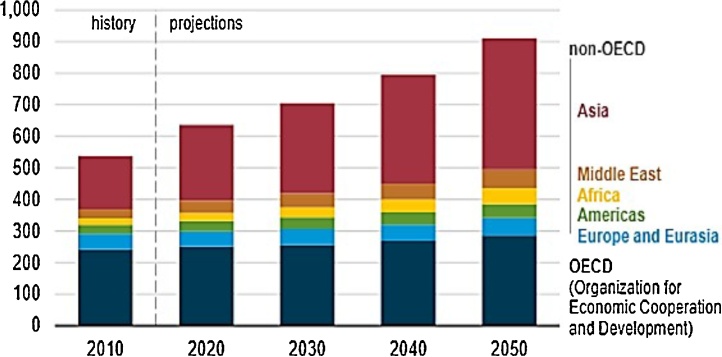
- EIA projects nearly 50% increase in world energy usage by 2050, led by growth in Asia. URL: https://www.eia.gov/todayinenergy/detail.php?id=41433.
Publication types
LinkOut - more resources
Full Text Sources