Alcohol Use and Gastrointestinal Cancer Risk
- PMID: 32775347
- PMCID: PMC7383256
- DOI: 10.1159/000507232
Alcohol Use and Gastrointestinal Cancer Risk
Abstract
Background: Alcohol use is an important and potentially modifiable risk factor for gastrointestinal cancers. The more and the longer a person drinks, the higher the risk of cancer becomes. Even modest use of alcohol may increase cancer risk; 100 g of alcohol per week or less is currently considered to be the limit of low-risk use.
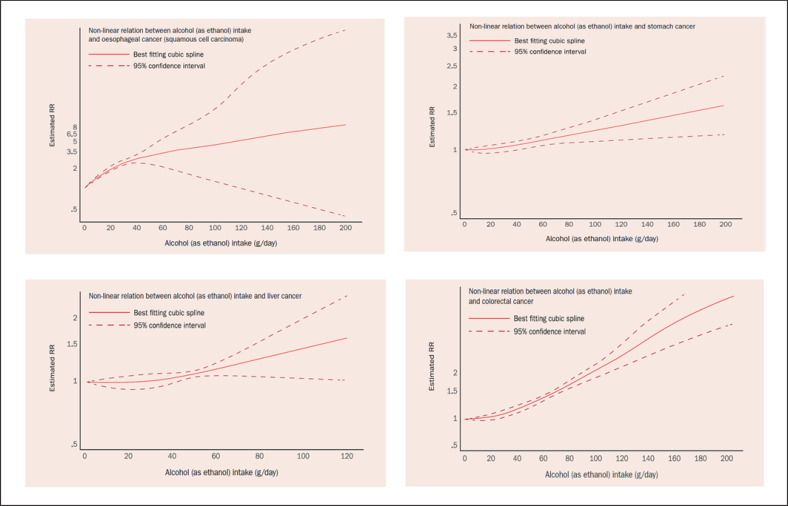
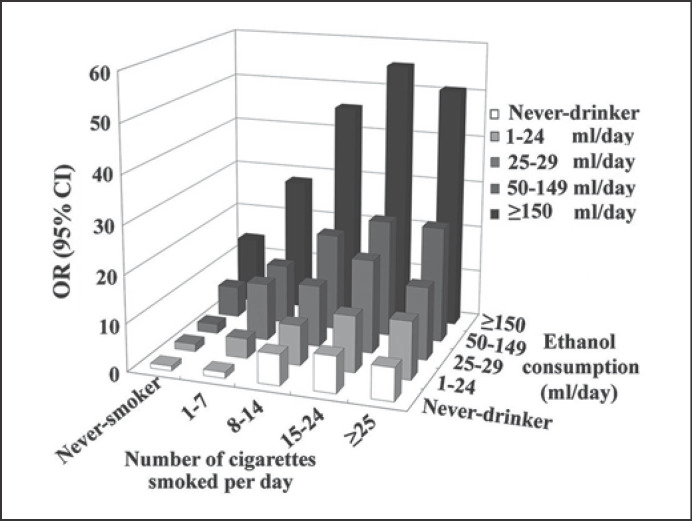
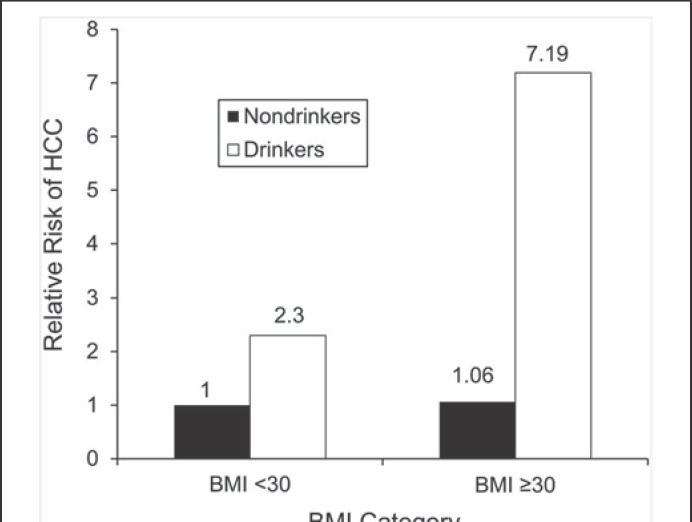
Gastrointestinal cancer risk: Alcohol is causally associated with oesophageal squamous cell cancer, gastric cancer, hepatocellular carcinoma, colorectal cancer, and most likely also with pancreatic cancer. Alcohol when combined with tobacco smoking or excess body weight can act synergistically to cause gastrointestinal cancer. Exposure to alcohol may have contributed to the recent incidence increases of early-onset gastrointestinal cancers in some Western countries.
Conclusions: People with long-term risky alcohol use should be encouraged to join cancer screening programmes. Alcohol cessation appears to be effective in reducing the alcohol-induced, increased cancer risk.
Keywords: Alcohol; Cholangiocarcinoma; Colorectal cancer; Gastric cancer; Hepatocellular carcinoma; Oesophageal cancer; Pancreatic ductal adenocarcinoma.
Copyright © 2020 by S. Karger AG, Basel.
Conflict of interest statement
The author has no conflicts of interest to declare.
Figures
References
-
- Baan R, Straif K, Grosse Y, Secretan B, El Ghissassi F, Bouvard V, et al. WHO International Agency for Research on Cancer Monograph Working Group Carcinogenicity of alcoholic beverages. Lancet Oncol. 2007 Apr;8((4)):292–3. - PubMed
-
- LoConte NK, Brewster AM, Kaur JS, Merrill JK, Alberg AJ. Alcohol and Cancer: A Statement of the American Society of Clinical Oncology. J Clin Oncol. 2018 Jan;36((1)):83–93. - PubMed
-
- World Cancer Research Fund/American Institute for Cancer Research Continuous Update Project Expert Report 2018. Alcoholic Drinks and the Risk of Cancer. Available online at Dietandcancerreport.Org.
Publication types
LinkOut - more resources
Full Text Sources