


A new perspective on transient characteristics of quiet stance postural control
- PMID: 32776952
- PMCID: PMC7416949
- DOI: 10.1371/journal.pone.0237246
A new perspective on transient characteristics of quiet stance postural control
Abstract
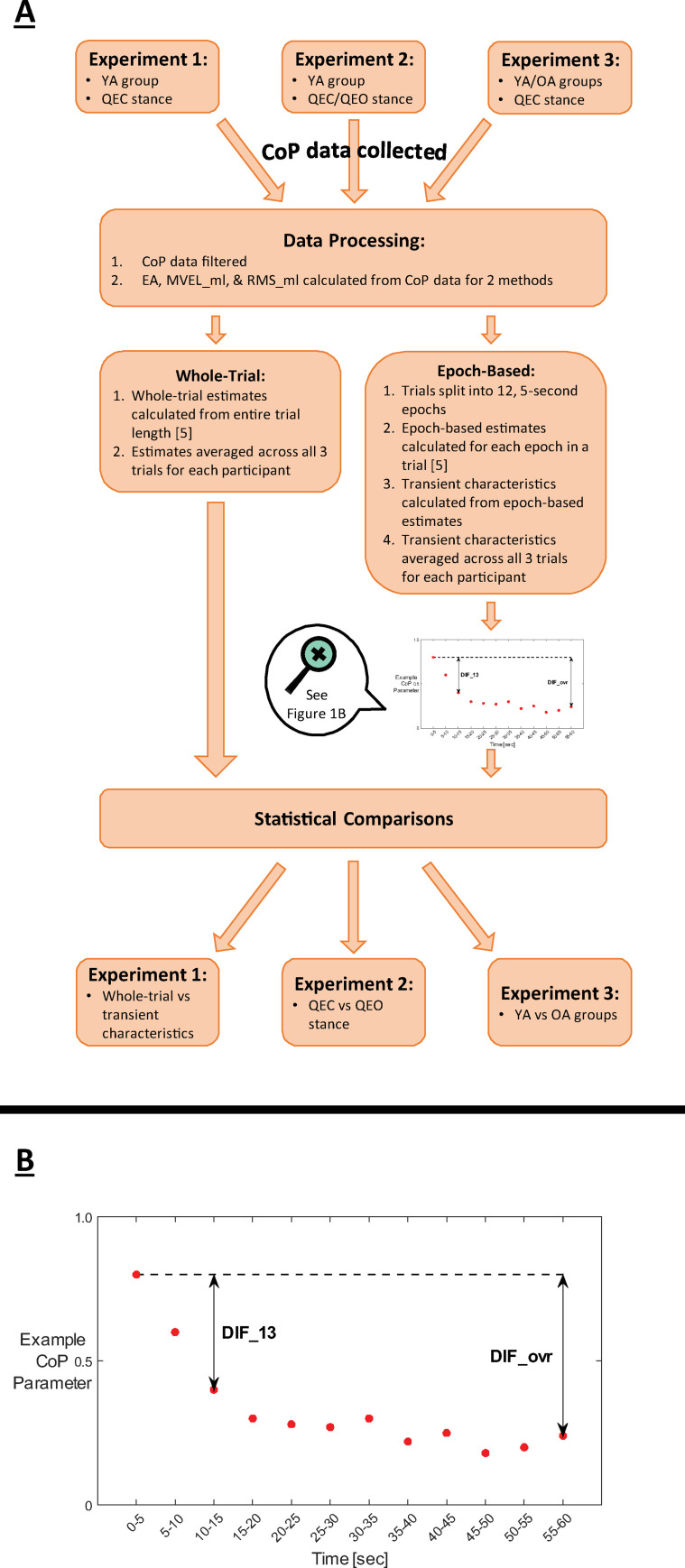
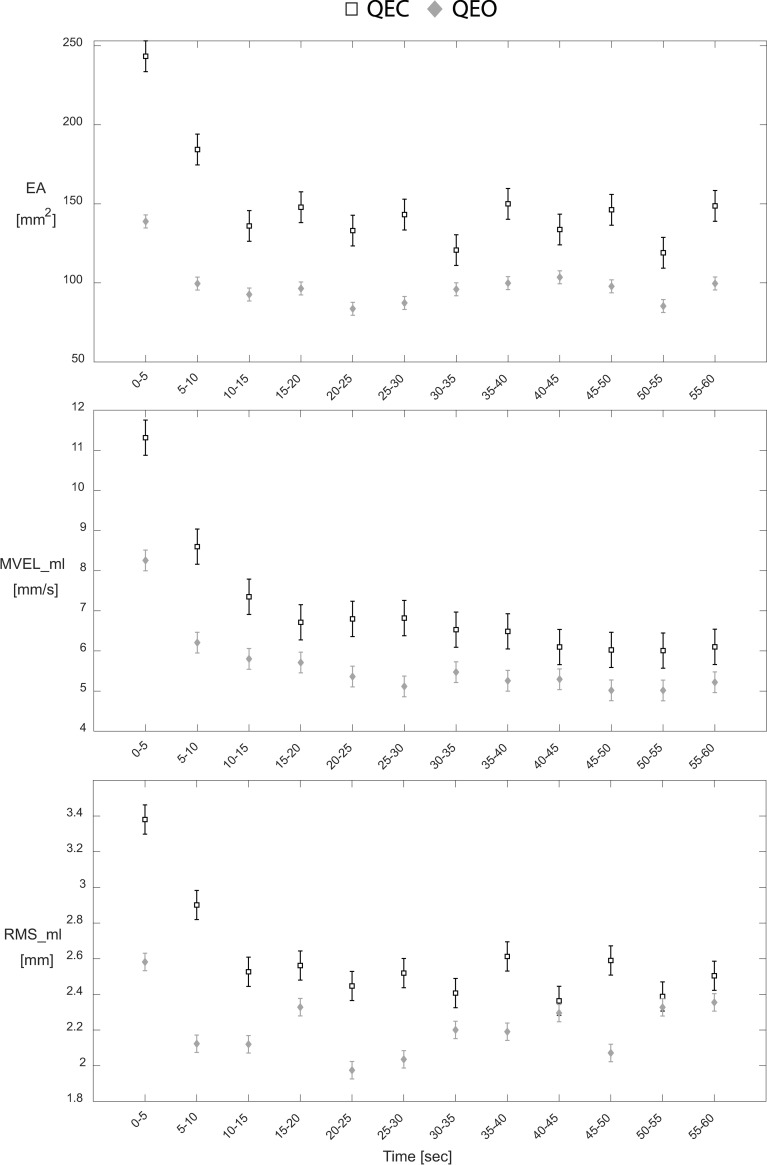
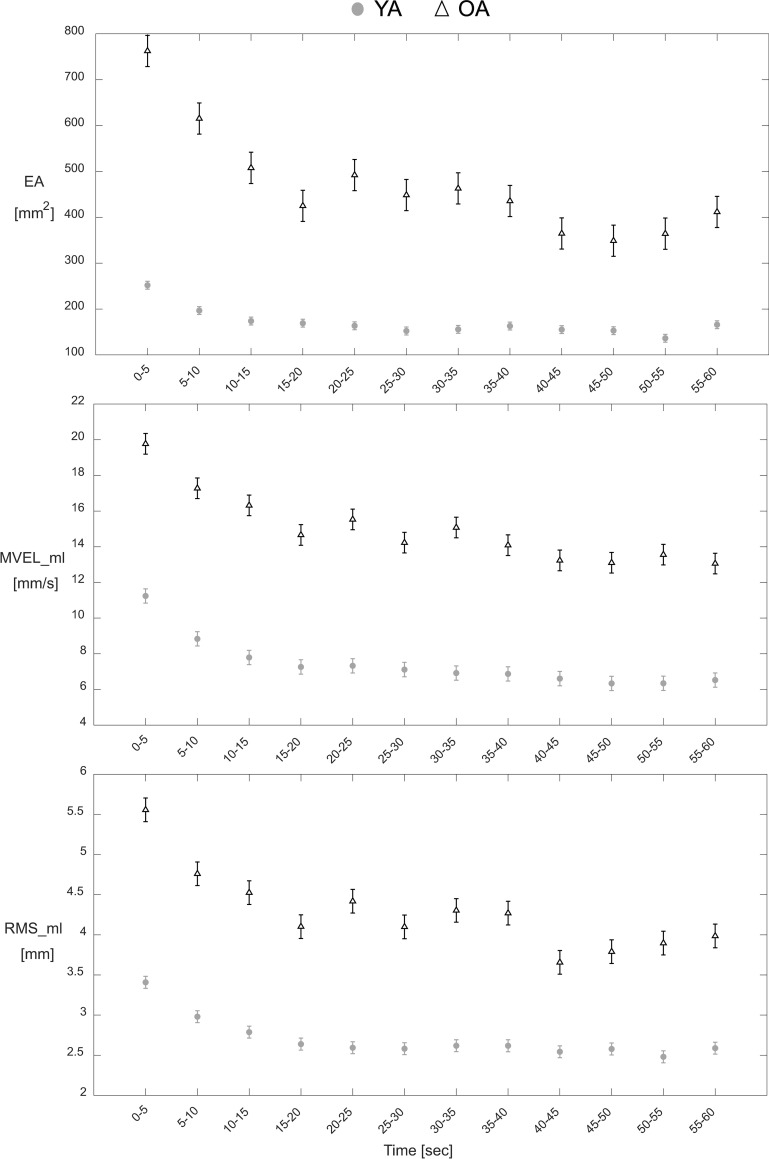
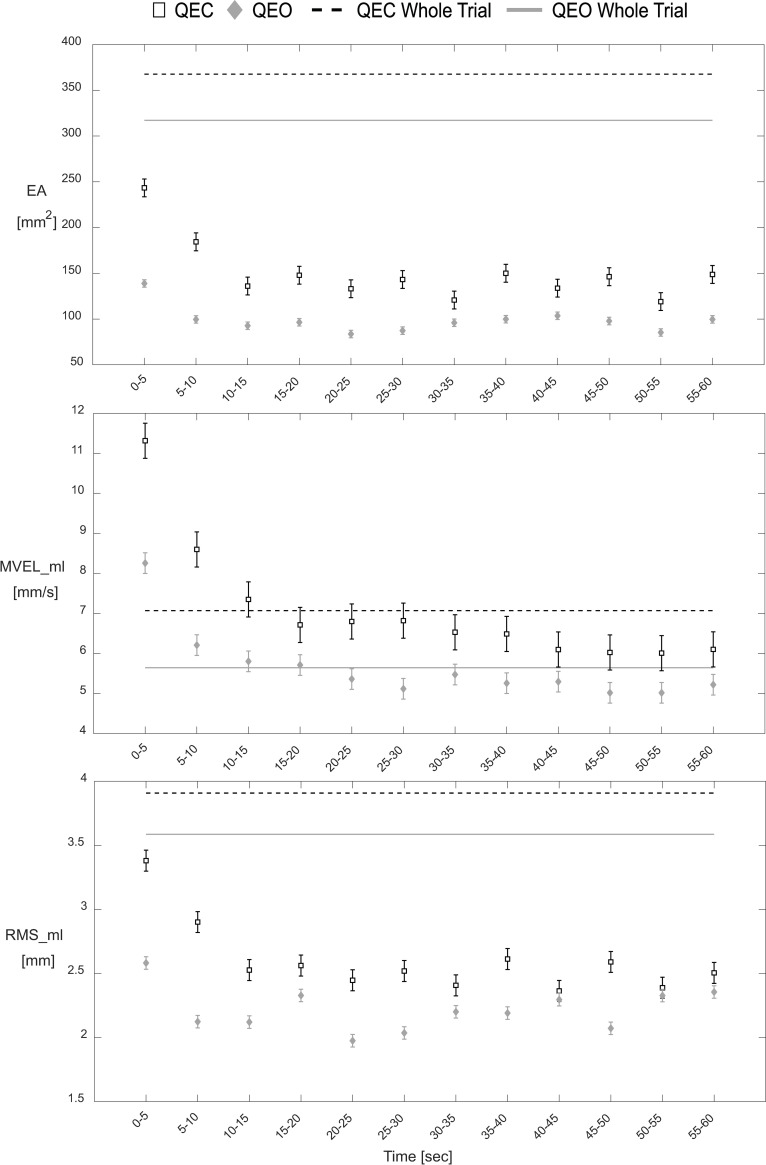
Postural control provides insight into health concerns such as fall risk but remains relatively untapped as a vital sign of health. One understudied aspect of postural control involves transient responses within center of pressure (CoP) data to events such as vision occlusion. Such responses are masked by common whole-trial analyses. We hypothesized that the transient behavior of postural control would yield unique and clinically-relevant information for quiet stance compared to traditionally calculated whole-trial CoP estimates. Three experiments were conducted to test different aspects of this central hypothesis. To test whether transient, epoch-based characteristics of CoP estimates provide different information than traditional whole-trial estimates, we investigated correlations between these estimates for a population of young adults performing three 60-second trials of quiet stance with eyes closed. Next, to test if transient behavior is a result of sensory reweighting after eye closure, we compared transient characteristics between eyes closed and eyes open conditions. Finally, to test if there was an effect of age on transient behavior, we compared transient characteristics during eyes closed stance between populations of young and older adults. Negligible correlations were found between transient characteristics and whole-trial estimates (p>0.08), demonstrating limited overlap in information between them. Additionally, transient behavior was exaggerated during eyes closed stance relative to eyes open (p<0.044). Lastly, we found that transient characteristics were able to distinguish between younger and older adults, supporting their clinical relevance (p<0.029). An epoch-based approach captured unique and potentially clinically-relevant postural control information compared to whole-trial estimates. While longer trials may improve the reliability of whole-trial estimates, including a complementary assessment of the initial transient characteristics may provide a more comprehensive characterization of postural control.
Conflict of interest statement
The authors have declared that no competing interests exist.
Figures
References
-
- Maki BE, Holliday PJ, Topper AK. A prospective study of postural balance and risk of falling in an ambulatory and independent elderly population. Journals Gerontol. 1994;49: M72–M84. - PubMed
Publication types
MeSH terms
Grants and funding
LinkOut - more resources
Full Text Sources
Medical
