


Elevated depression and anxiety symptoms among pregnant individuals during the COVID-19 pandemic
- PMID: 32777604
- PMCID: PMC7395614
- DOI: 10.1016/j.jad.2020.07.126
Elevated depression and anxiety symptoms among pregnant individuals during the COVID-19 pandemic
Erratum in
-
Corrigendum to elevated depression and anxiety symptoms among pregnant individuals during the COVID-19 pandemic journal of affective disorders 277 (2020) 5-13.J Affect Disord. 2021 Jan 15;279:377-379. doi: 10.1016/j.jad.2020.10.012. Epub 2020 Nov 18. J Affect Disord. 2021. PMID: 33099052 Free PMC article. No abstract available.
Abstract
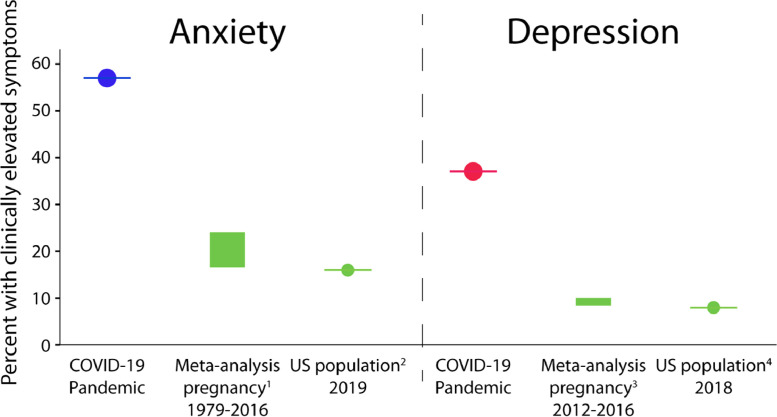
Background: Anxiety and depression symptoms in pregnancy typically affect between 10 and 25% of pregnant individuals. Elevated symptoms of depression and anxiety are associated with increased risk of preterm birth, postpartum depression, and behavioural difficulties in children. The current COVID-19 pandemic is a unique stressor with potentially wide-ranging consequences for pregnancy and beyond.
Methods: We assessed symptoms of anxiety and depression among pregnant individuals during the current COVID-19 pandemic and determined factors that were associated with psychological distress. 1987 pregnant participants in Canada were surveyed in April 2020. The assessment included questions about COVID-19-related stress and standardized measures of depression, anxiety, pregnancy-related anxiety, and social support.
Results: We found substantially elevated anxiety and depression symptoms compared to similar pre-pandemic pregnancy cohorts, with 37% reporting clinically relevant symptoms of depression and 57% reporting clinically relevant symptoms of anxiety. Higher symptoms of depression and anxiety were associated with more concern about threats of COVID-19 to the life of the mother and baby, as well as concerns about not getting the necessary prenatal care, relationship strain, and social isolation due to the COVID-19 pandemic. Higher levels of perceived social support and support effectiveness, as well as more physical activity, were associated with lower psychological symptoms.
Conclusion: This study shows concerningly elevated symptoms of anxiety and depression among pregnant individuals during the COVID-19 pandemic, that may have long-term impacts on their children. Potential protective factors include increased social support and exercise, as these were associated with lower symptoms and thus may help mitigate long-term negative outcomes.
Keywords: Anxiety; COVID-19; Depression; Physical Activity; Pregnancy; Stress.
Copyright © 2020. Published by Elsevier B.V.
Conflict of interest statement
The authors report no conflicts of interest.
Figures
References
-
- Al-Rabiaah A., Temsah M.H., Al-Eyadhy A.A., Hasan G.M., Al-Zamil F., Al-Subaie S., Somily A.M. Middle east respiratory syndrome-corona virus (MERS-CoV) associated stress among medical students at a university teaching hospital in Saudi Arabia. J. Infect. Public Health. 2020 doi: 10.1016/j.jiph.2020.01.005. - DOI - PMC - PubMed
Publication types
MeSH terms
LinkOut - more resources
Full Text Sources
Medical
Miscellaneous
