


Patient-appraised beneficial moments during inpatient psychiatric treatment
- PMID: 32778097
- PMCID: PMC7418414
- DOI: 10.1186/s12913-020-05617-4
Patient-appraised beneficial moments during inpatient psychiatric treatment
Abstract
Background: Psychiatric inpatients receive a multidisciplinary treatment approach, covering psychiatry, nursing, occupational therapy, and psychology. Research findings reveal that the effectiveness of any treatment is associated with three types of factors: specific (e.g., treatment techniques), common (e.g., clinician-patient relationship, patients' expectations) and extra-therapeutic. However, there is little published research on the factors and events which inpatients themselves consider to be beneficial ('beneficial moments').
Methods: Inpatients (N = 107) of a psychiatric clinic completed a questionnaire to elicit their appraisal of beneficial moments. A qualitative content analysis was applied. The coding procedure was conducted independently by two authors.
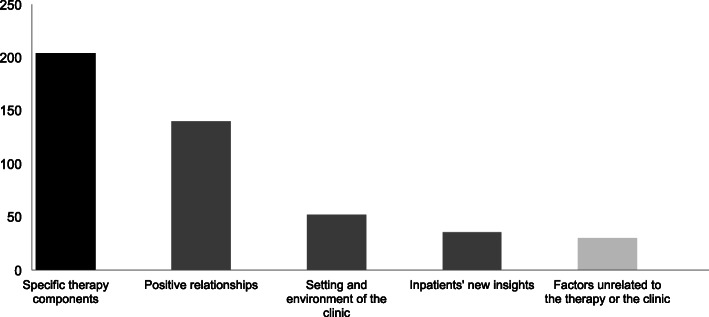
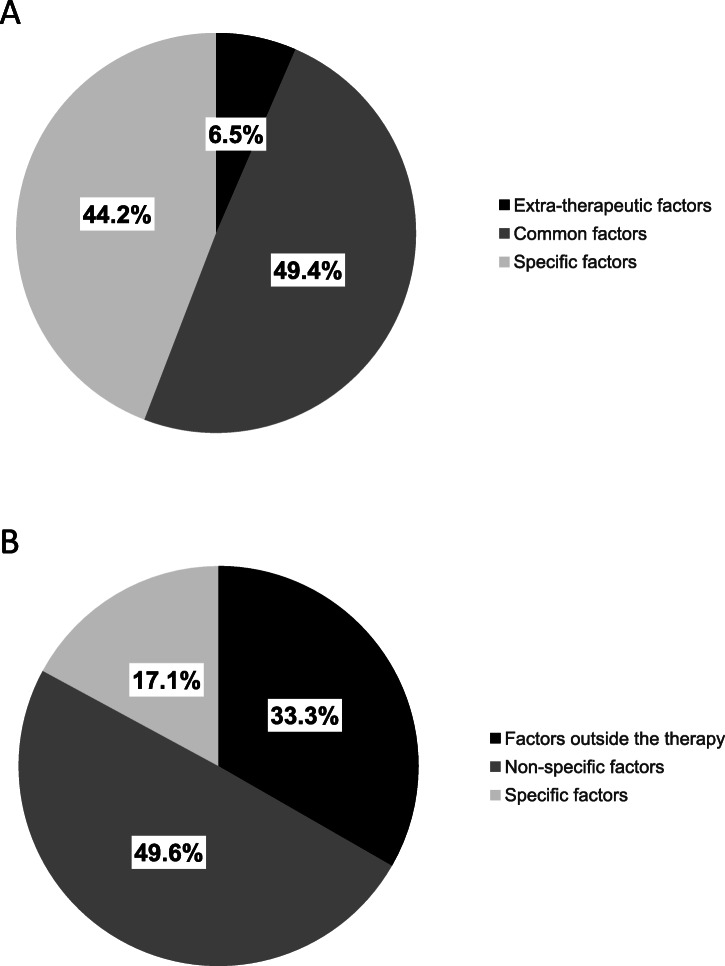
Results: Self-appraised beneficial moments were found in five areas: therapy-specific components (number of quotations, N = 204), positive relationships (N = 140), clinical setting and environment (N = 52), inpatients' new insights (N = 36), and factors unrelated to either therapy or the clinic (N = 30). In total, 44% of the quotations were related to specific factors, 49% to common factors, and 7% to extra-therapeutic factors.
Conclusions: Inpatients judge both specific and common factors as crucial for the therapeutic benefit they gain during their stay at the clinic. Our results differ from meta-analytical findings, where the impact of specific factors on symptom improvement has shown to be much smaller (i.e., 17%) than appraised by patients in our study (i.e., 44%). Our study underlines the importance of a patient-centred care approach as well as shared decision making and patient-clinician communication. For clinical practice, knowledge of inpatients' perspectives on beneficial moments is crucial in order to reinforce precisely these therapeutic components.
Keywords: Beneficial moments; Common factors; Content analysis; Inpatients; Qualitative; Specific factors.
Conflict of interest statement
The authors declare no financial interest or potential conflicts of interest.
Figures
References
-
- Bowers L, Chaplin R, Quirk A, Lelliott P. A conceptual model of the aims and functions of acute inpatient psychiatry. J Ment Health. 2009;18(4):316–325.
-
- Paterson C, Karatzias T, Dickson A, Harper S, Dougall N, Hutton P. Psychological therapy for inpatients receiving acute mental health care: a systematic review and meta-analysis of controlled trials. Br J Clin Psychol. 2018;57:453–472. - PubMed
-
- Wampold BE, Imel ZE. The great psychotherapy debate: the evidence for what makes psychotherapy work. New York: Routledge; 2015.
-
- Leichsenring F, Rabung S, Leibing E. The efficacy of short-term psychodynamic psychotherapy in specific psychiatric disorders: a meta-analysis. Arch Gen Psychiatry. 2004;61(12):1208–1216. - PubMed
MeSH terms
Grants and funding
LinkOut - more resources
Full Text Sources
Medical
