Review
. 2020 Sep;28(9):732-743.
doi: 10.1016/j.tim.2020.03.008. Epub 2020 Apr 23.

Metabolic Heterogeneity and Cross-Feeding in Bacterial Multicellular Systems

Affiliations
Review

Metabolic Heterogeneity and Cross-Feeding in Bacterial Multicellular Systems

Christopher R Evans et al. Trends Microbiol. 2020 Sep.

Abstract

Cells in assemblages differentiate and perform distinct roles. Though many pathways of differentiation are understood at the molecular level in multicellular eukaryotes, the elucidation of similar processes in bacterial assemblages is recent and ongoing. Here, we discuss examples of bacterial differentiation, focusing on cases in which distinct metabolisms coexist and those that exhibit cross-feeding, with one subpopulation producing substrates that are metabolized by a second subpopulation. We describe several studies of single-species systems, then segue to studies of multispecies metabolic heterogeneity and cross-feeding in the clinical setting. Many of the studies described exemplify the application of new techniques and modeling approaches that provide insights into metabolic interactions relevant for bacterial growth outside the laboratory.

Keywords: biofilms; metabolite exchange; microfluidics; phenotypic diversity.


Figures

Figure 1.
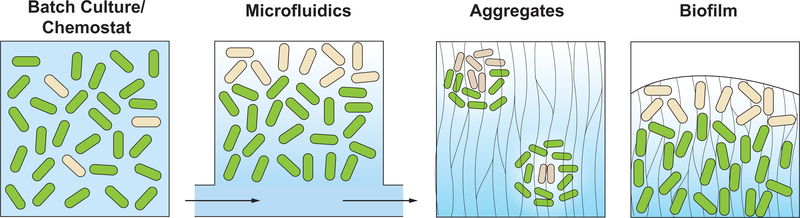
Figure 1.. Conditions of various bacterial growth models.
Metabolic heterogeneity arises in bacterial systems due to innate and stochastic effects. However, differentiation can be further promoted by chemical gradients and spatial constraints that result from endogenous structure formation or imposed architectures. In well-mixed liquid cultures (e.g., batch cultures or chemostats) cells with different metabolisms (represented by green and beige coloration) are evenly distributed throughout the suspension. In microfluidic devices such as the one depicted, medium flows across one side of the population, leading to chemical gradient formation and metabolic differentiation along the gradient. When bacterial aggregates are suspended in a provided matrix (such as an agar block or sputum in the lung of a patient with cystic fibrosis), gradients can be present in the external matrix, leading to the differentiation seen in the upper aggregate, but can also form inside aggregates due to the activities of the cells, as seen in the lower aggregate. In biofilms, cells reside in a self-produced matrix and promote gradient formation and thereby metabolic differentiation.
Figure 2.
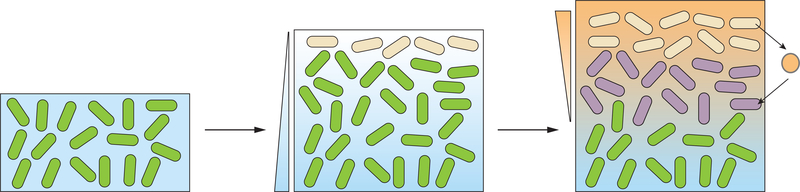
Figure 2.. Niche formation can enable cross-feeding, and cross-feeding can promote niche formation, in bacterial systems.
An example showing the development of resource gradients and cross-feeding is depicted. As the bacterial population grows, a resource gradient (blue) forms that promotes metabolic differentiation (represented by green and beige coloration of the cells). Bacteria carrying out the “beige” metabolism release a product (closed orange circle) that can be used by cells in a specific subzone, leading to further metabolic differentiation (purple cells).
Figure 3.
Figure 3.. Examples of cross-feeding in biofilms.
Four distinct cases of metabolite cross-feeding are depicted as biofilms that each contain two metabolic subpopulations (beige and green). Metabolic pathways for each subpopulation are indicated by selected intermediates (arrows may represent multiple pathway steps). All biofilms shown are growing under an oxic atmosphere and form an O2 gradient such that cells are O2-limited at the biofilm base. In the biofilms shown in (A), cells at the base convert glucose into an intermediate that is released. The intermediate is taken up by cells in the oxic zone and provides a source of carbon for the tricarboxylic acid (TCA) cycle. In the biofilms shown in (B), cells are releasing compounds that can be used as electron acceptors. Left: In our group’s model of P. aeruginosa biofilms growing under an oxic atmosphere, on medium with nitrate (NO 3-), the first step of denitrification is carried out in the oxic zone, and subsequent steps are carried out in the O2-limited zone. Right: Some P. aeruginosa phenazines are specifically produced in the oxic zone of the biofilm, then oxidized by O2 (blue arrow). Phenazines are reduced by cells at the biofilm base and can serve to balance the intracellular redox state.
Figure 4.
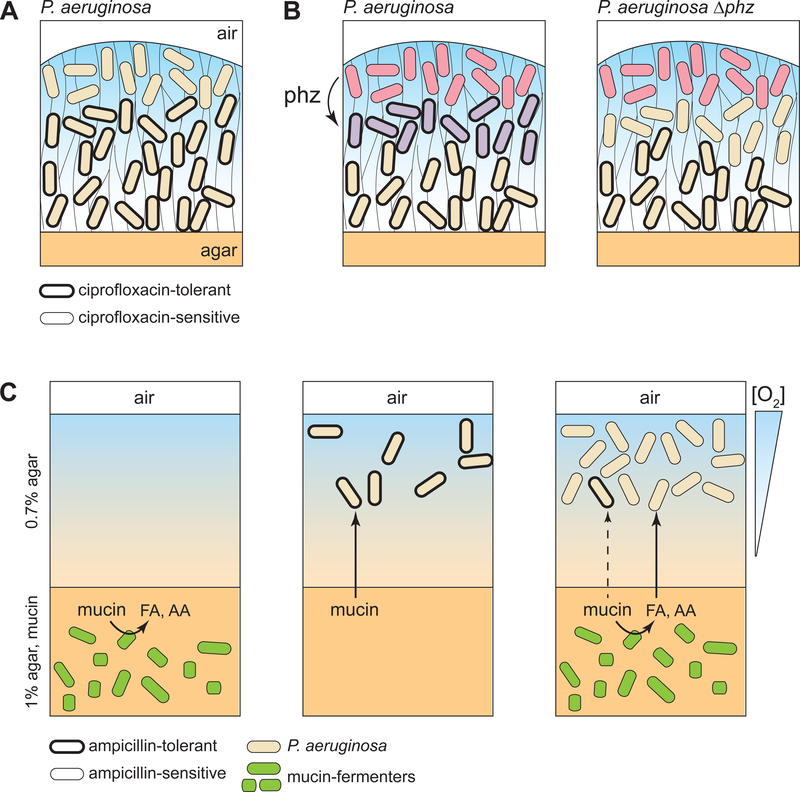
Figure 4.. Implications of metabolic heterogeneity for antibiotic tolerance of P. aeruginosa populations.
Three studies addressing the effects of metabolic heterogeneity on antibiotic tolerance are represented. (A, B) Tolerance to ciprofloxacin in P. aeruginosa colony biofilms. (A) Williamson et al. used selective GFP labeling of metabolically active or inactive cells, followed by antibiotic exposure, FACS, and CFU counting, to show that the air-exposed metabolically active subpopulation is more susceptible to antibiotics [67]. (B) Schiessl et al. used SRS microscopy to show that phenazine-producing biofilms contain two bands of metabolically active cells (red and purple), while phenazine-null biofilms contain one pronounced band of metabolically active cells (red) [68]. Based on CFU counts, phenazine-producing biofilms show less antibiotic susceptibility, suggesting that the lower band of metabolic activity in these biofilms contains cells in a differentiated state with higher antibiotic tolerance. (C) An anaerobic community of mucin fermenters embedded in agar produces short-chain fatty acids (FA) and amino acids (AA). These products can serve as carbon sources and support replication of a P. aeruginosa population present in the air-exposed portion of the agar block. Interestingly, while the fermenters are sensitive to ampicillin in mono-and co-culture (left and right panels, respectively), P. aeruginosa is only sensitive in co-culture [78, 79].

References

    1. Batsivari A. et al. (2020) Dynamic responses of the haematopoietic stem cell niche to diverse stresses. Nat. Cell Biol 22, 7–17 - PubMed
    1. Woods HA (2014) Mosaic physiology from developmental noise: within-organism physiological diversity as an alternative to phenotypic plasticity and phenotypic flexibility. J. Exp. Biol 217, 35–45 - PubMed
    1. Dueck A. et al. (2016) Gene silencing pathways found in the green alga Volvox carteri reveal insights into evolution and origins of small RNA systems in plants. BMC Genomics 17, 853. - PMC - PubMed
    1. Brunet T. and King N. (2017) The Origin of Animal Multicellularity and Cell Differentiation. Dev. Cell 43, 124–140 - PMC - PubMed
    1. Jang C. et al. (2019) Metabolite Exchange between Mammalian Organs Quantified in Pigs. Cell Metab. 30, 594–606.e3 - PMC - PubMed

Publication types

MeSH terms