


Natural killer cell responses to emerging viruses of zoonotic origin
- PMID: 32784125
- PMCID: PMC7415341
- DOI: 10.1016/j.coviro.2020.07.003
Natural killer cell responses to emerging viruses of zoonotic origin
Abstract
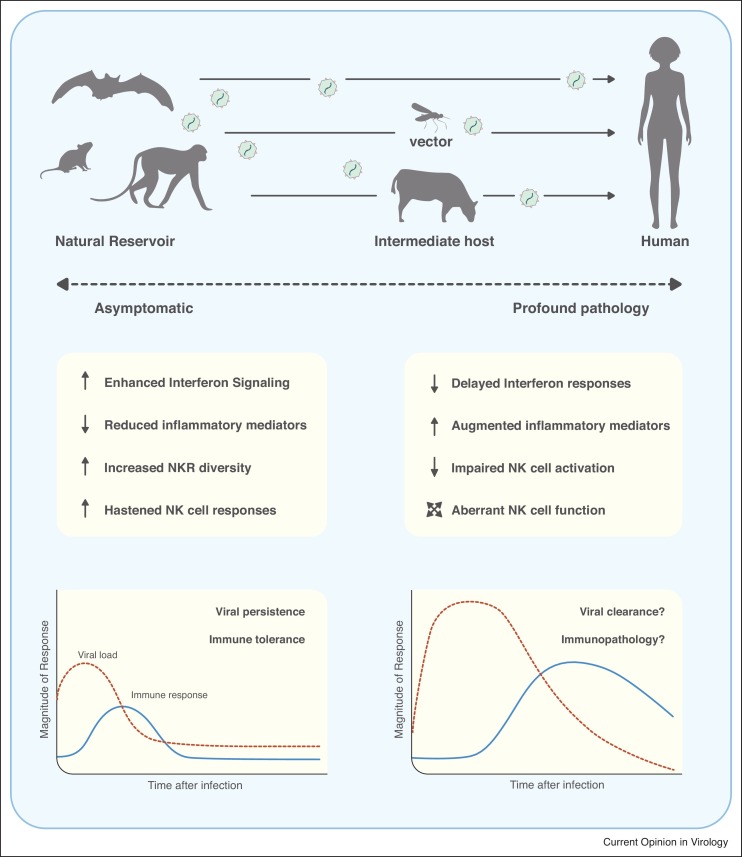
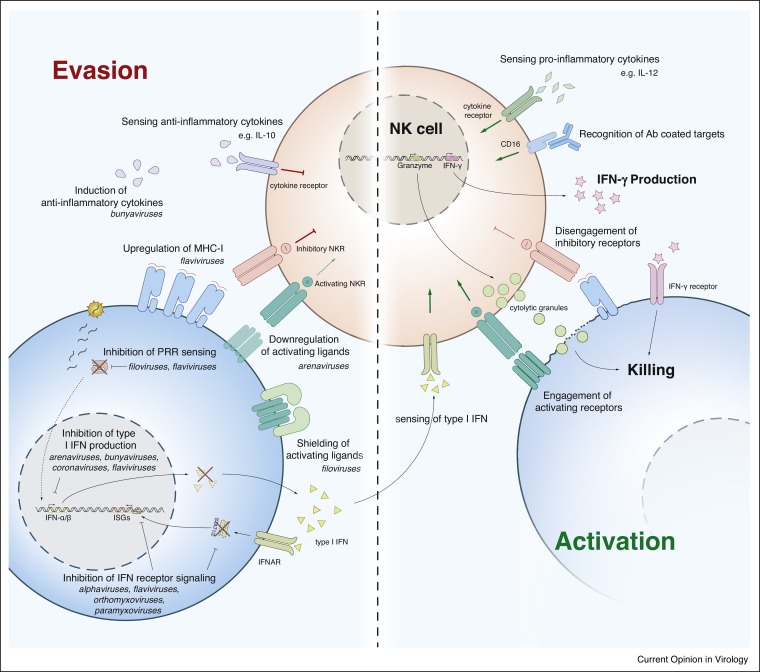
Emerging viral diseases pose a major threat to public health worldwide. Nearly all emerging viruses, including Ebola, Dengue, Nipah, West Nile, Zika, and coronaviruses (including SARS-Cov2, the causative agent of the current COVID-19 pandemic), have zoonotic origins, indicating that animal-to-human transmission constitutes a primary mode of acquisition of novel infectious diseases. Why these viruses can cause profound pathologies in humans, while natural reservoir hosts often show little evidence of disease is not completely understood. Differences in the host immune response, especially within the innate compartment, have been suggested to be involved in this divergence. Natural killer (NK) cells are innate lymphocytes that play a critical role in the early antiviral response, secreting effector cytokines and clearing infected cells. In this review, we will discuss the mechanisms through which NK cells interact with viruses, their contribution towards maintaining equilibrium between the virus and its natural host, and their role in disease progression in humans and other non-natural hosts.
Copyright © 2020 Elsevier B.V. All rights reserved.
Figures
References
-
- Johns Hopkins University: Coronavirus Resource Center. https://coronavirus.jhu.edu/map.html.
-
- Blueprint for R&D preparedness and response to public health emergencies due to highly infectious pathogens. http://www.who.int/csr/research-and-development/meeting-report-prioritiz....
-
- Mandl J.N., Ahmed R., Barreiro L.B., Daszak P., Epstein J.H., Virgin H.W., Feinberg M.B. Reservoir host immune responses to emerging zoonotic viruses. Cell. 2015;160:20–35. - PMC - PubMed
-
In this review, the authors provide a detailed analysis of immune mechanisms in natural hosts of emerging zoonotic viruses that allows for viral tolerance and persistance.
-
- Yokoyama W.M., Kim S., French A.R. The dynamic life of natural killer cells. Annu Rev Immunol. 2004;22:405–429. - PubMed
-
- Kiessling R., Klein E., Pross H., Wigzell H. “Natural” killer cells in the mouse. II. Cytotoxic cells with specificity for mouse Moloney leukemia cells. Characteristics of the killer cell. Eur J Immunol. 1975;5:117–121. - PubMed
Publication types
MeSH terms
Grants and funding
LinkOut - more resources
Full Text Sources
Miscellaneous
