


Effects of Whey and Pea Protein Supplementation on Post-Eccentric Exercise Muscle Damage: A Randomized Trial
- PMID: 32784847
- PMCID: PMC7468723
- DOI: 10.3390/nu12082382
Effects of Whey and Pea Protein Supplementation on Post-Eccentric Exercise Muscle Damage: A Randomized Trial
Abstract
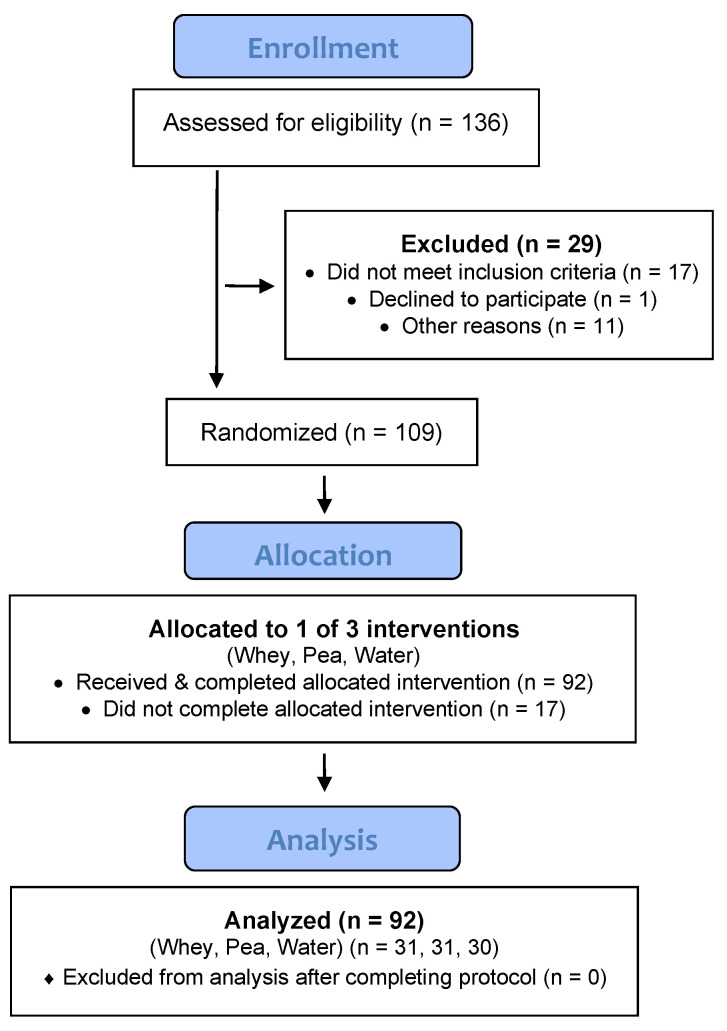
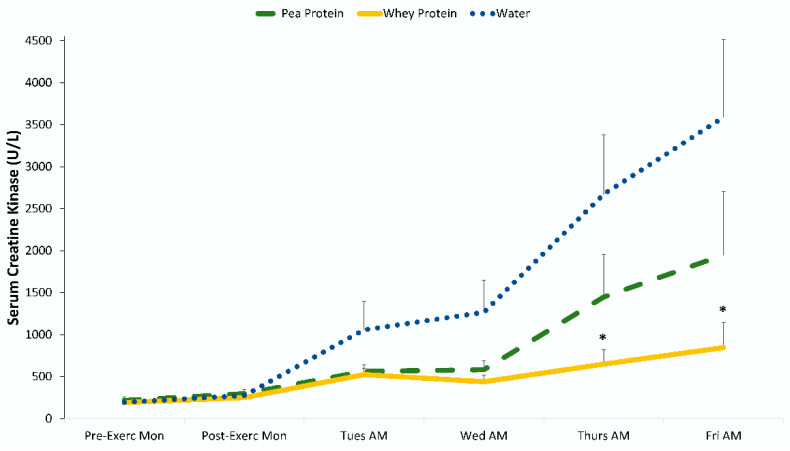
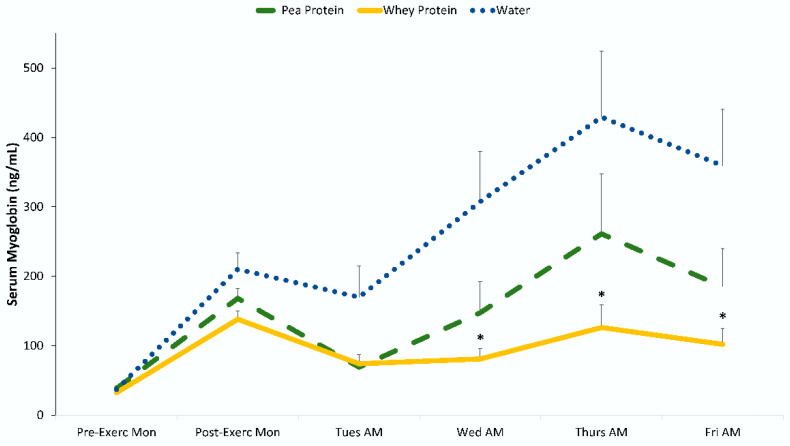
This randomized trial compared pea protein, whey protein, and water-only supplementation on muscle damage, inflammation, delayed onset of muscle soreness (DOMS), and physical fitness test performance during a 5-day period after a 90-min eccentric exercise bout in non-athletic non-obese males (n = 92, ages 18-55 years). The two protein sources (0.9 g protein/kg divided into three doses/day) were administered under double blind procedures. The eccentric exercise protocol induced significant muscle damage and soreness, and reduced bench press and 30-s Wingate performance. Whey protein supplementation significantly attenuated post-exercise blood levels for biomarkers of muscle damage compared to water-only, with large effect sizes for creatine kinase and myoglobin during the fourth and fifth days of recovery (Cohen's d > 0.80); pea protein versus water supplementation had an intermediate non-significant effect (Cohen's d < 0.50); and no significant differences between whey and pea protein were found. Whey and pea protein compared to water supplementation had no significant effects on post-exercise DOMS and the fitness tests. In conclusion, high intake of whey protein for 5 days after intensive eccentric exercise mitigated the efflux of muscle damage biomarkers, with the intake of pea protein having an intermediate effect.
Keywords: creatine kinase; exercise; inflammation; muscle damage; myoglobin; protein.
Conflict of interest statement
D.C.N., K.A.Z., A.J.S., A.T.H., and X.W. declare no conflict of interest. Scientists from the funding company (H.K.N., C.L.-M., L.G.-D.) had a role in the design of the study and in writing the manuscript, but not in the collection and analysis of the data. The funding agency signed an agreement with the university in support of academic freedom to publish the data.
Figures
References
-
- Mazzulla M., Sawan S.A., Williamson E., Hannaian S.J., Volterman K.A., West D.W.D., Moore D.R. Protein intake to maximize whole-body anabolism during postexercise recovery in resistance-trained men with high habitual intakes is severalfold greater than the current Recommended Dietary Allowance. J. Nutr. 2020;150:505–511. doi: 10.1093/jn/nxz249. - DOI - PubMed
-
- Rahbek S.K., Farup J., Moller A.B., Vendelbo M.H., Holm L., Jessen N., Vissing K. Effects of divergent resistance exercise contraction mode and dietary supplementation type on anabolic signalling, muscle protein synthesis and muscle hypertrophy. Amino Acids. 2014;46:2377–2392. doi: 10.1007/s00726-014-1792-1. - DOI - PubMed
Publication types
MeSH terms
Substances
Grants and funding
LinkOut - more resources
Full Text Sources
Medical
