


Batch and Flow Ultrasound-Assisted Extraction of Grape Stalks: Process Intensification Design up to a Multi-Kilo Scale
- PMID: 32785182
- PMCID: PMC7464093
- DOI: 10.3390/antiox9080730
Batch and Flow Ultrasound-Assisted Extraction of Grape Stalks: Process Intensification Design up to a Multi-Kilo Scale
Abstract
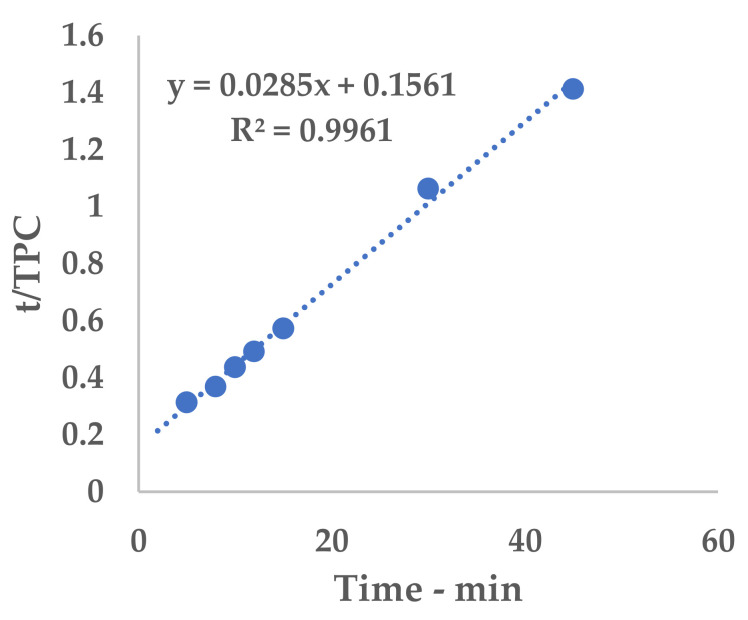
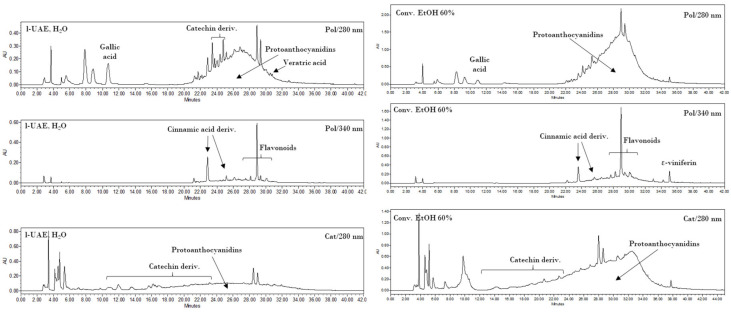
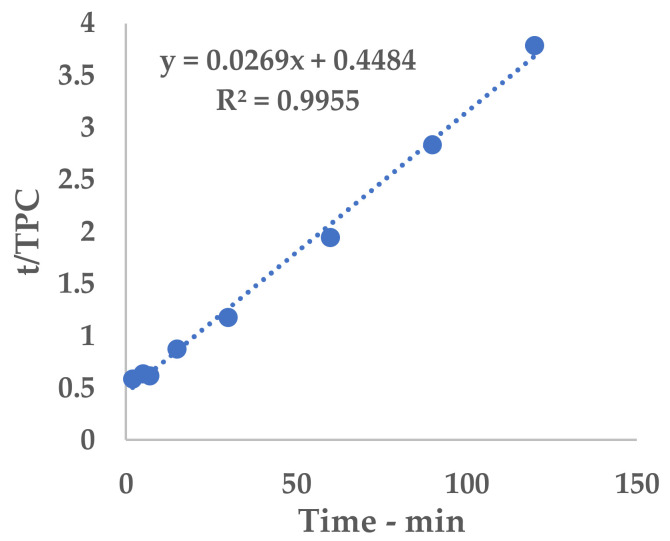
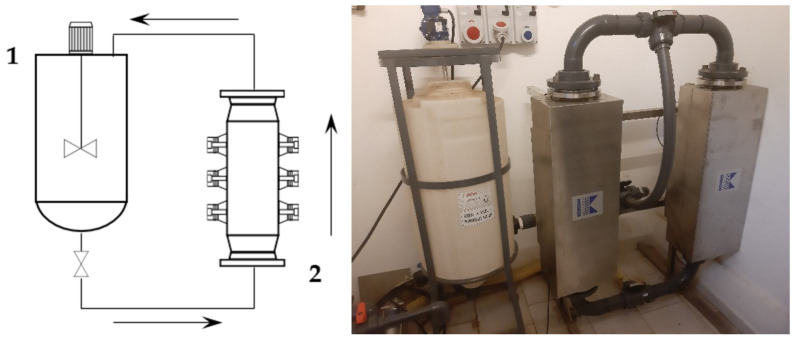
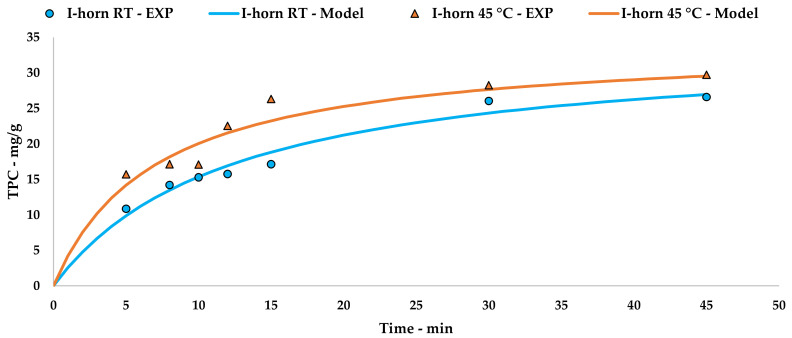
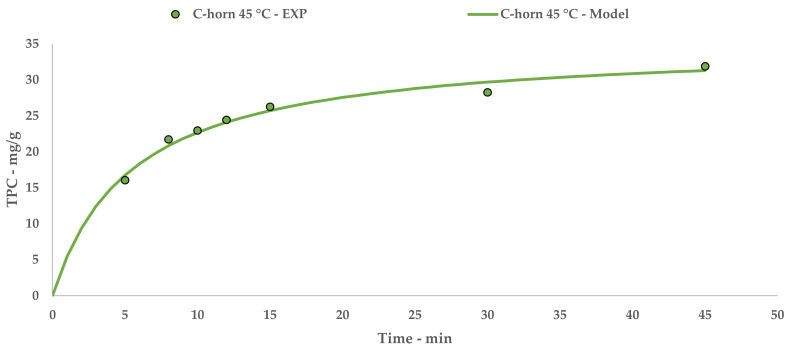
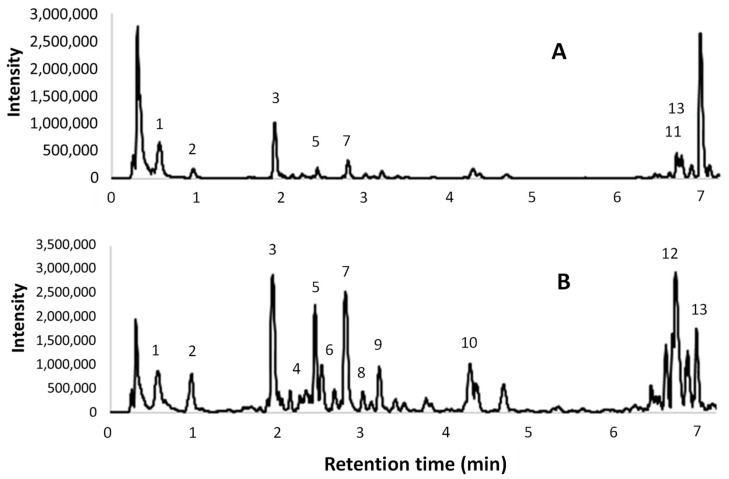
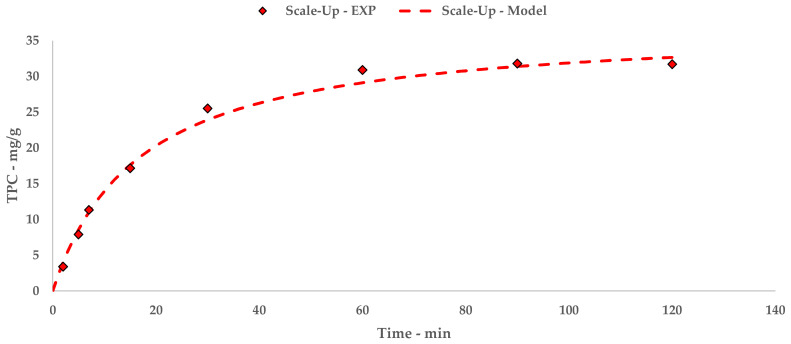
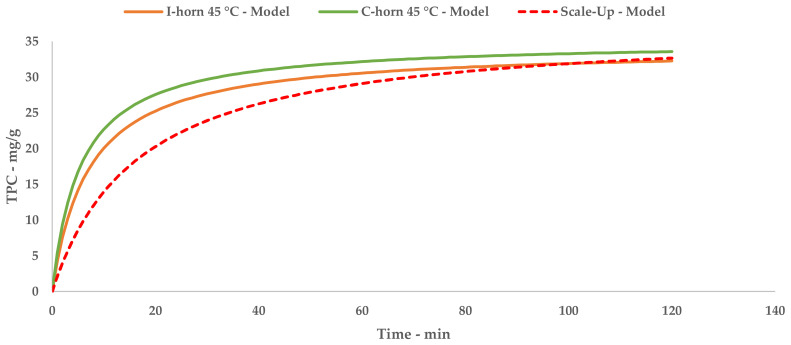
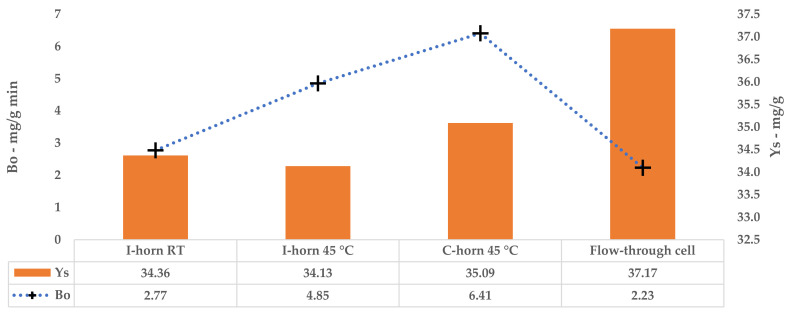
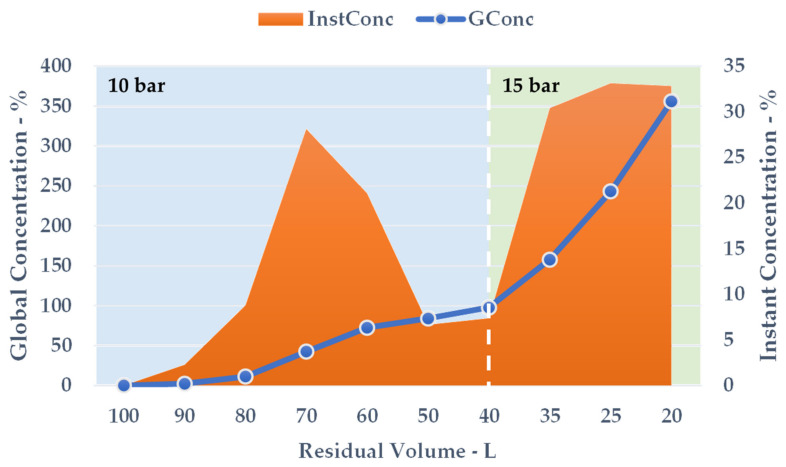
Nowadays, approximately 1 billion kg/y of grape stalks, with a remarkable polyphenols content, are produced worldwide. In this paper, the extraction process intensification of polyphenols in water was achieved under ultrasound-assisted recovery, focusing on kinetics and scaling-up factors. Immersion and cup-horn systems were exploited as acoustic cavitation sources, and the total phenolic content (TPC) was chosen to assess the process efficiency. The kinetics were evaluated by Peleg's hyperbolic model, and the effect of both the initial feedstock granulometry and ultrasound size-reduction were determined. The results were compared with conventional extraction methods (data analysis by ANOVA). The best polyphenols yield was obtained after 45 min of sonication, giving between 29.71 and 31.89 mg/g (gallic acid equivalents over the dry matter). The extracts were characterized using HPLC-DAD, UPLC-ESI-MS/MS, DPPH• assay (2,2-diphenyl-1-picrylhydrazyl), TEAC assay (Trolox equivalent antioxidant capacity), and proanthocyanidin content determination. The flow-mode extraction procedure of grape stalks (2 kg) was carried out in a 15 L reactor. A semi-industrial decanter unit and a bag-filter were the keys units of the downstream operations. The resulting particle-free solution underwent nanofiltration on a membrane pilot skid, providing a final polyphenols-enriched stream concentrated up to 355.91%, as shown by the antioxidant activity and TPC.
Keywords: antioxidant activity; extraction kinetics; flow system; grape stalks; kilo-scale procedure; polyphenols; process intensification; ultrasound-assisted extraction.
Conflict of interest statement
The authors declare no conflict of interest.
Figures

References
-
- Zacharof M. Grape Winery Waste as Feedstock for Bioconversions: Applying the Biorefinery Concept. FAOSTAT Food and Agriculture-Organization of the United Nations Food and Agriculture Data. [(accessed on 12 May 2020)]; Available online: http://www.fao.org/faostat/en/#data/QC.
-
- International Organization of Vine and Wine (OIV), FAO [(accessed on 12 May 2020)]; Available online: http://www.oiv.int/public/medias/6782/oiv-2019-statistical-report-on-wor....
-
- Oliveira M., Duarte E. Integrated approach to winery waste: Waste generation and data consolidation. Front. Environ. Sci. Eng. 2016;10:168–176. doi: 10.1007/s11783-014-0693-6. - DOI
-
- Spigno G., Marinoni L., Garrido G.D. State of the Art in Grape Processing By-Products. In: Galanakis C.M., editor. Handbook of Grape Processing by-Products—Sustainable Solution. Academic Press Elsevier; London, UK: 2017. pp. 1–27.
