


The risk of cardiovascular complications in inflammatory bowel disease
- PMID: 32785793
- PMCID: PMC7568702
- DOI: 10.1007/s10238-020-00639-y
The risk of cardiovascular complications in inflammatory bowel disease
Abstract
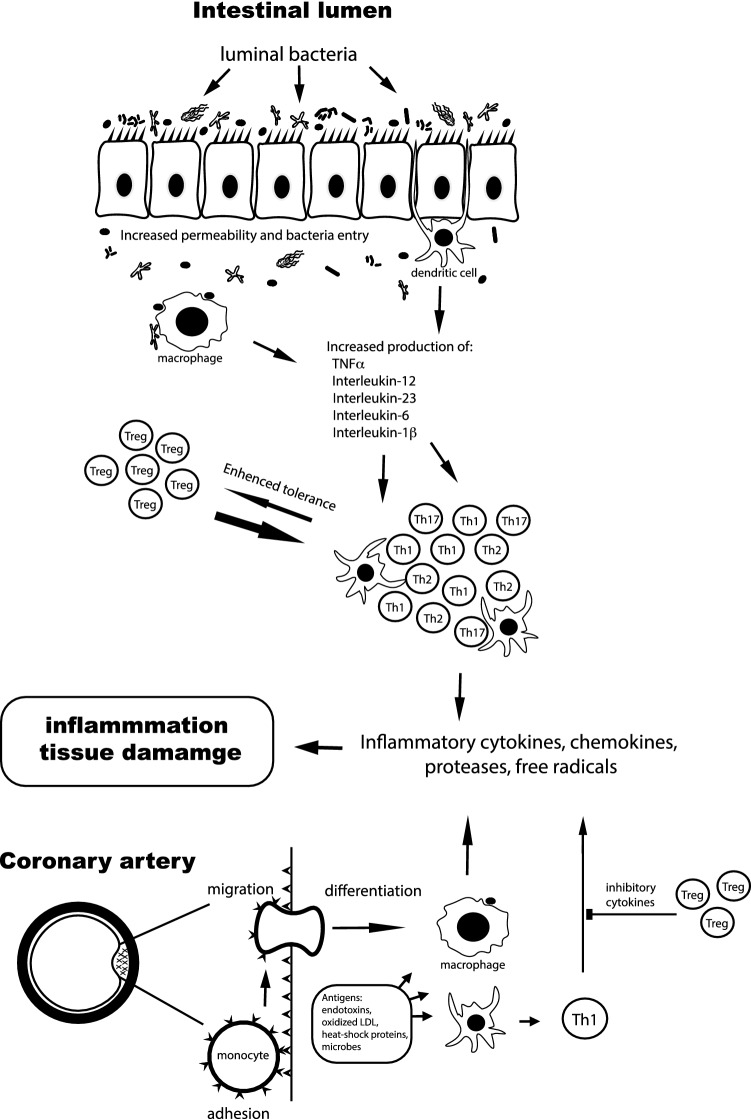
Inflammatory bowel disease (IBD) is a chronic, relapsing disease of unknown etiology involving gastrointestinal tract. IBD comprises two main entities: ulcerative colitis and Crohn's disease. Several studies showed increased risk of cardiovascular complications in chronic inflammatory disorders, especially during IBD relapses. Endothelium plays a role in physiologic regulation of vascular tone, cell adhesion, migration and resistance to thrombosis. Also, its dysfunction is associated with increased risk of atherosclerosis development. There are several potential links between chronic IBD-related inflammatory processes and the risk of cardiovascular disease, but insight into pathogenetic pathways remains unclear. We present the current concepts and review of adult and pediatric studies on the risk of CVD in IBD.
Keywords: Atherosclerosis; Endothelial dysfunction; Inflammatory bowel disease; Ischemic heart disease.
Conflict of interest statement
All authors declare no conflict of interest.
Figures
References
-
- Timmis A, Townsend N, Gale CP, et al. European Society of Cardiology: Cardiovascular disease statistics 2019. Eur Heart J. 2020;41:12–85. - PubMed
-
- Yarur AJ, Deshpande AR, Pechman DM, et al. Inflammatory bowel disease is associated with an increased incidence of cardiovascular events. Am J Gastroenterol. 2011;106:741–747. - PubMed
-
- Kristensen SL, Ahlehoff O, Lindhardsen J, Erichsen R, Jensen GV, Torp-Pedersen C, et al. Disease activity in inflammatory bowel disease is associated with increased risk of myocardial infarction, stroke and cardiovascular death: a Danish nationwide cohort study. PLoS ONE. 2013;8:e56944. - PMC - PubMed
-
- Ng SC, Shi HY, Hamidi N, et al. Worldwide incidence and prevalence of inflammatory bowel disease in the 21st century: a systematic review of population-based studies. Lancet. 2018;390(10114):2769–2778. - PubMed
Publication types
MeSH terms
LinkOut - more resources
Full Text Sources
