


Reducing nosocomial transmission of COVID-19: implementation of a COVID-19 triage system
- PMID: 32788160
- PMCID: PMC7539706
- DOI: 10.7861/clinmed.2020-0411
Reducing nosocomial transmission of COVID-19: implementation of a COVID-19 triage system
Abstract
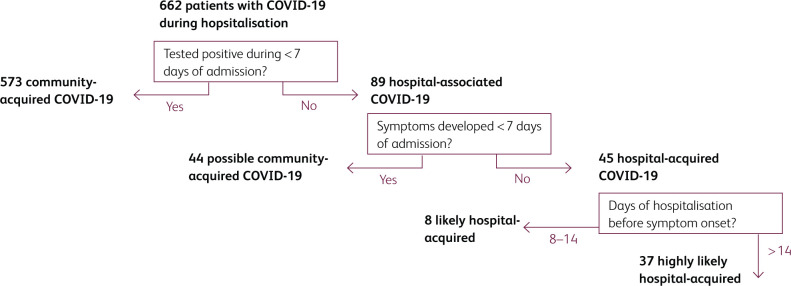
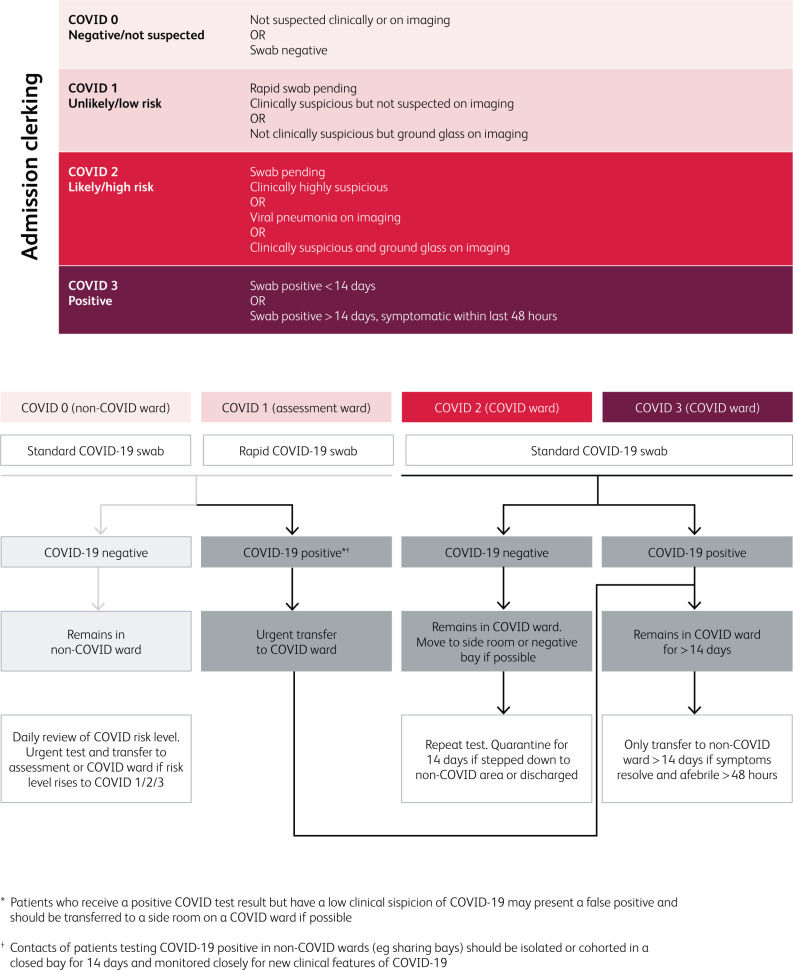
Nosocomial transmission of COVID-19 puts patients with other medical problems at risk of severe illness and death. Of 662 inpatients with COVID-19 at an NHS Trust in South London, 45 (6.8%) were likely to have acquired COVID-19 in hospital. These patients had no evidence of respiratory or influenza-like illness on admission and developed symptoms, with positive SARS-CoV-2 PCR test results, more than 7 days after admission (>14 days for 38 [5.7%] patients). Forty (88.9%) of these patients had shared a ward with a confirmed COVID-19 case prior to testing positive. Implementation of a triage system combining clinical assessment with rapid SARS-CoV-2 testing facilitated cohorting so that fewer susceptible patients were exposed to COVID-19 on shared wards. With hospital service resumption alongside the possibility of future waves of COVID-19 related admissions, strategies to prevent nosocomial transmission are essential. Point-of-care diagnostics can complement clinical assessment to rapidly identify patients with COVID-19 and reduce risk of transmission within hospitals.
Keywords: COVID-19; infection control; nosocomial infection; patient isolation; point-of-care testing.
© Royal College of Physicians 2020. All rights reserved.
Figures

References
-
- Public Health England COVID-19 infection prevention and control guidance. PHE, 2020. https://assets.publishing.service.gov.uk/government/uploads/system/uploa... [Accessed 21 May 2020].
Publication types
MeSH terms
LinkOut - more resources
Full Text Sources
Miscellaneous
