Preventive Effects of Repetitive Peripheral Magnetic Stimulation on Muscle Atrophy in the Paretic Lower Limb of Acute Stroke Patients: A Pilot Study
- PMID: 32789276
- PMCID: PMC7365239
- DOI: 10.2490/prm.20200008
Preventive Effects of Repetitive Peripheral Magnetic Stimulation on Muscle Atrophy in the Paretic Lower Limb of Acute Stroke Patients: A Pilot Study
Abstract
Objective: The aim of this study was to investigate the effect of repetitive peripheral magnetic stimulation (rPMS) on muscle atrophy prevention in the rectus femoris muscle (RF) of the paretic limb in acute stroke patients.
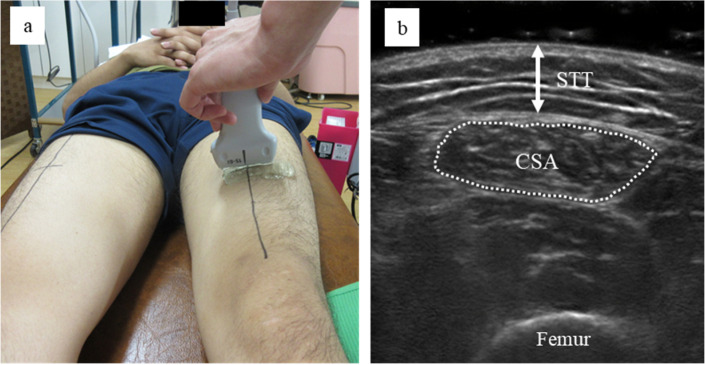
Methods: Twelve acute stroke patients with a National Institute of Health Stroke Scale score >5 and a motor score of the paretic lower limb >2 at admission were divided into an intervention group (rPMS: mean age, 75±6.4 years) and a conventional care group (non-rPMS: mean age, 62±11.8 years). Baseline measurements were performed within 4 days of stroke onset. In the rPMS group, treatment was applied to the paretic thigh only for 2 weeks, 5 days a week, in addition to conventional care. The cross-sectional area (CSA) of the RF was assessed in both limbs using ultrasound at baseline and 2 weeks later. Data on patient characteristics were collected from the clinical records to assess correlations with the CSA rate of change.
Results: Patients in the rPMS group were significantly older. Although the CSA of the RF did not change significantly on either side in the rPMS group, there was a significant decrease in the CSA on the paretic side in the non-rPMS group. However, no significant difference was observed in the CSA rate of change in the rPMS and non-rPMS groups. The CSA rate of change on the paretic side correlated negatively with age in the rPMS group.
Conclusions: Our results suggest that rPMS prevents muscle atrophy more effectively in patients in their 60s than in patients more than 70 years old.
Keywords: aging; magnetic stimulation; muscle atrophy; stroke; ultrasonography.
©2020 The Japanese Association of Rehabilitation Medicine.
Conflict of interest statement
CONFLICTS OF INTEREST: There are no conflicts of interest.
Figures