


doi: 10.1021/acs.orglett.0c02213.
Epub 2020 Jul 29.
Photophysical Tuning of Shortwave Infrared Flavylium Heptamethine Dyes via Substituent Placement
Affiliations
- PMID: 32790432
- PMCID: PMC7542986
- DOI: 10.1021/acs.orglett.0c02213
Item in Clipboard
Photophysical Tuning of Shortwave Infrared Flavylium Heptamethine Dyes via Substituent Placement
Org Lett.
.
Abstract
Optical imaging in the shortwave infrared region (SWIR, 1000-2000 nm) provides high-resolution images in complex systems. Here we explore substituent placement on dimethylamino flavylium polymethine dyes, a class of SWIR fluorophores. We find that the position of the substituent significantly affects the λmax and fluorescence quantum yield. Quantum-mechanical calculations suggest that steric clashes control the extent of π-conjugation. These insights provide design principles for the development of fluorophores for enhanced SWIR imaging.
Figures
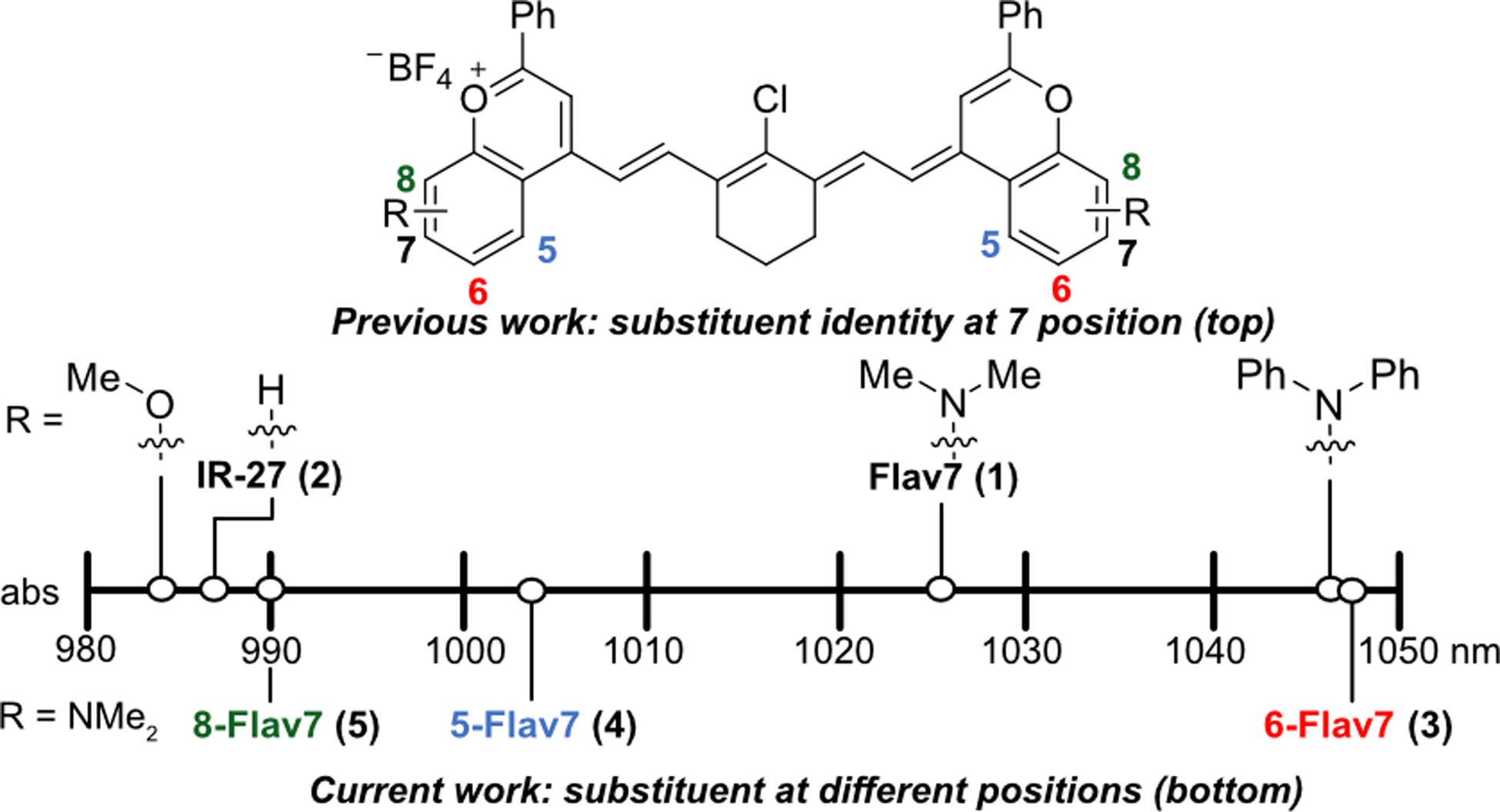
Systematic exploration of structural modifications of Flav7 (1). Previous work on derivatives at the seven-position, includeing methoxy and diphenylamine with a shift in λmax. Current work on exploring dimethylamino substitutions at different positions (five-, six-, and eight- on the heterocycle (3–5).
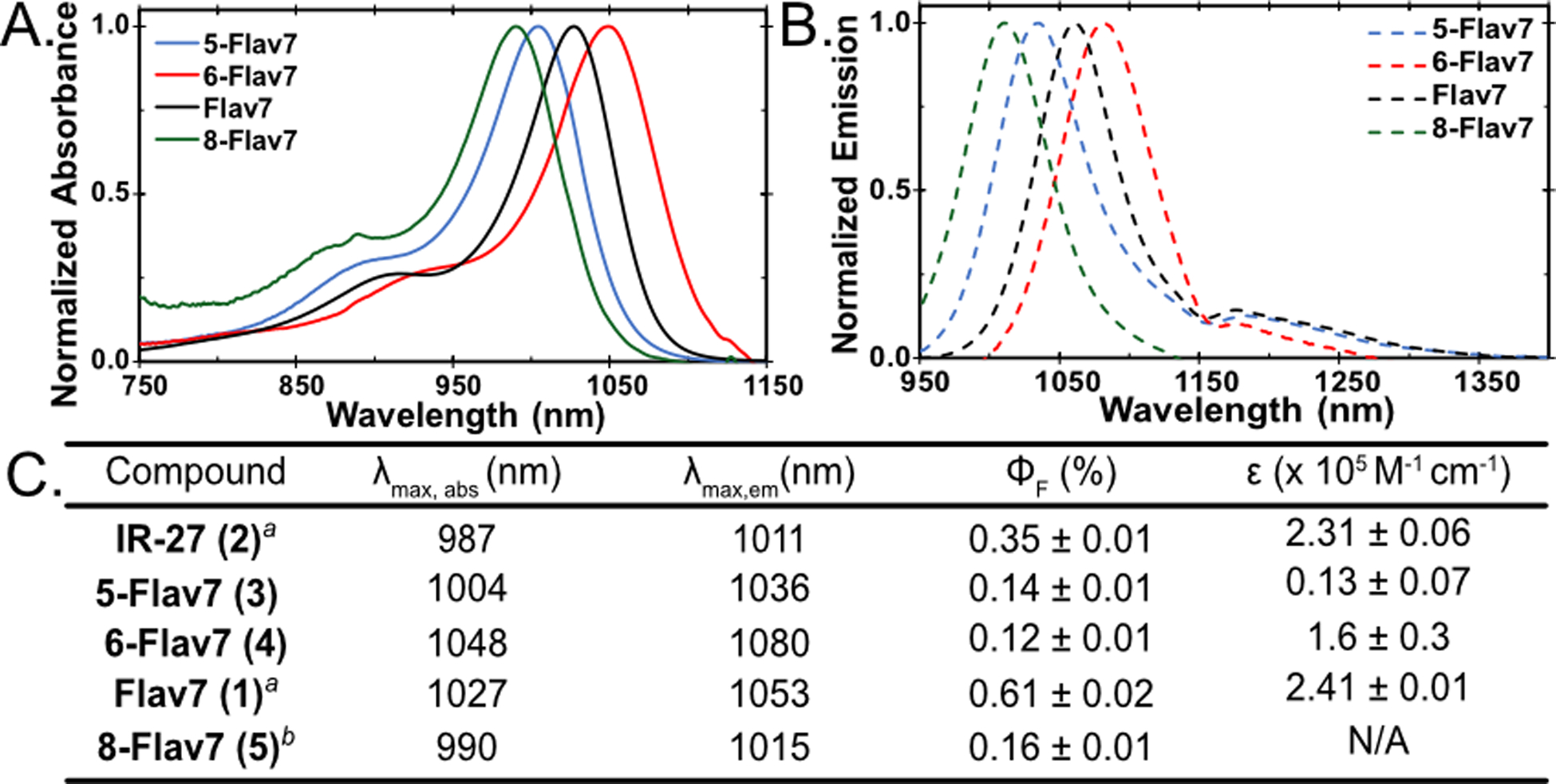
Normalized (A) absorbance and (B) emission of the flavylium polymethines discussed. (C) Photophysical data of unsubstituted (IR-27, 2) and dimethylamino substituted heptamethines (1, 3–5). All samples were taken in dichloromethane. aData was previously reported. bPhotophysical data was taken with crude sample.
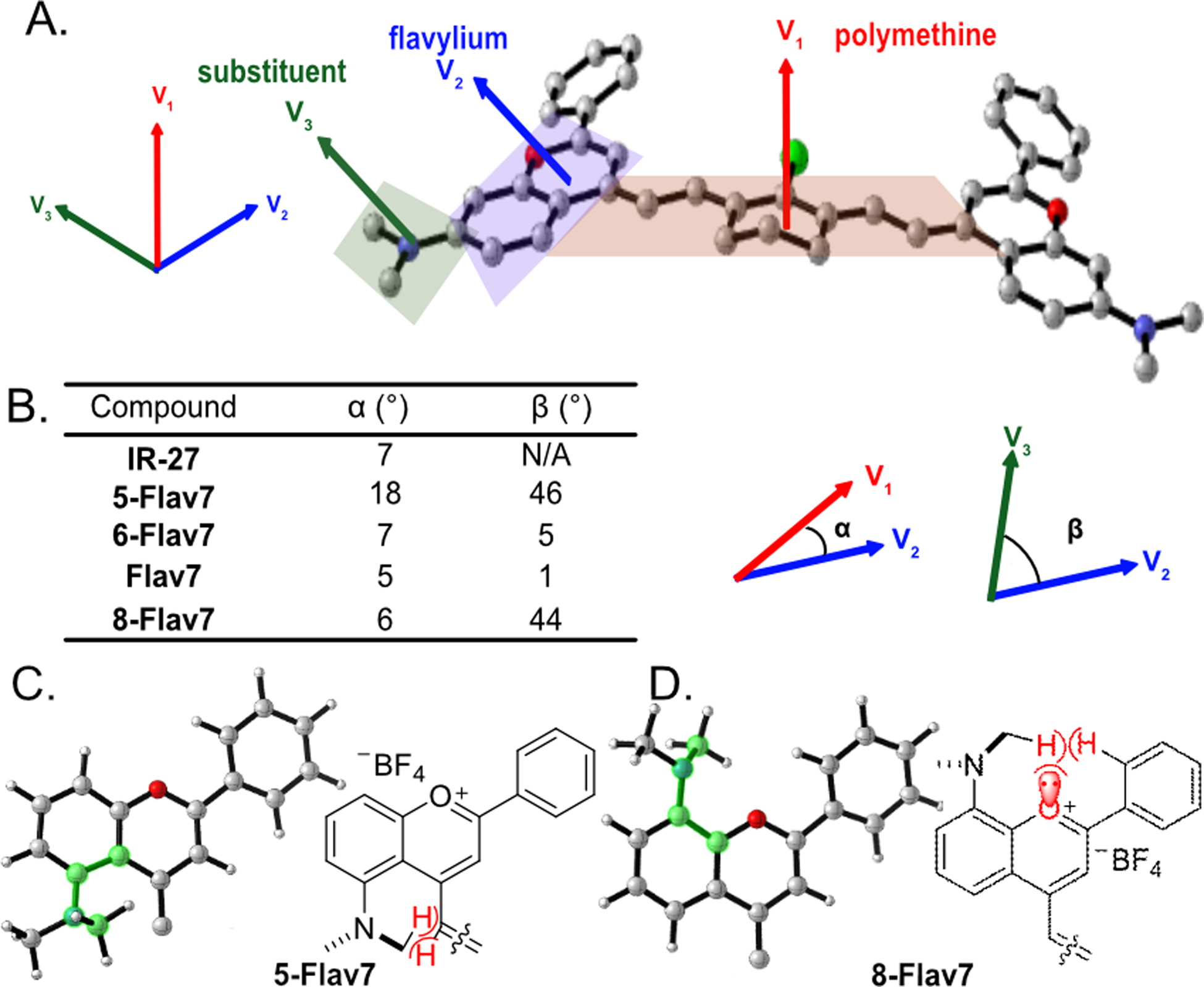
(A) Represented by Flav7; torsion angles are defined by α (V1 to V2, red to blue) and β (V3 to V2, green to blue) using the normal of the plane of the polymethine (V1), flavylium (V2) and substituent (V3). (B) Table of α and β angles for Flav7 dyes. (C,D) Heterocycle structures of (C) 5-Flav7 and (D) 8-Flav7 at the S0 state, optimized with M06–2X/6–31+G(d,p). The polymethine chain is omitted for clarity. The dihedral angles at the substituted positions of the flavylium heterocycles are highlighted in green to show the rotation of the NMe2 group in 5-Flav7 and 8-Flav7.
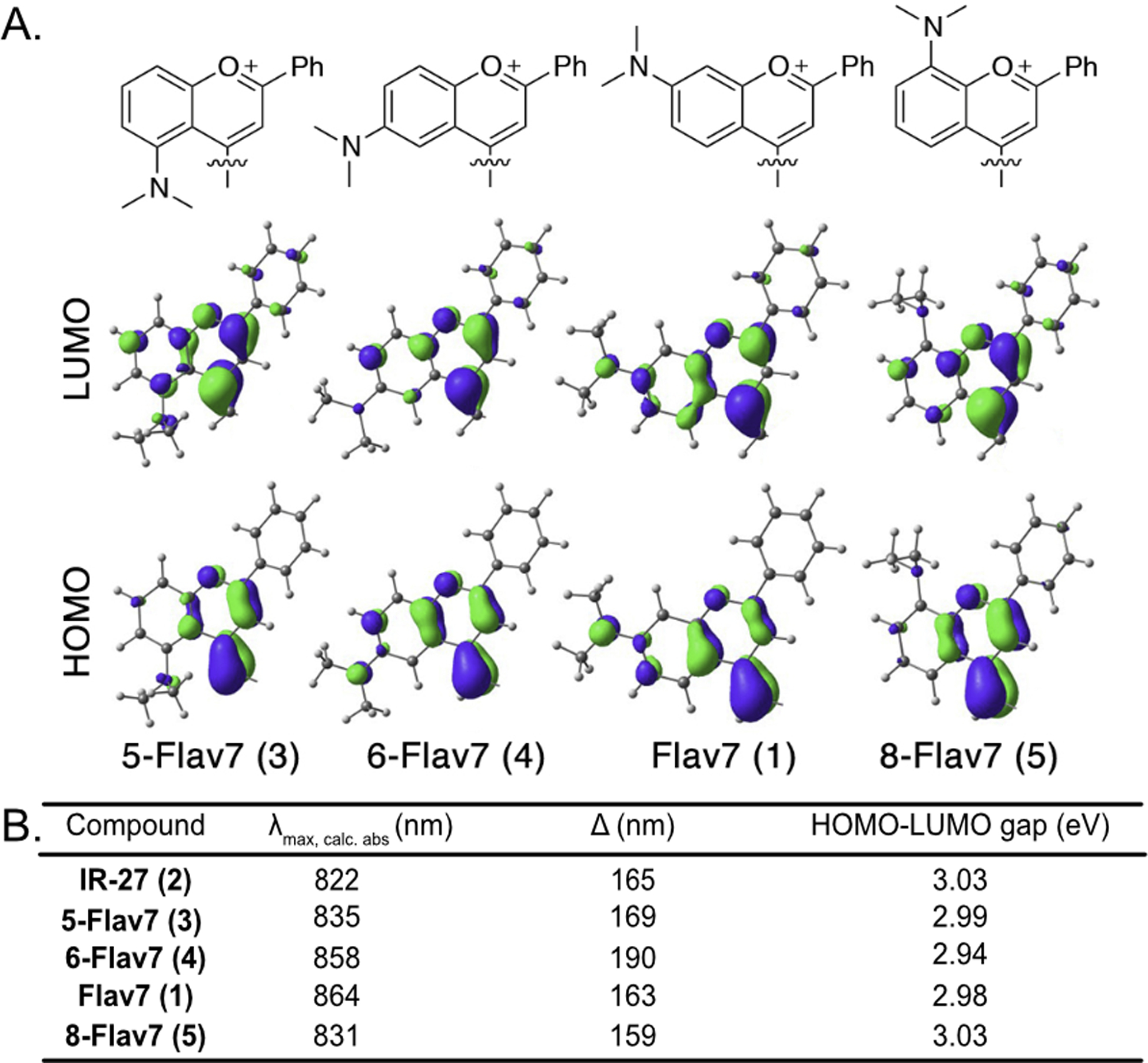
(A) HOMOs and LUMOs of Flav7 (1) and (5,6 and 8)-Flav7 (3–5) at M06–2X/6–31+G(d,p) level of theory. Polymethine chains were omitted for clarity. Explicit frontier molecular orbital information can be found in the SI. (B) Table of calculated λmax,calc,abs (nm) determined by theoretical HOMO-LUMO gap (eV). Δ is the difference between experimental and calculated λmax,abs.
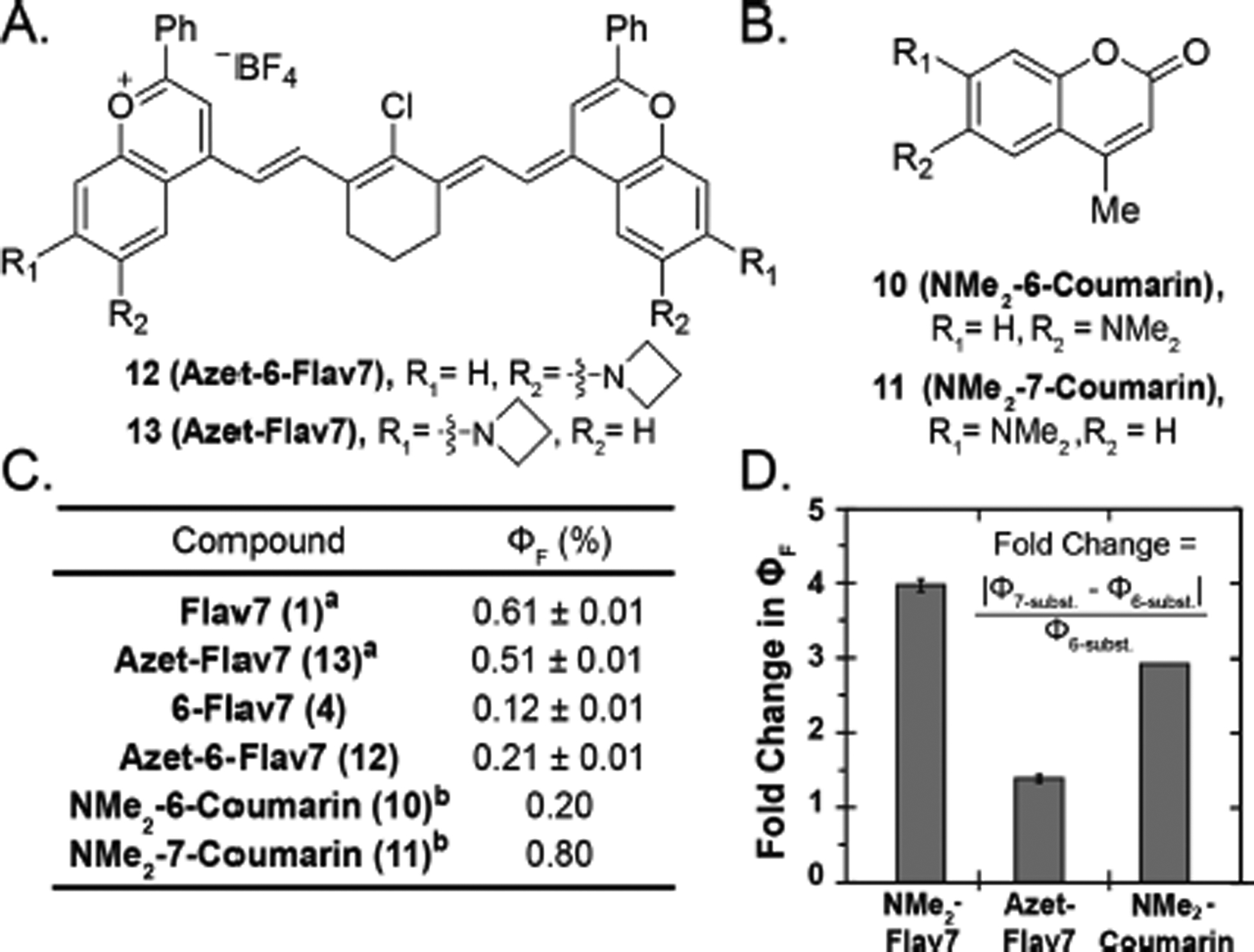
(A) Structures of azetidine-substituted flavylium heptamethines (12, 13). (B) Structure of 6- and 7-aminocoumarins (10, 11). (C) ΦF of flavylium heptamethine and coumarin dyes in dichloromethane and decanol, respectively. aPreviously reported by our group. bPreviously reported. (D) Fold change of ΦF between six- and seven-substituted flavylium heptamethine or coumarin fluorophore.

Synthetic scheme for dimethylamino flavylium heptamethines 3–5 with substituents at the five-, six-, and eight- positions. (a) RuPhos Pd G3 (0.10 eq), RuPhos (0.10 eq), Cs2Co3, HNMe2, toluene, 110 °C, 24 h. for 6a and 6b. (b) SPhos Pd G3 (0.10 eq), SPhos (0.10 eq) Cs2Co3, HNMe2, toluene, 110 °C, 24 h. for 6c. (c) MeMgBr (1.4M), THF, r.t. d) 2,6-di-tert-butyl-4methyl-pyridine, n-butanol/toluene or acetic anhydride, 100 °C, 15 min. Refer to SI for further experimental details.
References
-
- Schnermann MJ Chemical Biology: Organic Dyes for Deep Bioimaging. Nature. 2017, 551, 176–177. - PubMed
-
- Thimsen E; Sadtler B; Berezin MY Shortwave-Infrared (SWIR) Emitters for Biological Imaging: A Review of Challenges and Opportunities. Nanophotonics 2017, 6 (5), 1043–1054.
-
- Weissleder R A Clearer Vision for in Vivo Imaging. Nat. Biotechnol 2001, 19 (4), 316–317. - PubMed
Publication types
MeSH terms
Substances
Grants and funding
LinkOut - more resources
Full Text Sources
Research Materials
Miscellaneous
